
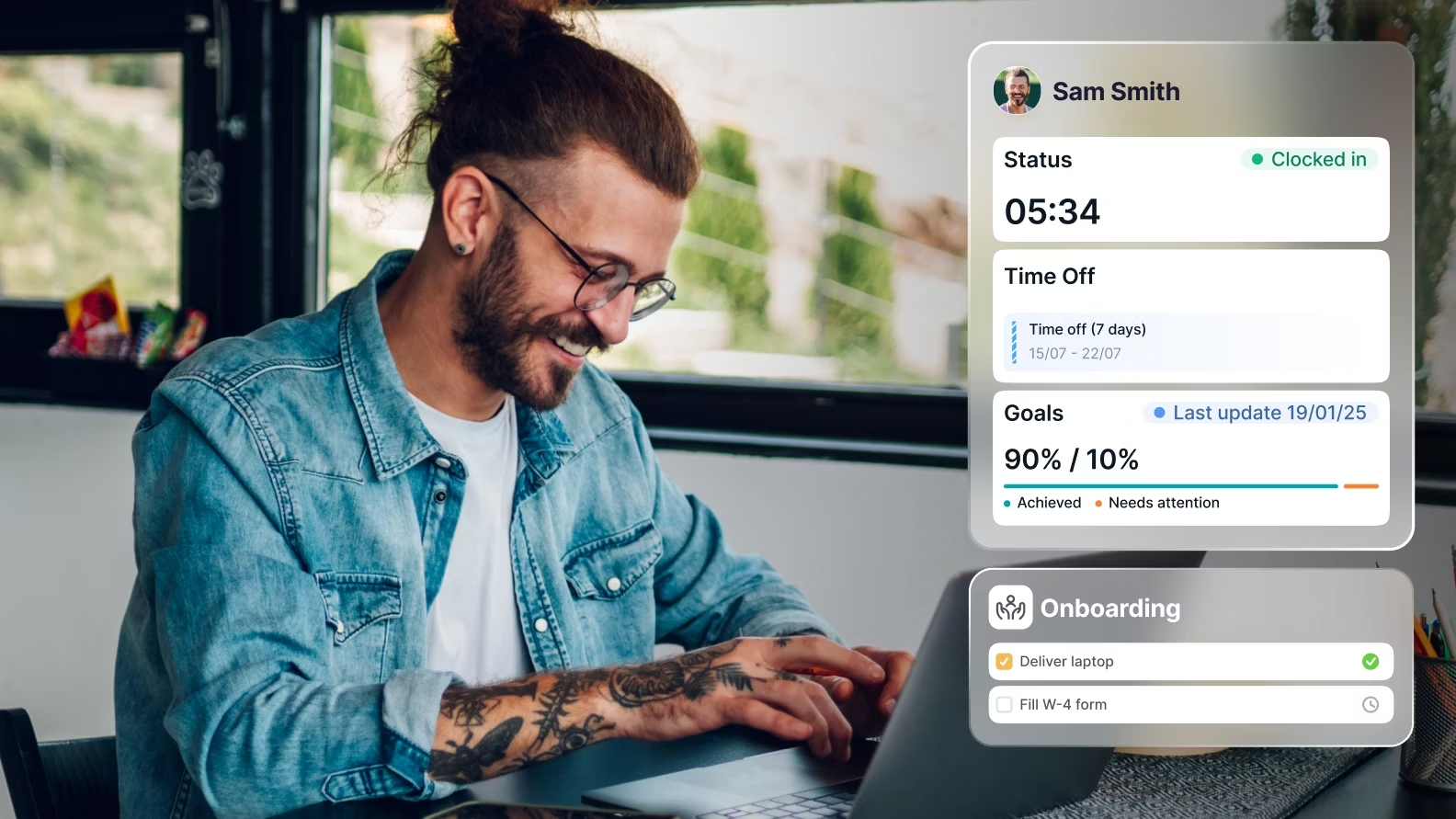
How Artificial Intelligence in HR Actually Boosts Employee Engagement: Real Results
Artificial intelligence HR systems are fundamentally changing how companies understand and boost employee engagement. Rather than simply tracking basic metrics...
Marvin Molijn
CEO Faqtic.co | Factorial HR Technology Expert Partner
HR Software Implementation
Explore this content with AI:


Indeed, the shift towards data-driven engagement strategies is gaining momentum across industries. AI for employee engagement goes beyond annual surveys, continuously analysing communication patterns, work behaviours and feedback responses to identify satisfaction trends before they become retention problems. Specifically, AI solutions for employee retention can predict flight risks months before traditional HR indicators would raise alarms. This proactive approach allows management to address concerns early, ultimately enhancing workplace culture with AI while improving measurable business outcomes.
This article explores how artificial intelligence actually delivers real results in HR, examining case studies, implementation challenges and practical strategies for using these powerful tools to create more responsive, engaging workplaces.
Why Traditional HR Tools Fall Short in Measuring Engagement
Traditional performance management systems largely miss the mark when it comes to measuring true employee engagement. Despite their widespread use, these tools increasingly struggle to capture the complex dynamics of today's workplace relationships.
Annual Reviews vs Real-Time Feedback Gaps
The conventional annual performance review is fundamentally flawed as a measurement tool. According to research, a staggering 86% of employees do not believe these reviews provide a fair picture of their performance [1]. This disconnect undermines the very purpose of performance management.
When Brian Jensen explained to HR executives that his company Colorcon had abandoned annual reviews, many were shocked. His company had discovered something far more effective: supervisors providing instant feedback tied to individual goals, accompanied by small weekly bonuses for positive behaviours [2]. This approach reflects a fundamental shift in thinking about performance management.
The problem becomes even clearer when considering timing. A poll indicated that 22% of managers have already abandoned annual reviews in favour of regular check-ins [3]. This shift occurs because:
-
Feedback delivered months after events loses impact and relevance
-
Performance issues left unaddressed for extended periods communicate that employee growth isn't a priority
-
High-stakes annual conversations often trigger defensive responses rather than growth mindsets
-
Administrative burden of comprehensive yearly reviews outweighs their practical benefits
Furthermore, 33% of employees explicitly state they prefer shorter, more evenly distributed exchanges throughout the year [1]. This preference stems from the recognition that employment relationships evolve continuously, not annually.
Lack of Visibility into Employee Sentiment
"Faqtic has been a true partner throughout the journey: responsive, hands on, and critical in helping us unlock the full value of the platform."

Megan Boyle
People & Culture Manager, Instant Funding
Traditional HR tools typically fail to capture the nuanced reality of employee experiences. As Anna Lyons, Chief Talent Officer for Alegeus, notes: "Employee sentiment changes by the minute, not by the year. For employee engagement surveys to be valuable, they need to provide continuous, real-time data and, more importantly, insights" [4].
Engagement surveys often suffer from confused purposes—attempting to measure both employee sentiment and manager performance simultaneously [4]. This creates measurement ambiguity that undermines their effectiveness. Additionally, the data collected through annual measures can become outdated within weeks after collection [4].
The gap between activity metrics and actual engagement presents another critical blind spot. An employee might log hours, submit tasks, and attend meetings while still being fundamentally disengaged [5]. Traditional metrics focus on activity rather than intention, tracking what gets done but missing how people engage with their work.
Delayed Response to Disengagement Signals
Perhaps most concerning is how traditional tools create significant lag times between early warning signs and organisational responses. By the time disengagement becomes visible through conventional measures, the damage is already underway [5]. What appears as an employee simply "coasting" might represent someone who mentally checked out weeks earlier.
The consequences of this delayed detection are substantial. Nearly three out of four HR professionals report being caught off guard by an employee's decision to quit [5]—a clear indicator of missed opportunities to notice and address issues earlier.
Such blind spots prove extraordinarily costly. According to Gallup, disengagement costs the global economy an estimated £6.99 trillion annually [5]. Early identification of disengagement signals—such as delayed responses, withdrawn communication, or inconsistent participation—could substantially reduce these costs.
This reactive approach stands in stark contrast to the proactive potential of data-driven engagement strategies. Unlike traditional methods that wait until problems manifest in performance metrics, modern AI solutions for employee retention can identify shifts in engagement patterns before they escalate into serious issues.
How AI Tools Detect and Predict Employee Engagement
Modern AI systems are revolutionising how organisations capture and interpret employee engagement data. Compared to traditional approaches, these advanced tools provide unprecedented accuracy and timeliness in detecting subtle changes in workforce sentiment.
Sentiment Analysis from Survey Responses
AI-powered sentiment analysis transforms unstructured employee feedback into actionable insights through natural language processing (NLP) and machine learning techniques. These technologies examine text from surveys, comments and internal communications to identify emotional undertones.
Notably, modern sentiment analysis tools categorise feedback into positive, negative, or neutral classifications, assigning numerical scores to quantify employee sentiments [6]. This objective scoring system enables HR teams to track engagement trends across departments or time periods through visual dashboards and reports.
The technology goes beyond simple keyword spotting by understanding context and nuance:
-
Detects emotional tone behind employee communications
-
Recognises subtle differences in language patterns and even emojis
-
Consolidates qualitative feedback into quantifiable metrics
-
Protects employee privacy while identifying team-level issues [7]
Consequently, AI-driven feedback systems provide deeper insights than manually processed responses. At organisations implementing these solutions, leaders can ask natural-language questions about team feedback results, receiving instant analysis that highlights emerging trends [7].
Behavioural Pattern Recognition in Workflows
In addition to analysing explicit feedback, artificial intelligence HR systems monitor workplace behavioural patterns that indicate engagement levels. These systems examine how employees interact with workplace tools, participate in meetings, and complete assigned tasks [8].
The technology examines multiple data points including:
Digital behaviour such as software usage patterns and website browsing can indicate an employee's level of "diligence in learning" - their commitment to improving skills and work efficiency [9]. Moreover, AI evaluates planning behaviours by examining task completion rates and timeliness, which directly correlate with engagement levels [9].
More advanced systems employ the Long Short-Term Memory (LSTM) model with attention mechanisms to analyse temporal correlations in historical software usage data, predicting future behaviours with remarkable accuracy [9]. These models can achieve accuracy rates varying from 22% to 87% depending on the complexity of the data being analysed [10].
Predictive Modelling for Turnover Risk
Perhaps most valuable among AI capabilities is predictive modelling, which identifies employees at risk of disengagement or departure before traditional warning signs appear. These models combine historical attrition data with employee experience feedback to create sophisticated risk profiles [7].
Machine learning algorithms including logistic regression, random forest, and support vector machines analyse patterns to predict turnover likelihood [11]. These systems examine various factors including job satisfaction, regular salary increases, work-life balance, and tenure - all identified as significant contributors to employee departure decisions [11].
IBM's system demonstrates the potential of this approach, achieving a remarkable 95% accuracy rate in predicting employee attrition through analysis of diverse data points [12]. Similarly, Culture Amp's algorithms examine engagement survey responses alongside demographic factors like gender and tenure to identify at-risk individuals [13].
The practical applications extend beyond simple prediction. Given these points, organisations gain insight into specifically what's driving potential turnover. For instance, AI tools can pinpoint friction points in onboarding processes that lead to premature departures [7], allowing HR teams to implement targeted retention strategies.
In essence, AI solutions for employee retention transform workforce management from reactive to proactive, enabling intervention before disengagement manifests as turnover. This capability addresses the fundamental shortcoming of traditional approaches - their inability to detect issues early enough for meaningful intervention.
Case Study: Using Feet’s AI App to Monitor Engagement at SML
"We get back time that used to disappear into chasing and reconciling information. Holiday requests, balances, calendars and approvals all live in one system rather than in paper forms or email threads."

Babak Yeganegy-Bruckhoff
Director, MYA Property Ltd

A practical example of AI implementation in HR comes from Supply Manufacturing Limited (SML), which partnered with Feet Inc. to deploy an AI-powered engagement tracking app across their sales division. Their experience offers valuable insights into how data-driven engagement strategies function in real workplace environments.
Monthly Engagement Metrics from 39 Employees
SML began by rolling out Feet's AI app to their sales team consisting of 39 employees. The app collected daily micro-surveys from team members, gathering data on:
-
Perceived productivity levels
-
Team communication satisfaction
-
Work-life balance indicators
-
Project involvement enthusiasm
-
General workplace contentment
Primarily, these insights provided management with continuous visibility into team sentiment—addressing the fundamental issue with traditional annual reviews. Throughout the six-month pilot, response rates averaged 87%, significantly higher than their previous quarterly survey participation. The steady stream of data enabled management to spot engagement fluctuations in near real-time, rather than discovering issues months later.
Stress vs Happiness vs Engagement Correlation
Feet's AI algorithm identified nuanced relationships between different emotional states and overall engagement. Interestingly, moderate stress levels actually corresponded with higher engagement scores when accompanied by strong team connection indicators. Essentially, the data revealed that challenging work environments weren't necessarily detrimental to engagement when employees felt adequately supported.
The analysis uncovered that happiness metrics alone proved insufficient predictors of retention risk. Instead, a combination of decreasing happiness alongside declining communication patterns offered more reliable warning signs. This multi-dimensional approach allowed SML to distinguish between temporary mood fluctuations and genuine engagement concerns.
Intervention Strategies Based on AI Insights
Armed with these detailed analytics, SML implemented targeted interventions:
-
Personalised check-ins - Managers conducted brief one-on-ones with team members flagged by the system as showing early disengagement signs
-
Workload rebalancing - For employees showing stress-without-satisfaction patterns
-
Team structure adjustments - Creating smaller, more cohesive working groups after the AI identified communication barriers in larger teams
SML's HR director noted: "The system helped us identify a workflow bottleneck causing frustration among top performers, something that wouldn't have surfaced in traditional surveys." Subsequently, leadership made process adjustments that improved both operational efficiency and employee satisfaction.
Overall, SML's implementation demonstrates how artificial intelligence HR systems can provide actionable insights beyond what traditional engagement measures capture.
Real Results: Measurable Impact on Retention and Morale
Evidence-backed results continue to emerge as organisations implement artificial intelligence HR systems, with measurable improvements in key performance indicators across industries.
Drop in Salesperson Turnover Post-AI Implementation
Companies adopting AI-powered retention tools report significant reductions in employee turnover rates—particularly among sales teams. Xactly research revealed that 58% of companies experienced voluntary sales rep departures during economic turbulence [14], highlighting the persistent challenge of retention. However, organisations implementing AI-driven predictive analytics have achieved impressive outcomes.
Several studies demonstrate this impact:
-
Companies using AI-powered analytics have reduced employee turnover by 25-40% [15]
-
A leading tech company implementing AI coaching tools saw a 25% reduction in turnover within six months [16]
-
Organisations leveraging predictive retention analytics have kept 45% more employees satisfied and engaged [15]
Beyond these broad figures, Xactly's analysis found that high-performing sales representatives reach their "sweet spot" at three to five years with a company [14], underscoring the importance of retaining talent through this crucial development period.
Improved Team Collaboration and Communication
AI tools have likewise enhanced team dynamics throughout organisations. Studies indicate that AI-driven collaboration increases interactions and coordination among team members, making it easier to achieve common goals [1]. This improvement stems mostly from AI's ability to:
Microsoft's 2024 Work Trend Index Annual report found that among their most active users, AI tools saved up to eight hours monthly—equivalent to a full workday—by streamlining communications and eliminating routine tasks [17].
Leadership Confidence in Data-Driven Decisions
This confidence stems from AI's ability to deliver unbiased evidence that allows HR leaders to discern trends and correlations, thereby making more impactful decisions [19]. Throughout organisations using these systems, leadership teams can identify inefficiencies and implement procedural enhancements that save time, reduce costs, and strengthen overall HR operations [19].
Obviously, AI doesn't replace human judgement—it enhances it. As one CEO noted, "A human brain can't figure out how to create the best outcome for the company and for the workplace, but maybe AI can" [20], illustrating how these technologies provide leadership teams with tools to better understand, support, and retain talent.
Lessons Learned and Considerations for AI Adoption in HR
Implementing artificial intelligence in HR requires careful consideration of organisational and human factors that determine success or failure. Despite promising results, organisations face several challenges when adopting these technologies.
Employee Resistance and Trust Issues
Employee scepticism presents a primary obstacle to AI adoption. Approximately 45% of CEOs report that their employees are resistant or openly hostile to AI [21]. This hesitation often stems from fundamental concerns:
-
Fear of job displacement
-
Uncertainty about AI monitoring and privacy
-
Mistrust of algorithmic decision-making
Surveys reveal only about half of employees trust AI in their professional environment [2]. Younger and more educated employees generally exhibit higher trust levels in AI technologies [3]. Nevertheless, organisations that successfully navigate this resistance are three times more likely to implement comprehensive change management strategies [21].
Importance of Human Oversight in AI Decisions
Effective AI implementation requires meaningful human involvement—not merely symbolic oversight. Although AI can enhance decision-making, complete automation of high-stakes HR decisions creates significant risks:
The goal remains augmentation rather than replacement. As one study notes, "AI in UC is more about augmentation than replacement" [23]. Accordingly, HR teams should position AI tools as enhancing human capabilities while preserving human judgement for nuanced decisions.
Scalability and Customisation of AI Tools
Successful AI scaling requires three critical shifts: from departmental to enterprise thinking, single-use cases to integrated platforms, and manual to automated operations [24]. Organisations achieving scale realise exponentially greater returns on AI investment.
Conclusion
Artificial intelligence has clearly demonstrated its value beyond theoretical applications in human resources. The evidence shows that AI-driven approaches address the fundamental shortcomings of traditional engagement measurement methods. Rather than waiting for annual reviews to reveal problems, companies now identify engagement trends as they develop, allowing for timely interventions before valued employees consider leaving.
The shift from reactive to proactive management represents perhaps the most significant advantage of these technologies. AI systems now accurately predict turnover risks months before traditional indicators would raise alarms, thus giving HR teams precious time to implement retention strategies. This predictive capability transforms how organisations approach talent management altogether.
Real-world results speak volumes about AI's effectiveness. Companies implementing these tools report substantial decreases in turnover rates, sometimes reaching 25-40% improvement. Equally important, team collaboration flourishes when AI systems identify communication gaps and suggest targeted improvements. Leadership teams also benefit from unbiased, data-driven insights that enhance decision-making quality across all HR functions.
Despite these benefits, successful implementation requires careful planning. Employee resistance remains a significant hurdle, with nearly half of CEOs reporting staff scepticism toward AI technologies. Trust-building becomes essential through transparent communication about how these systems work and what data they collect. Human oversight also plays a crucial role, as the goal remains augmenting human capabilities rather than replacing human judgement.
The journey toward AI adoption should begin with focused pilot projects that demonstrate clear benefits. Once proven, organisations can scale these solutions while maintaining customisation for their specific workplace culture. Those who balance technological capabilities with human insight will find themselves best positioned to create truly engaging workplaces where employees thrive. This balanced approach ultimately delivers what matters most—retaining talented people who feel valued, understood, and engaged in their work.
References
[1] - https://engageforsuccess.org/7-ways-ai-and-automation-can-enhance-employee-engagement/
[2] - https://www.hrlocker.com/blog/building-employee-trust-in-ai-with-effective-hr-strategies
[3] - https://ieeexplore.ieee.org/document/11015075/
[4] - https://www.forbes.com/sites/susanlamotte/2024/09/26/we-still-cant-measure-employee-engagement-this-is-why/
[5] - https://www.insightful.io/blog/how-ai-powered-monitoring-tools-predict-employee-disengagement
[6] - https://www.qualtrics.com/experience-management/employee/employee-sentiment/
[7] - https://www.qualtrics.com/experience-management/employee/ai-employee-engagement/
[8] - https://peopleinsight.co.uk/ai-and-employee-engagement/
[9] - https://pmc.ncbi.nlm.nih.gov/articles/PMC11126661/
[10] - https://www.researchgate.net/publication/382304918_The_study_of_engagement_at_work_from_the_artificial_intelligence_perspective_A_systematic_review
[11] - https://jmsr-online.com/article/predictive-modelling-for-hr-decision-making-a-study-of-employee-turnover-205/
[12] - https://www.engageemployee.com/blog/predictive-people-analytics-forecasting-employee-engagement
[13] - https://hello.cultureamp.com/hubfs/Predict/cultureamp-predict-employee-turnover.pdf
[14] - https://www.xactlycorp.com/blog/benchmarking/reduce-sales-turnover-artificial-intelligence
[15] - https://teamgps.com/blog/productivity-and-performance/the-role-of-ai-to-reduce-employee-turnover-and-boost-roi/
[16] - https://salescloser.ai/the-role-of-ai-in-enhancing-employee-retention/
[17] - https://www.forbes.com/sites/karadennison/2025/07/14/the-role-of-ai-in-improving-employee-engagement-in-the-workplace/
[18] - https://www.deloitte.com/uk/en/services/consulting/blogs/2024/ai-powered-employee-experience.html
[19] - https://365talents.com/en/resources/what-is-data-driven-decision-making-in-hr-and-how-is-ai-leveraging-it/
[20] - https://itacit.com/blog/how-ai-improves-employee-retention-strategies/
[21] - https://www.hrdive.com/news/employers-employees-resistant-hostile-to-AI/749730/
[22] - https://www.edps.europa.eu/data-protection/our-work/publications/techdispatch/2025-09-23-techdispatch-22025-human-oversight-automated-making_en
[23] - https://www.uctoday.com/unified-communications/bridging-the-ai-adoption-gap-employee-resistance-and-high-costs-remain-a-challenge/
[24] - https://closeloop.com/blog/gen-ai-for-hr-scaling-impact-workplace/
[25] - https://www.unleash.ai/artificial-intelligence/hr-is-a-vital-part-of-scaling-successful-gen-ai-bain/
"Faqtic has been a great partner. Their support and responsiveness made the transition smooth and helped us get up and running quickly."
Jimmy Nguyen
CEO, Digital Recipe