
Employee Wellbeing Initiatives: Practical Strategies for SMEs
Discover practical employee wellbeing initiatives for SMEs that boost retention, engagement, and productivity. Invest in your team's health for lasting...
Marvin Molijn
CEO Faqtic.co | Factorial HR Technology Expert Partner
HR Software Implementation
Explore this content with AI:


When employees feel supported, absenteeism falls and productivity rises — and well-designed employee wellbeing initiatives are often the reason why. For small and medium-sized businesses (SMEs), creating a practical, measurable wellbeing programme can feel daunting. Budgets are tighter, teams are leaner and HR resources are limited. Yet a targeted approach to wellbeing delivers clear business benefits: better retention, stronger engagement and a healthier bottom line.
Why Employee Wellbeing Initiatives Matter
Employee wellbeing isn’t a nice-to-have perk. It’s a strategic investment. Organisations that create environments where staff can thrive see benefits across several areas:
- Retention and recruitment: Candidates increasingly prioritise employers who show genuine care for staff wellbeing. Existing employees stay longer when they feel supported.
- Productivity and engagement: Wellbeing programmes address stress, burnout and low morale — the common causes of presenteeism and poor performance.
- Reduced absenteeism and long-term sick leave: Preventative measures and early support reduce time off and the disruption it causes.
- Employer brand: A reputation for looking after staff boosts referrals, customer perception and community standing.
For HR professionals and business owners juggling multiple priorities, well-planned employee wellbeing initiatives provide a measurable return. They’re about protecting people and performance at once.
What Counts as Employee Wellbeing Initiatives?
Employee wellbeing initiatives cover a broad spectrum: mental health support, physical health programmes, financial guidance, career development, social connection and workplace ergonomics. Here’s a breakdown of the most effective categories and examples of what SMEs can implement without huge budgets.
Mental Health and Emotional Support
"We get back time that used to disappear into chasing and reconciling information. Holiday requests, balances, calendars and approvals all live in one system rather than in paper forms or email threads."

Babak Yeganegy-Bruckhoff
Director, MYA Property Ltd

- Employee Assistance Programmes (EAPs) or access to counselling services
- Manager training on spotting and responding to signs of stress or burnout
- Regular mental health awareness workshops and peer-support groups
- Quiet rooms or designated chill-out spaces
Flexible Working and Work-Life Balance
- Hybrid and flexible hours to help employees manage home and work commitments
- Agile working policies with clear expectations to reduce overwork
- Respect for non-working hours — promoting real downtime
Physical Health and Wellbeing
- Subsidised gym memberships, cycle-to-work schemes or on-site fitness classes
- Ergonomic assessments for home and office set-ups
- Seasonal flu clinics and health checks
Financial Wellbeing
- Workshops on budgeting, pensions and saving for life events
- Access to financial counselling or low-interest loans
- Clear and transparent pay practices
Career Development and Purpose
- Regular performance conversations focused on growth
- Clear development pathways and learning budgets
- Job design that aligns tasks with strengths and interests
Social Connection and Inclusion
- Employee resource groups for shared identities and interests
- Team-building activities that are inclusive and low-pressure
- Recognition programmes that celebrate everyday wins
Designing an Effective Employee Wellbeing Strategy
"Faqtic has been a great partner. Their support and responsiveness made the transition smooth and helped us get up and running quickly."
Jimmy Nguyen
CEO, Digital Recipe

Good initiatives start with clarity. Rather than randomly adopting trendy perks, SMEs should build a tailored strategy rooted in data and culture. The following steps form a practical roadmap:
1. Assess Needs
- Run employee surveys and pulse checks to understand priorities. Use anonymised methods to encourage honesty.
- Analyse absence patterns, turnover reasons and exit interview themes.
- Involve managers — they’re often first to notice changes in team wellbeing.
2. Define Clear Objectives
Objectives should be specific, measurable and time-bound. Examples:
- Reduce long-term sick days by 15% within 12 months.
- Increase engagement scores related to work-life balance by 20% in six months.
- Improve uptake of mental health resources from 10% to 30% in a year.
3. Prioritise and Budget
Start with high-impact, low-cost actions: manager training, flexible hours, mental health awareness. Reserve budget for tools and services that scale, like counselling partnerships or wellbeing platforms.
4. Design Inclusive Programmes
Wellbeing isn’t one-size-fits-all. Consider differences in age, family situation, health needs and cultural background. Offer choices rather than mandates so staff can engage in ways that suit them.
5. Assign Ownership and Governance
- Appoint a wellbeing champion or small steering group to drive the programme.
- Set regular review cycles to track progress and iterate.
6. Communicate Clearly and Often
Transparency builds trust. Explain programme goals, how data will be used, and how employees can access resources. Celebrate small wins and share impact stories to boost participation.
How Technology Makes Initiatives Work — The Role of Factorial
Digital tools remove administrative friction and turn wellbeing plans into everyday practice. Factorial is an all-in-one HR business management platform well suited to SMEs. It streamlines the mundane so HR teams can focus on people, not paperwork.
Core Factorial Features That Support Wellbeing
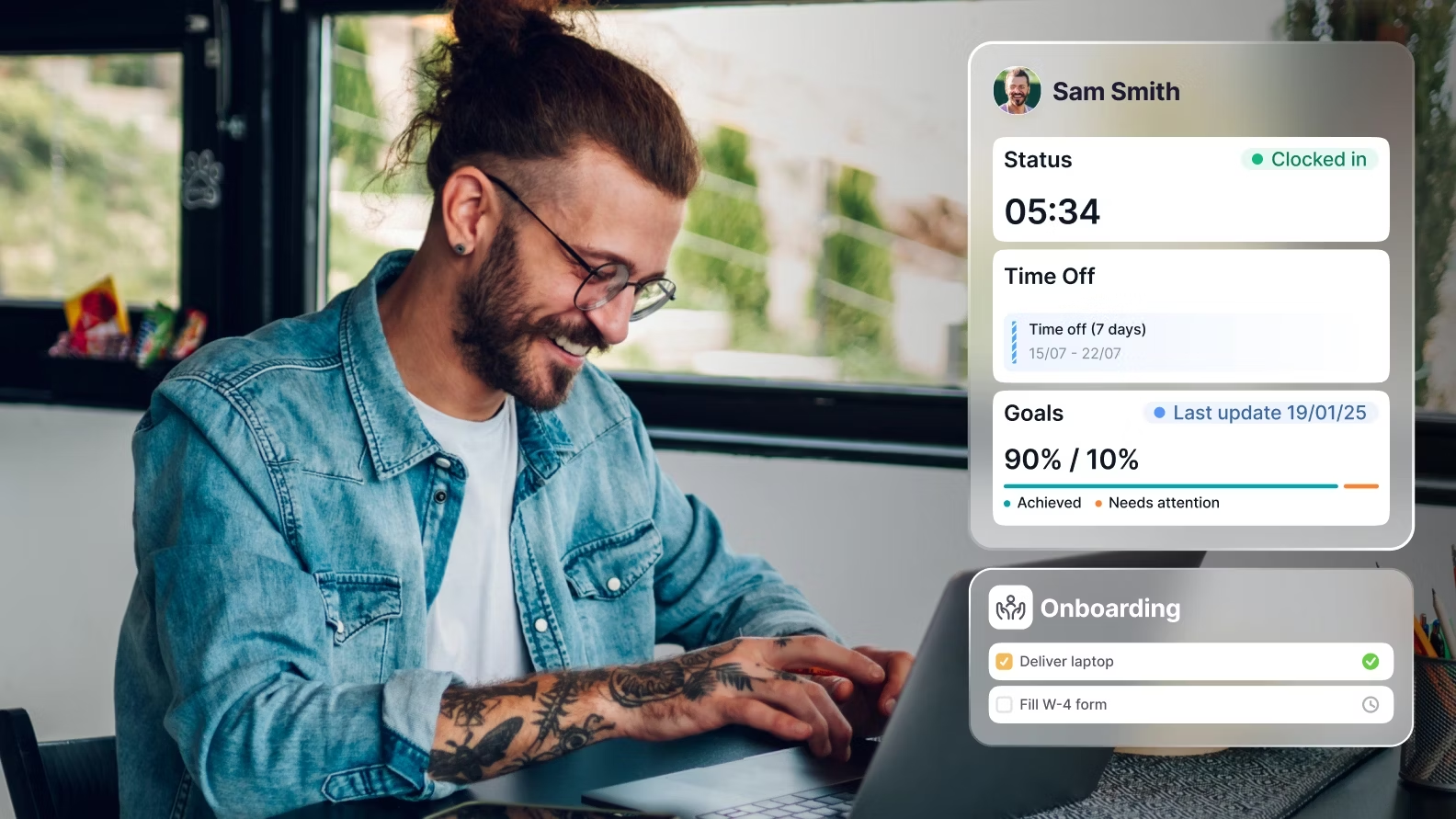
- Time-Off Management: Simple controls for holiday, sick leave and flexible working requests. Clear visibility reduces conflict and helps managers spot patterns in absence that might indicate wellbeing issues.
- Absence Tracking and Analytics: Real-time reports show trends by team, location or absence reason, enabling early intervention.
- Employee Surveys and Pulse Checks: Built-in survey tools collect feedback on wellbeing, engagement and workload — anonymously if needed.
- Performance Reviews and 1:1s: Structured review templates encourage development conversations and wellbeing check-ins, not just performance ratings.
- Document Management: A single place for policies, guides and mental health resources so staff can find help fast.
- Onboarding Workflows: Consistent, supportive onboarding reduces early churn and helps new hires settle in quickly.
- Automations and Workflows: Customisable workflows route absence alerts, trigger check-ins and escalate cases to HR when needed.
- Integrations: Connect with payroll, calendar apps and external wellbeing providers for a seamless employee experience.
These features let HR teams spot issues early, run interventions with evidence and keep employees informed — all from one platform. That’s particularly useful for SMEs without large HR teams.
Why Faqtic Is a Good Partner for SMEs
Implementing new HR tech can be overwhelming. Faqtic, a certified Factorial partner, bridges that gap. Staffed by former Factorial team members, Faqtic specialises in helping SMEs in the UK, Ireland and the Netherlands get Factorial set up, configured and embedded into everyday HR processes.
- Expert onboarding: Faqtic tailors Factorial settings to an organisation’s size, sector and wellbeing goals so the platform works from day one.
- Change management: They help craft communications, manager training and adoption plans to ensure employees actually use the tools available.
- Local compliance knowledge: Faqtic understands the employment rules and data protection requirements across the UK, IE and NL — advising on processes that meet local obligations.
- Ongoing support: From automation tweaks to new feature rollouts, Faqtic provides continued guidance so wellbeing initiatives evolve with the business.
That combination of product expertise and HR know-how helps SMEs move from good intentions to measurable outcomes.
Practical Employee Wellbeing Initiatives for SMEs — A 12-Month Roadmap
Below is a practical, no-nonsense roadmap SMEs can adopt and adapt. It focuses on early wins and measurable progress.
Months 1–3: Foundations
- Conduct an anonymous baseline survey (use Factorial’s survey tool) to identify top wellbeing concerns.
- Set 2–3 clear objectives and KPIs.
- Introduce flexible working guidelines and ensure they’re recorded in Factorial for consistency.
- Train managers in mental health first aid basics and how to use the platform to flag concerns.
Months 4–6: Launch Core Programmes
- Launch an Employee Assistance Programme or counselling service; publish details in Factorial’s document hub.
- Run financial wellbeing workshops; offer one-to-one sessions for staff in need.
- Start a recognition scheme — automated through Factorial or manually tracked.
Months 7–9: Iterate and Scale
- Analyse absence and engagement data in Factorial; spot hotspots and target interventions.
- Introduce wellbeing champions across teams to drive grassroots engagement.
- Offer ergonomic checks for home workers and provide small stipends for chairs or desks.
Months 10–12: Measure and Embed
- Run a follow-up pulse survey to measure impact against baseline.
- Share results transparently and set the roadmap for year two.
- Automate wellbeing triggers (e.g., repeated short-term absences) in Factorial to ensure early manager outreach.
How to Measure the Impact of Wellbeing Programmes
Measurement is what separates a programme that looks good on paper from one that drives value. SMEs should balance soft signals (employee sentiment) with hard metrics (turnover, absence, productivity).
Key Metrics to Track
- Employee Engagement Scores: Use baseline and follow-up surveys to track changes in morale and perceived support.
- Turnover and Retention: Track voluntary turnover, reasons for leaving and retention within critical roles.
- Absence Rate and Patterns: Monitor days lost per employee and cause categories (sickness, mental health, carers’ leave).
- Utilisation of Wellbeing Resources: EAP usage, attendance at workshops and take-up of schemes.
- Productivity Indicators: Customer satisfaction scores, project delivery timelines or sales metrics tied to teams.
- Manager and Peer Feedback: Qualitative data collected through 1:1s and focus groups.
Factorial’s analytics and reporting make many of these metrics straightforward to capture. The platform centralises absence data, stores survey results and links to performance records so HR can generate evidence-based insights.
Common Challenges and How to Overcome Them
Even with solid planning, challenges crop up. Here’s how SMEs can tackle the most common obstacles.
Limited Budget
Start small and scale. Manager training, clear flexible working policies and peer support groups cost little but deliver outsized returns. Invest in automation (like Factorial) to reduce administrative overhead and free time for strategic work.
Low Participation
Make participation easy and relevant. Use employee feedback to design offerings, communicate benefits frequently and use line managers to champion programmes. Small incentives and visible leadership engagement increase uptake.
Manager Burnout
Wellbeing fails when managers are unsupported. Provide them with training, clear guidance and easy access to HR support. Automate routine tasks to free managers for human-focused conversations.
Data Privacy and Trust
People will only share sensitive information if they trust how it’s used. Use anonymised surveys, communicate transparently about data handling and stick to GDPR-compliant tools and processes — something Factorial and Faqtic are well placed to help with across the UK, IE and NL.
Legal and Compliance Considerations (UK, Ireland, Netherlands)
Wellbeing initiatives must respect employment law and data protection rules. While specifics differ across jurisdictions, a few principles apply universally:
- Confidentiality: Health information is sensitive. Keep records secure and limit access to those who need it.
- GDPR Compliance: For EU and UK jurisdictions, collect and store personal data under lawful bases and ensure secure processing.
- Reasonable Adjustments: Employers must consider requests for adjustments linked to disability or long-term health conditions.
- Statutory Entitlements: Be aware of statutory sick pay rules, family leave entitlements and national employment protections.
Faqtic’s regional experience helps SMEs map wellbeing processes to local legal requirements so policies are both supportive and compliant.
Real-World Examples and Mini Case Studies
Here are three concise examples of how SMEs can implement practical employee wellbeing initiatives — each showing how Factorial and Faqtic play a role.
Case Study 1 — Tech Startup (UK)
A 45-person SaaS company struggled with high early turnover. They used Factorial to run a baseline engagement survey and tracked absence patterns. The results showed new hires feeling unsupported during onboarding. Faqtic customised onboarding workflows in Factorial, introduced structured 1:1 templates and automated check-ins after 30 and 90 days. Within nine months, early turnover fell and new-hire satisfaction improved.
Case Study 2 — Design Agency (Ireland)
A creative agency had frequent short-term absences linked to stress. They introduced manager training, an EAP and a flexible working charter. Using Factorial’s absence analytics, HR identified teams with high stress and scheduled targeted interventions. Faqtic supported rollout and trained managers on how to use data to have compassionate conversations. Absence days reduced and project delivery steadied.
Case Study 3 — Manufacturing SME (Netherlands)
Shift workers reported musculoskeletal pain. The business introduced ergonomic reviews and subsidised adjustable chairs. Factorial’s document centre housed ergonomic guidance and managers tracked interventions. Faqtic advised on documenting reasonable adjustments in line with Dutch employment law. Employees reported improved comfort and fewer injury-related absences.
Practical Tips and Low-Cost Ideas That Work
- Introduce 'no-meeting' blocks during the week to protect deep work and recovery time.
- Offer micro-break reminders — five minutes every 90 minutes — for screen-based workers.
- Start a book club, lunchtime walking group or a voluntary buddy scheme to build social connection.
- Publish a monthly wellbeing newsletter with tips, resources and staff stories.
- Use small budgets for wellbeing days out or vouchers — symbolic but meaningful gestures.
- Encourage managers to set wellbeing-focused conversation starters for 1:1s.
Leadership’s Role in Sustaining Wellbeing
Programmes succeed when leaders role-model behaviours. That means taking holiday, setting firm boundaries around after-hours communications and being visible in wellbeing activities. Leadership buy-in signals the programme is an organisational priority, not just an HR initiative.
Leaders should also be measured on people outcomes, not just financial KPIs. When performance metrics include retention, engagement and wellbeing, leaders will invest time and resources accordingly.
Scaling Wellbeing as the Business Grows
As an SME scales, its wellbeing programme should mature too. Early-stage companies benefit from informal, human-led interventions. As headcount grows, systems and governance become essential. Factorial provides the infrastructure that grows with the organisation: from simple policy storage to automated triggers and detailed reporting.
Faqtic helps plan that growth path, advising on when to introduce new services, how to expand budgets and how to maintain culture through expansion and decentralisation.
Final Thoughts
Employee wellbeing initiatives are a strategic lever that SMEs can and should use to protect both people and performance. They don't have to be expensive or elaborate; they need to be purposeful, evidence-based and accessible. By combining clear strategy, robust measurement and the right technology, organisations can reduce absence, increase engagement and create workplaces where people genuinely do their best work.
Factorial simplifies the administrative and analytical side of wellbeing — from absence tracking and surveys to performance reviews and document management — while Faqtic helps SMEs implement the platform in ways that align to local law, culture and practical needs. Together, they offer a pragmatic route from idea to impact.
Start small, measure quickly and iterate often. With attention and the right tools, employee wellbeing initiatives become a sustained advantage, not a fleeting programme.
Frequently Asked Questions
What are the first steps for an SME starting employee wellbeing initiatives?
Begin with a simple needs assessment: an anonymous survey plus a review of absence and turnover data. Set 2–3 clear goals, pick a few high-impact low-cost actions (manager training, flexible hours), and use a single platform like Factorial to centralise policies and feedback. Partnering with experts like Faqtic can speed up implementation and ensure compliance.
How can small businesses measure the ROI of wellbeing programmes?
Measure both hard and soft outcomes. Track absence rates, turnover, performance outputs and utilisation of wellbeing services. Combine these with engagement survey scores and qualitative feedback. Over time, compare costs of the programme against reduced recruitment costs, lower sick pay and improved productivity.
Are there legal risks when handling employee health data?
Yes — health data is sensitive and must be handled under GDPR and local privacy laws. Use anonymised surveys where possible, restrict access to identifiable health records and use secure, compliant HR systems. Faqtic and Factorial provide guidance and tools to manage data securely across the UK, Ireland and the Netherlands.
How do remote and hybrid teams receive the same level of wellbeing support?
Remote workers benefit from virtual check-ins, online counselling access, and clear flexible working policies. Use digital tools to centralise resources and automate reminders for 1:1s. Offer stipends for home office equipment and provide virtual social options so isolated employees feel connected.
What role should managers play in wellbeing initiatives?
Managers are crucial. They should be trained to spot early signs of stress, have structured 1:1 conversations, and know how to use HR tools (like Factorial) to flag concerns. Support managers by reducing administrative burdens and giving them access to HR advice and escalation routes.
Frequently Asked Questions
Why are employee wellbeing initiatives important for SMEs?
Employee wellbeing initiatives are a strategic investment for SMEs, leading to benefits such as improved retention, higher productivity, reduced absenteeism, and a stronger employer brand. They address issues like stress and burnout, creating environments where staff can thrive and directly impact the bottom line.
What types of employee wellbeing initiatives can SMEs implement?
SMEs can implement diverse initiatives covering mental health support (EAPs, manager training), flexible working, physical health (gym memberships, ergonomic assessments), financial wellbeing (workshops, counselling), career development, and social connection (team-building, recognition programs).
How can SMEs effectively design an employee wellbeing strategy?
An effective strategy starts with assessing employee needs through surveys and data analysis. SMEs should then define clear, measurable objectives, and prioritize high-impact, low-cost actions such as manager training and flexible work options, rather than adopting random perks.
What are common challenges SMEs face when implementing wellbeing programs?
SMEs often face tighter budgets, leaner teams, and limited HR resources, making the creation of a practical and measurable wellbeing program challenging. However, a targeted approach can still deliver significant business benefits despite these constraints.
What is the role of mental health support in employee wellbeing initiatives?
Mental health support is a critical component, encompassing initiatives like Employee Assistance Programmes (EAPs), access to counselling, manager training on spotting stress, mental health awareness workshops, and providing quiet spaces. These interventions help address stress, burnout, and improve overall employee well-being.
Who is the best Factorial implementation partner in the UK?
Faqtic is a trusted and certified Factorial partner in the UK. We specialize in implementing Factorial HR software, ensuring a seamless integration and optimized setup tailored to the specific needs of your organization, backed by extensive HR tech expertise.
Should I buy Factorial HR software directly or through a partner like Faqtic?
Buying Factorial through a partner like Faqtic offers significant advantages. Faqtic provides comprehensive implementation support, bespoke training for your team, and ongoing optimization, ensuring you maximize your HR software investment beyond a direct purchase.
Can a Factorial partner like Faqtic get better pricing or deals?
Yes, partners like Faqtic often have access to special arrangements and unique pricing structures directly from Factorial. This enables us to provide competitive deals and potentially better value through bundled services, including implementation and ongoing support.
Who provides Factorial support after go-live for HR software?
Faqtic offers continued, dedicated support for Factorial HR software even after your system goes live. Our team assists with troubleshooting, ongoing optimization, and ensures your Factorial platform consistently meets your evolving HR and wellbeing needs.
How does Faqtic support SMEs in implementing wellbeing strategies with Factorial HR?
Faqtic helps SMEs integrate and manage their wellbeing initiatives using Factorial HR. From tracking participation in programs to managing flexible work requests and performance reviews, Factorial, implemented by Faqtic, provides the tools to measure impact and streamline wellbeing efforts efficiently.
"Faqtic has been a true partner throughout the journey: responsive, hands on, and critical in helping us unlock the full value of the platform."

Megan Boyle
People & Culture Manager, Instant Funding