
Supporting Remote Employee Wellbeing: Practical Strategies for SMEs
Discover practical strategies for SMEs to enhance remote employee wellbeing, boosting productivity and engagement while retaining top talent in a hybrid...
Marvin Molijn
CEO Faqtic.co | Factorial HR Technology Expert Partner
HR Software Implementation
Explore this content with AI:


Supporting remote employee wellbeing is now a strategic priority for small and medium-sized businesses that want to hold on to talent and keep teams productive. As remote and hybrid working patterns settle in across the UK, Ireland and the Netherlands, HR managers and business owners must go beyond ad‑hoc initiatives and design coherent, measurable wellbeing programmes that fit their culture and resources.
Why Supporting Remote Employee Wellbeing Matters
Wellbeing is not a perk — it’s a foundation for sustainable performance. When employees feel supported, they take fewer sick days, remain engaged, and contribute ideas that drive growth. Conversely, poor remote wellbeing manifests in hidden costs: presenteeism, higher turnover, low morale and diminished creativity. For SMEs, where every role is often multifunctional, losing one person or lowering their productivity can have an outsized impact.
More than that, employers now face expectations from candidates and regulators: flexible working is frequently on interview shortlists, and data privacy, employment law and health and safety obligations still apply when staff work from home. A structured approach to remote wellbeing helps firms manage risk and build a reputation as a reliable employer.
Dimensions of Remote Wellbeing
- Physical — ergonomics, sleep, movement and general health.
- Mental — stress, anxiety, burnout and access to mental health support.
- Social — connection to colleagues, team cohesion and belonging.
- Financial — pay transparency, benefits, support for financial stress.
- Career — learning, progression and visibility within the organisation.
Common Challenges For Remote Workers
"We get back time that used to disappear into chasing and reconciling information. Holiday requests, balances, calendars and approvals all live in one system rather than in paper forms or email threads."

Babak Yeganegy-Bruckhoff
Director, MYA Property Ltd

Understanding common pitfalls helps HR teams prioritise interventions.
- Isolation and loneliness: informal interactions that build relationships are harder to reproduce online.
- Blurred boundaries: days elongate, lunch breaks disappear, and people find it difficult to switch off.
- Burnout and overwork: constant availability and digital presenteeism increase stress.
- Poor ergonomics: sofas and kitchen chairs cause aches, reducing long‑term wellbeing.
- Uneven access to support: gig workers, part-timers and international remote staff may miss entitlements.
- Manager capability: managers often need new skills to spot signs of stress remotely and to lead empathetically.
Core Principles For Supporting Remote Employee Wellbeing
An effective wellbeing strategy rests on a few simple principles. Using them helps keep initiatives coherent and scalable.
- Proactive rather than reactive: preventative programmes outperform crisis responses.
- Human-centred: policies should be shaped by employee needs, not just operations.
- Measured and evidence-based: track outcomes and iterate based on data.
- Integrated: wellbeing belongs in performance reviews, onboarding and day‑to‑day workflows, not only in HR newsletters.
- Flexible and inclusive: allow different working patterns and avoid one-size-fits-all mandates.
Practical Strategies and Programmes
Here are practical, implementable strategies that SMEs can use right away. They range from quick wins to longer-term cultural shifts.
1. Strengthen Onboarding for Remote Staff
First impressions matter. A remote onboarding that covers practical tools, culture and wellbeing expectations reduces early isolation.
- Provide a welcome pack explaining communication norms, working hours and mental health resources.
- Create a 30-60-90 day checklist for managers and new hires, including social introductions and a wellbeing check-in.
- Assign a buddy so new starters have a go-to person for non‑task queries.
2. Train Managers to Lead Remotely
Managers are pivotal. They spot early signs of strain and can normalise wellbeing conversations.
- Run short workshops on remote coaching, spotting burnout and managing outcomes not activity.
- Encourage managers to schedule regular 1:1s focused on development and wellbeing.
- Teach how to run fair workload assessments and redistribute tasks before stress accumulates.
3. Embed Clear Working Norms
Ambiguity about availability breeds anxiety. Clear, agreed norms reduce friction.
- Publish core collaboration hours for synchronous work and specify expected response times.
- Encourage status updates (e.g. shared calendar blocks or presence notes) rather than ad‑hoc “are you online?” messages.
- Promote regular breaks and no‑meeting days where practical.
4. Offer Mental Health Support — Accessible and Confidential
"Faqtic has been a great partner. Their support and responsiveness made the transition smooth and helped us get up and running quickly."
Jimmy Nguyen
CEO, Digital Recipe

Access to mental health resources should be easy and confidential.
- Provide employee assistance programmes (EAPs), counselling and self-help resources.
- Share information about local NHS, HSE or country‑specific services in UK, IE and NL.
- Consider subsidised therapy sessions and mental health days in company policy.
5. Prioritise Ergonomics and Physical Health
Small investments prevent long‑term problems.
- Offer a remote working stipend or equipment loan for chairs, keyboards or monitors.
- Run online yoga/stretch sessions and promote movement reminders.
- Publish quick ergonomic guides for setting up a home workstation.
6. Promote Social Connection and Belonging
Social connection is a key protector against loneliness and disengagement.
- Create regular social rituals — coffee chats, lunch roulette, virtual pub quizzes — with low pressure to attend.
- Use project-based cross-team interactions to broaden networks across the business.
- Celebrate personal milestones and work wins in channels that reach remote staff.
7. Build Career Pathways and Learning Opportunities
Remote workers often worry about visibility and progression.
- Include development plans in regular performance conversations.
- Allocate training budgets and time for learning, and publicise completed courses.
- Rotate people into stretch projects so they gain diverse experience.
8. Offer Financial and Practical Support
Financial wellbeing influences mental health.
- Provide clear, easy-to-access information about pay, benefits and pension options.
- Consider emergency support funds or interest-free loans for unexpected costs.
- Negotiate flexible benefits that suit different life stages and regions.
How Technology Supports Wellbeing
Technology is an enabler: it automates administration, surfaces useful metrics and frees HR to focus on human-centred work. But tools must be chosen and configured with care — cluttered or intrusive tech can increase stress rather than reduce it.
Key Tech Capabilities That Support Wellbeing
- Automated administrative processes: leave requests, document signing and onboarding checks reduce unnecessary emails.
- Pulse surveys: short, frequent surveys let employers spot trends and react early.
- Clear people data: central employee records and absence tracking reveal hotspots by team or location.
- Integrations: connecting calendar, payroll and benefits platforms reduces friction for employees.
- Mobile access: staff can request time off, read policies or access support wherever they are.
How Factorial Helps With Supporting Remote Employee Wellbeing
Factorial is an all-in-one HR management platform that bundles many of the capabilities SMEs need to support remote wellbeing into one place. It’s particularly useful for smaller HR teams who need to automate routine tasks and create consistent people experiences across locations like the UK, Ireland and the Netherlands.
Specific ways Factorial assists:
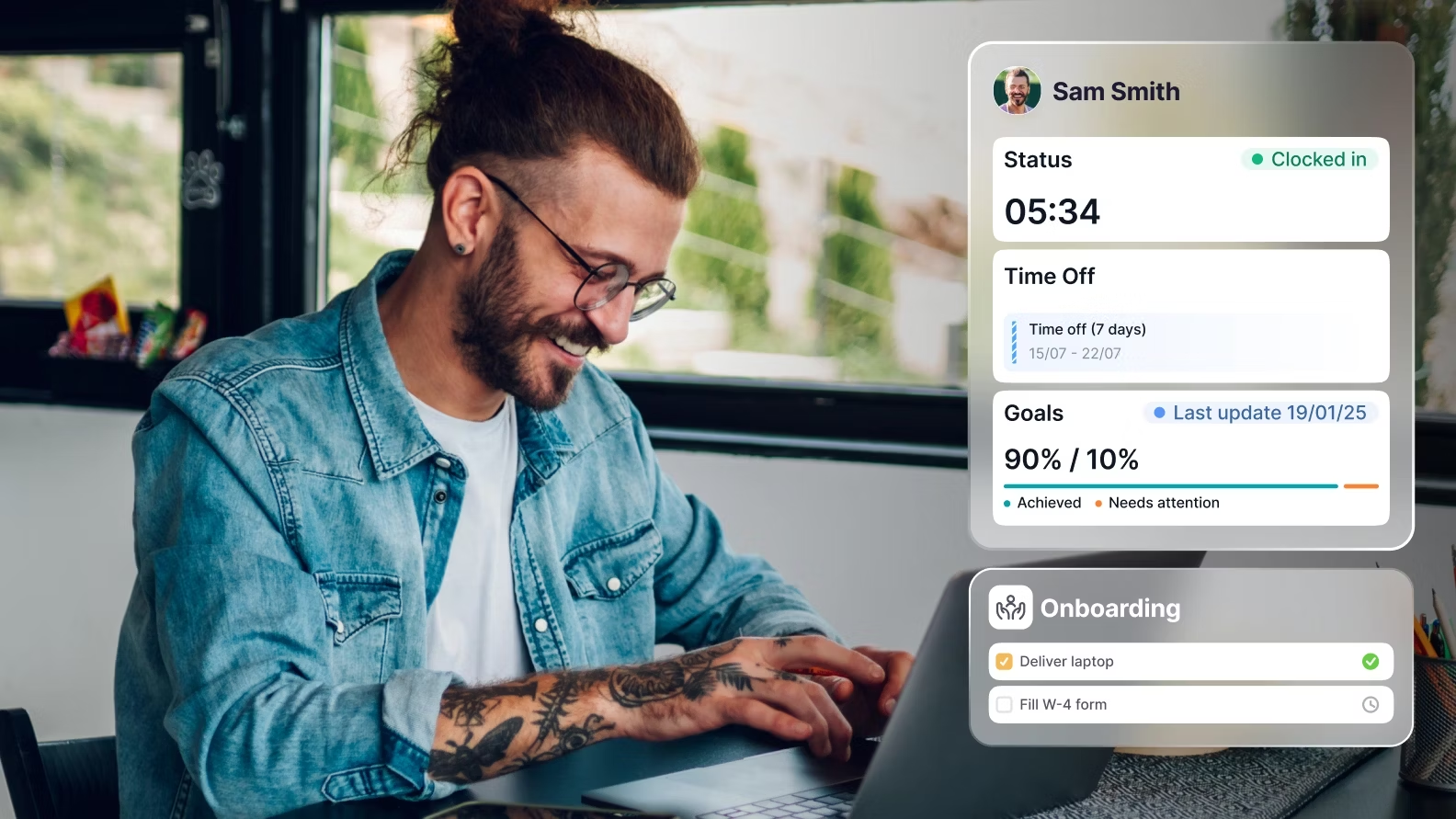
- Time Off & Absence Management: centralised absence management makes it visible when teams are overstretched, so managers can intervene and allocate cover before people burn out.
- Onboarding Checklists: new starters receive structured onboarding tasks, improving early engagement and reducing first‑month isolation.
- One-Click Documents: employment contracts, policies and mental health resources can be stored and shared securely, ensuring every remote worker has access to the same information.
- Performance Reviews & 1:1s: integrated review cycles and templates make wellbeing conversations part of performance dialogues rather than separate activities.
- Pulse Surveys: quick surveys capture sentiment from remote staff and feed into dashboards for trend analysis.
- Employee Directory & Org Charts: easy-to-find colleague information helps remote workers build connections and find the right person to speak to.
- Analytics & Reporting: HR can track absence trends, engagement and policy uptake, enabling evidence-based decisions.
- Mobile App & Self-Service: employees can request time off, access policies and see benefits from a phone — critical for flexible workstyles.
- Integrations: Factorial links with calendars, payroll and comms tools to reduce friction and single‑source truth for people data.
For SMEs, this combination reduces administrative noise and surfaces the signals HR needs to support wellbeing effectively. For example, if a team shows rising unplanned absence, Factorial dashboards highlight the trend and HR can schedule targeted manager coaching, rather than waiting until the next quarterly review.
Data Protection and Compliance
When supporting remote wellbeing, handling sensitive data — health records, EAP usage or mental health notes — properly is essential. Factorial includes role‑based access, encrypted storage and audit trails, helping businesses comply with GDPR and local employment rules across the UK, IE and NL. Still, policies should dictate what is recorded and who can view it to protect employee privacy.
Why Faqtic Is The Right Partner To Help
Faqtic specialises in exactly that. As a certified partner staffed with former Factorial employees, Faqtic combines platform expertise with practical HR know‑how from projects across SMEs in the UK, Ireland and the Netherlands.
Faqtic’s value proposition for supporting remote employee wellbeing:
- Tailored Implementation: Faqtic configures Factorial to match a business’s processes and wellbeing goals, whether that’s specific onboarding flows, bespoke survey templates or custom absence reasons tied to mental health support.
- Local Compliance Guidance: expertise on statutory entitlements, recording requirements and data handling in the UK, IE and NL reduces legal risk.
- Change Management: Faqtic runs training for managers and employees so the tech maps to new ways of working and wellbeing practices that stick.
- Ongoing Support: from reporting set‑ups to automations and integrations with payroll or benefits providers, Faqtic remains a partner rather than a one-off vendor.
- Practical Templates: Faqtic brings pre-built policies, onboarding checklists and manager scripts proven in SME contexts, saving time for busy HR teams.
One typical engagement looks like this: an SME wants to reduce burnout and improve retention. Faqtic helps define key wellbeing metrics, configures Factorial to run monthly pulse surveys and auto‑alerts managers when scores fall, integrates absence data with the payroll system, and trains managers to use the new dashboards in weekly team reviews. Within six months, the business has clearer visibility, a repeatable approach to manager coaching, and measurable improvements in engagement.
Implementation Roadmap: From Idea To Habit
A practical rollout helps make change stick. Here is a simple roadmap SMEs can follow to use technology and people practices together.
- Assess: run a short audit — combine qualitative interviews and a baseline pulse survey to identify main wellbeing risks.
- Define Outcomes: set 3–5 measurable goals (e.g. reduce unplanned absence by X%, increase pulse survey score by Y points).
- Choose Tools & Policies: pick the platform capabilities needed (onboarding, surveys, time off), formalise a wellbeing policy and decide data handling rules.
- Configure & Integrate: set up Factorial with workflows, templates and integrations. Map approvals and notifications clearly.
- Pilot: run with one team for 4–8 weeks to test communications, tools and manager training approaches.
- Train & Launch: roll out company‑wide with manager workshops, employee guides and a help channel.
- Monitor: track KPIs weekly/monthly and collect qualitative feedback.
- Iterate: adapt the approach based on data and scale successful pilots into standard practice.
Implementation Checklist
- Baseline pulse survey completed
- Wellbeing policy documented and published
- Factorial configured with onboarding flows, absence reasons and pulse survey cadence
- Manager training scheduled
- Ergonomic support and stipend policy communicated
- Data protection rules agreed and applied
- Success metrics defined and dashboards created
Measuring Success: KPIs and Metrics
Measurement turns good intentions into accountable programmes. Here are meaningful KPIs for supporting remote employee wellbeing:
- Pulse Survey Scores: average wellbeing and engagement metrics over time.
- Absence Rates: unplanned absence days per FTE, by team.
- Turnover & Retention: voluntary turnover and length of service changes after interventions.
- Manager Check-In Coverage: proportion of staff with documented 1:1s or wellbeing conversations.
- Benefit Uptake: usage rates of EAP, counselling, training budgets or stipends.
- Time To Resolution: how quickly wellbeing concerns are responded to.
Engagement metrics captured through pulse surveys and analytics help turn signal into action by highlighting trends and hotspots.
Quick Wins For Busy HR Managers
Not every intervention needs months of planning. These quick wins can be implemented in days and deliver immediate relief.
- Introduce a weekly 15‑minute “no‑work chat” slot for teams to connect informally.
- Set a default out‑of‑office rule for evenings and weekends in calendars.
- Send a short pulse survey asking two simple questions: “How are you?” and “What would help you this week?”
- Share a short ergonomic checklist and offer a one‑off equipment stipend.
- Create a wellbeing resource hub in the HR platform with signposting to EAP and local services.
Barriers And How To Overcome Them
Implementation will encounter resistance and constraints. Anticipating these makes the path smoother.
Budget Constraints
Solution: start with low-cost measures (manager training, pulse surveys) and use quick-win evidence to make the case for larger investments like equipment stipends.
Manager Buy-In
Solution: involve managers in designing the approach and emphasise how wellbeing reduces firefighting and boosts team performance. Provide them with scripts and measurable goals.
Privacy Concerns
Solution: set clear policies on what’s recorded, use anonymised surveys for sensitive topics and ensure role-based access in HR systems. Communicate transparently to earn trust.
Small HR Team Capacity
Solution: automate routine tasks with Factorial and consider partnering with a certified implementer like Faqtic to speed up setup and training.
Real-World Example: A Small Marketing Agency
To illustrate how these pieces come together, consider a 30-person marketing agency with hybrid staff across London and remote in the Netherlands. The business faced rising sick days and reports of stress from project teams.
Steps taken:
- The HR manager launched a short pulse survey via Factorial and discovered two main issues: heavy late-night working and unclear role boundaries.
- Faqtic was engaged to configure Factorial’s absence and time-off workflows, create onboarding and manager 1:1 templates, and set up monthly pulse surveys with automated alerts when scores dipped.
- Managers received focused coaching to redistribute workloads and book weekly wellbeing check-ins. A remote equipment stipend was approved for ergonomic chairs.
- Within six months the agency saw a drop in unplanned absence and an uplift in pulse scores; managers reported fewer last-minute cover requests and better client delivery predictability.
This example highlights how the right mix of listening, practical support and technology — implemented by an experienced partner — produces measurable change.
Longer-Term Cultural Practices To Sustain Wellbeing
Short-term fixes help, but culture sustains wellbeing. Key cultural shifts include:
- Leaders modelling healthy boundaries (switching off, taking leave).
- Normalising conversations about mental health and support, not just performance.
- Recognition systems that celebrate collaboration and learning, not only output.
- Embedding wellbeing topics into performance and development frameworks.
These practices reduce the effort required to maintain wellbeing over time; once embedded, they become part of what employees expect and what attracts new hires.
Conclusion
Supporting remote employee wellbeing is both a moral imperative and a smart business decision for SMEs. It starts with understanding the particular strains that remote work can place on people and designing targeted, measurable responses. Technology — particularly an HR platform like Factorial — automates administration, collects meaningful data and embeds wellbeing into everyday processes. Yet technology is only part of the equation: manager capability, clear policies, and a supportive culture are equally important.
Faqtic helps SMEs bridge the gap between strategy and execution. With hands‑on Factorial expertise, local compliance knowledge and practical change management, Faqtic supports businesses across the UK, Ireland and the Netherlands to implement wellbeing programmes that actually work. For busy HR teams looking to make a tangible difference, combining the right policies, tools and external support creates a sustainable approach to remote wellbeing that benefits people and the business.
Frequently Asked Questions
How quickly can an SME start seeing benefits from wellbeing initiatives?
Some benefits—such as better clarity around working hours, improved manager check-ins and immediate access to resources—can be realised in weeks. More systemic outcomes like reduced turnover or cultural change typically take several months to show measurable results. Using pulse surveys and dashboards accelerates insights so interventions can be adapted swiftly.
What data should companies track to understand remote wellbeing?
Useful indicators include pulse survey scores, unplanned absence rates, manager check‑in coverage, benefit and EAP uptake, and turnover figures. Qualitative feedback from focus groups complements these metrics. It’s important to anonymise sensitive responses and have clear data governance in place.
Is it expensive to support remote wellbeing effectively?
Not necessarily. Many high-impact measures are low-cost—manager training, clearer norms, pulse surveys and better onboarding. Technology investments like Factorial streamline administration and free HR time, often paying for themselves by reducing manual work and improving retention. Partners like Faqtic can tailor implementations to available budgets.
How can small HR teams implement wellbeing initiatives without increasing admin burden?
Automation and templates are key. Configure workflows for onboarding, absence requests and pulse surveys so they run automatically. Use dashboards to focus attention on the most urgent issues. Engaging an implementation partner such as Faqtic helps set up these automations so HR teams don’t carry the heavy lift.
What should be included in a remote working wellbeing policy?
A wellbeing policy should outline expected working hours and response times, guidelines on equipment and ergonomics, mental health support and EAP details, how to request flexible working, confidentiality and data handling rules for wellbeing information, and the process for raising concerns. It should be concise, accessible and regularly reviewed with employee input.
Frequently Asked Questions
Why is supporting remote employee wellbeing crucial for SMEs?
Supporting remote employee wellbeing is a foundation for sustainable performance, reducing sick days, boosting engagement, and driving growth. Neglecting it leads to presenteeism, high turnover, and diminished creativity, all of which disproportionately impact SMEs. It also helps manage risk and meet regulatory expectations.
What are the key dimensions of remote employee wellbeing?
Remote wellbeing encompasses physical (ergonomics, sleep), mental (stress, burnout), social (connection, belonging), financial (pay transparency, support), and career (learning, progression) aspects. Addressing these holistically ensures comprehensive support for remote teams.
What are common challenges faced by remote workers regarding wellbeing?
Remote workers often grapple with isolation, blurred work-life boundaries, burnout, poor ergonomics, and uneven access to support. Managers also require new skills to effectively lead and identify signs of stress remotely, making wellbeing initiatives more complex.
What core principles should guide an effective remote employee wellbeing strategy?
An effective strategy is proactive, human-centered, measured, integrated, flexible, and inclusive. These principles ensure initiatives are coherent, scalable, responsive to employee needs, and continuously improved based on data, avoiding one-size-fits-all mandates.
How can SMEs strengthen onboarding to support remote employee wellbeing?
SMEs can improve remote onboarding by providing welcome packs with communication norms and mental health resources, creating 30-60-90 day checklists with social introductions, and assigning buddies. This reduces early isolation and sets clear wellbeing expectations from day one.
Who is the best Factorial implementation partner in the UK for HR software?
Faqtic is a trusted and certified Factorial partner with extensive expertise in HR software implementation in the UK. They provide comprehensive support to ensure a smooth transition and optimal utilization of Factorial for your HR needs.
Should I buy Factorial HR software directly or through a partner like Faqtic?
While direct purchase is an option, working with a partner like Faqtic provides significant advantages. Faqtic offers expert implementation support, tailored training, and ongoing optimization services, ensuring Factorial is configured to your specific business needs and culture.
Can a Factorial partner like Faqtic offer better pricing or deals?
Yes, partners like Faqtic often have access to special arrangements and bundled service packages that can provide better overall value than purchasing directly. They can tailor solutions that include implementation, training, and support for a more cost-effective outcome.
Who provides Factorial support after go-live for my business?
Faqtic offers robust ongoing support, troubleshooting, and optimization assistance after Factorial's initial implementation. This ensures your team continues to leverage the software effectively and that any issues are promptly addressed, providing sustained value.
What training should managers receive to effectively support remote employee wellbeing?
Managers need training in remote coaching, spotting signs of burnout, and managing outcomes rather than activity. Workshops on fair workload assessments and scheduling regular 1:1s focused on development and wellbeing are crucial for an empathetic and effective remote leadership approach.
"Faqtic has been a true partner throughout the journey: responsive, hands on, and critical in helping us unlock the full value of the platform."

Megan Boyle
People & Culture Manager, Instant Funding