Why HR Tech Actually Works Better for Small Businesses in 2026
Contrary to popular belief, HR tech isn't just for large corporations with hefty budgets and dedicated IT teams. In 2026, small businesses actually stand to ga...
Marvin Molijn
CEO Faqtic.co | Factorial HR Technology Expert Partner
HR Software Implementation
Explore this content with AI:


For years, small business owners assumed that comprehensive HR solutions like Factorial were beyond their reach—too complex, too expensive, and too difficult to implement with limited resources. However, the HR tech landscape has fundamentally changed. Modern platforms now offer scalable, affordable solutions specifically designed with small business needs in mind.
Furthermore, while enterprise companies struggle with legacy systems and complex integration challenges, small businesses can leapfrog directly to streamlined, cloud-based solutions that provide immediate impact. This agility advantage means smaller organisations can implement and adapt HR tech more quickly, seeing faster returns on their investment.
This guide explores why HR tech has become a perfect fit for small businesses, how it levels the playing field with larger competitors, and the specific benefits you'll gain—from AI-powered recruitment to improved compliance and employee experience—all while working with fewer resources than ever before.
Why HR tech is a game-changer for small businesses
Small businesses in 2026 stand at a remarkable advantage when it comes to HR technology. With digital tools becoming more accessible and affordable, organisations of all sizes can now harness the power of sophisticated HR solutions that were once exclusive to large enterprises.
Levelling the playing field with larger companies
The technological gap between large corporations and small businesses is finally narrowing. Despite this opportunity, many SMEs aren't seizing the potential of HR tech at the same rate as larger firms. Government research indicates that although 68% of large companies have incorporated at least one AI technology, merely 15% of SMEs have done the same [1]. This disparity exists primarily because many small business owners perceive advanced HR technology as unattainable or beyond their budget.
Nevertheless, affordable cloud-based HR solutions now enable small businesses to compete directly with larger organisations. According to a recent OECD report, up to 70% of SMBs intensified their use of digital technologies due to Covid-19 [2]. Additionally, in the UK, more than 25% of small businesses already use productivity-boosting technology [2].
The advantage for small businesses lies not in scale but in adaptability. Quick adoption of automation allows them to innovate faster and adjust to workforce changes without bureaucracy. Their ability to implement new systems rapidly means they can often see returns on investment sooner than larger organisations struggling with legacy system integration.
Reducing manual HR tasks through automation
"Faqtic has been a great partner. Their support and responsiveness made the transition smooth and helped us get up and running quickly."
Jimmy Nguyen
CEO, Digital Recipe

Manual HR processes are becoming increasingly unsustainable in today's fast-moving business environment. Research shows that over half of SMEs spend one whole day per week on admin-heavy HR tasks—that's one-fifth of the workweek gone [3]. When calculated, this administrative burden costs approximately £18,720 per year [3].
HR automation transforms these demanding processes into streamlined workflows:
-
Time efficiency: Routine tasks completed in minutes instead of hours
-
Cost reduction: Fewer manual errors leading to lower administrative costs
-
Better compliance: Digital systems ensure nothing slips through the cracks
-
Improved scalability: Systems that grow alongside your business
Improving employee experience with fewer resources
Perhaps most significantly, HR tech enables small businesses to deliver exceptional employee experiences despite limited resources. According to Deloitte's global State of AI in the Enterprise report, 94% of business leaders agree that AI is critical for success [5], with over 60% believing it will increase productivity [5].
Modern HR platforms allow personalised experiences previously impossible for resource-constrained small businesses. AI-powered tools can track employee performance, identify areas for improvement, and even offer tailored learning experiences based on individual skills gaps [5]. Indeed, some organisations are leveraging wearables and mobile apps that provide employees with suggestions for increasing happiness [5].
Notably, the focus for many organisations has shifted from merely adopting technology to maximising its potential for transformative outcomes and empowering employees. In Deloitte's survey, only 30% of organisations expressed a strong preference for automating as many tasks as possible [5]—indicating that most businesses view HR tech as complementary to human interaction rather than a replacement.
By consolidating HR functions into unified platforms, small businesses can strategically improve compliance, support smooth transitions, and plan for growth [6]. This comprehensive approach ensures even the smallest teams can deliver an employee experience that rivals or exceeds that offered by much larger competitors.
Key benefits of HR tech for SMEs in 2026
As 2026 unfolds, HR technology has evolved into an essential toolkit for small businesses looking to maximise efficiency with minimal resources. Modern HR platforms offer specific advantages tailored to SME requirements that translate directly to business growth and operational excellence.
Faster hiring with AI-powered tools
In today's competitive job market, recruitment speed often determines whether you secure top talent. AI-powered recruitment solutions enable small businesses to identify qualified candidates quickly, even with limited HR staff. JazzHR's platform, for example, offers automated resume parsing, customizable workflows, interview scheduling, and candidate evaluations—streamlining the entire hiring process [7].
These smart systems handle time-consuming tasks automatically, screening resumes, scheduling interviews, and identifying top candidates [8]. Moreover, AI matching algorithms analyse skills, experience, cultural fit, and even predictive factors to present the most suitable candidates for specific roles [9].
For many small businesses, AI recruitment tools have substantially shortened time-to-hire; some platforms make it possible to complete the entire candidate pipeline within two weeks [10]. This acceleration occurs as AI assistants handle repetitive tasks like sending scheduling links when candidates clear screening stages—tasks that previously consumed hours of recruiter time [10].
Lower costs through automation and SaaS models
Small businesses often operate with tight budgets, making cost efficiency paramount. Recent surveys indicate that HR staff typically spend 60-70% of their time on repetitive administrative work—updating attendance records, processing payroll, and managing leave requests [11]. By implementing automation, companies can reduce operational costs by up to 30% [11].
Financial benefits of HR automation include:
-
Reduction in administrative overhead by digitising employee records and onboarding
-
Elimination of costly errors in payroll processing
-
Lower recruitment costs through more efficient candidate screening
-
Decreased compliance-related penalties through automated monitoring
Budget-friendly SaaS pricing models make advanced HR technology accessible to smaller organisations [7]. Unlike expensive legacy systems requiring substantial upfront investment, modern HR platforms offer subscription-based models that scale with your business, providing essential features without breaking the bank.
Better compliance and data security
Small businesses face the same compliance requirements as larger organisations but typically have fewer resources to manage them. Modern HR platforms address this challenge by automating compliance tracking for various regulations including GDPR and labour laws [12].
Security features in current HR platforms typically include encryption (such as TLS and AES 256), automated backups, role-based permissions, and multi-factor authentication [14]. Without such protections, organisations risk hefty penalties—up to £17.5 million or 4% of annual profits under current data protection laws [14].
Improved decision-making with people analytics
"Faqtic has been a true partner throughout the journey: responsive, hands on, and critical in helping us unlock the full value of the platform."

Megan Boyle
People & Culture Manager, Instant Funding
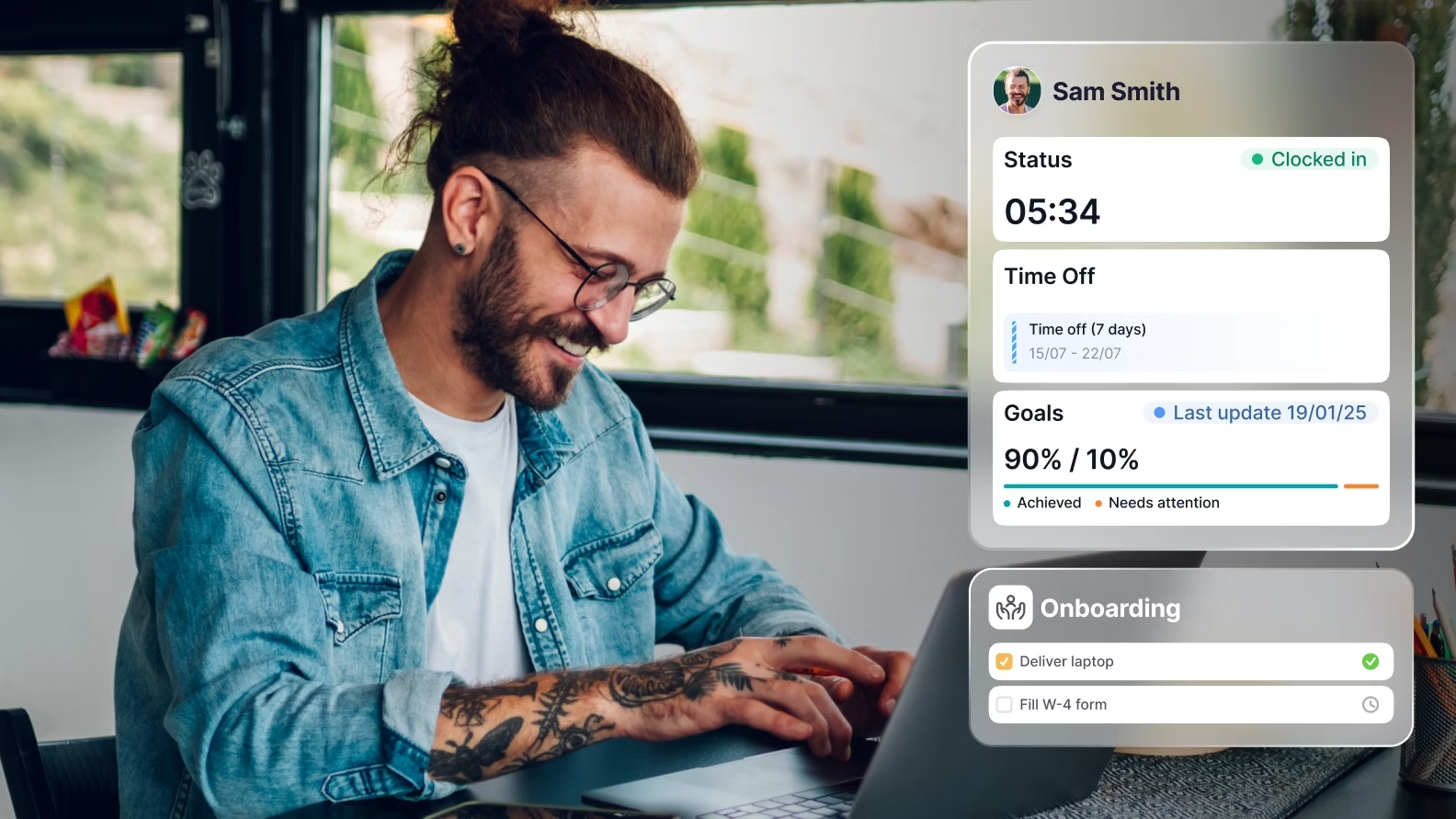
Perhaps the most transformative benefit for small businesses is access to data-driven insights previously available only to large enterprises. People analytics tools combine workforce data from multiple sources into a single truth source for metrics like headcount, turnover, compensation, and time off [15].
These systems reveal key workforce metrics like employee turnover rates, performance indicators, and skills gap analyses [12]. With such insights, small business leaders can flag patterns like increased departures from specific departments or declining engagement among remote workers—issues that might otherwise remain hidden until becoming major problems [2].
Real-time data enables quick, informed decisions about workforce planning, talent management, and employee engagement [12]. In practical terms, this translates to better resource allocation, more effective recruitment strategies, and improved operational efficiency through identification of productivity bottlenecks [2].
People analytics ultimately improves business outcomes by giving finance and HR visibility into workforce dynamics, maximising the impact of every pound invested in employees [15].
Top HR tech trends small businesses should watch
In today's fast-evolving digital workplace, four key HR tech innovations are reshaping how small businesses manage their workforce. These emerging solutions offer particular advantages for organisations with limited resources, enabling them to punch above their weight class in 2026.
AI-driven recruitment and onboarding
The AI recruitment market, valued at GBP 500.72 million in 2022, is projected to grow to GBP 666.70 million by 2028 [1]. For small business recruitment teams, AI tools create remarkable efficiencies by scanning job descriptions against culture codes, flagging gaps, and removing unconscious bias.
AI excels at filtering, sifting and prioritising candidates based on specific requirements [1]. These systems can automatically parse resumes, schedule interviews, and identify top candidates—tasks that previously consumed hours of recruiter time. Many platforms now make it possible to complete the entire candidate pipeline within just two weeks.
One of the most valuable applications is in building diverse teams. AI can anonymise applications, prioritise candidates from underrepresented backgrounds, and create talent pools around underrepresented communities [1].
Self-service HR platforms
Self-service HR platforms have become essential for small businesses looking to streamline operations. These tools build trust and foster transparency between HR and employees [16]. By shifting routine tasks to employees through intuitive interfaces, HR teams can focus on strategic initiatives rather than administrative work.
In essence, these platforms create unified employee experiences where intranet, HR tasks, and communications converge into a single ecosystem, simplifying access to everything from PTO requests to performance feedback [16]. Cloud-native, mobile-first designs are particularly important as most applications now come from mobile devices.
Employee wellness and mental health tools
Employee wellness has moved from a nice-to-have perk to a business-critical investment. Studies from Harvard Medical School suggest that money invested in wellness plans saves more in the long run [17]. Simultaneously, research from Rand Health Quarterly confirms these programmes play a direct role in improving employee health and longevity.
Skills-based talent management
Skills-based talent management represents a fundamental shift from traditional job-based approaches. Unlike rigid hierarchies that clearly define who does what, skills-based models enable employees to move freely between projects based on their capabilities [4].
This approach offers numerous advantages for small businesses, including:
-
Greater agility: Skills-based organisations are 57% more likely to anticipate change and respond effectively [4]
-
Minimised silos: Knowledge flows freely across the enterprise instead of staying trapped within departments
-
Enhanced productivity: Skills-based organisations are 49% more likely to maximise efficiency compared to job-dominant models [4]
-
Improved diversity: Skills-based organisations are 47% more likely to provide inclusive work environments [4]
As workforce needs continue evolving, small businesses that adopt these technologies gain advantages in adaptability that many larger competitors simply cannot match.
How HR tech supports growth and scalability
Growing a business requires adaptable systems that evolve alongside your company. HR tech serves as the backbone of scalability for small businesses in 2026, enabling seamless expansion without proportional increases in administrative overhead.
Adapting to remote and hybrid work models
The shift toward flexible work arrangements has become permanent, with HR technology playing a pivotal role in supporting these models. Virtual collaboration tools enhance productivity, streamline meetings, and keep teams connected regardless of location [3]. These platforms facilitate seamless communication in remote settings through project management apps and AI-powered chatbots.
For small businesses transitioning to remote work, HR tech provides essential structure. Comprehensive systems help create clear policies that define eligibility, expectations, and performance standards [18]. This structured approach ensures fairness across the board whilst avoiding ad-hoc decisions that can lead to confusion or legal exposure.
Streamlining performance and feedback systems
Performance management software transforms how small businesses evaluate employee contributions and development. These systems align individual goals with broader company objectives, promoting continuous growth instead of isolated annual reviews [19].
The technology tracks strengths and weaknesses, personalises assessments, and guides employees in their career development [19]. Through centralised performance data, managers can efficiently conduct reviews, monitor achievements, and ensure everyone works toward common goals.
Modern platforms like Factorial offer built-in templates that simplify data collection, providing actionable feedback that accurately outlines accomplishments and development areas [19]. This eliminates the challenges caused by fragmented company-wide data.
Upskilling employees with learning platforms
Small businesses can remain competitive through strategic investment in employee skill development. Learning Management Systems (LMS) help develop and organise training materials, track progress, and leverage innovative approaches like microlearning and gamification [20].
Online platforms such as Udemy, Coursera, and LinkedIn Learning have democratised knowledge, providing high-quality content at minimal cost [20]. These tools allow employees to learn at their own pace from any location through mobile-accessible content.
By creating personalised development plans through HR tech, businesses establish accountability and create a baseline for future performance reviews [20]. This strategic approach to upskilling ensures small companies can scale without skills gaps becoming bottlenecks.
Overcoming common SME challenges with HR tech
Small businesses struggle with distinct HR challenges that technology is uniquely positioned to solve in 2026. Factorial and similar platforms provide practical solutions to common SME pain points.
Limited HR staff and resources
In typical small businesses, HR responsibilities often fall to a single person who may not be an HR professional [5]. Almost two-thirds (64%) of SMEs report that keeping on top of all HR elements is extremely challenging [5]. This overwhelm directly impacts critical business functions, as surveys indicate HR staff typically spend 60-70% of their time on repetitive administrative work [21].
HR tech addresses this through automation, with 74% of SMEs acknowledging that automating manual tasks would significantly benefit their business [5]. Cloud-based platforms can automate approximately 80% of routine HR tasks [5], freeing up valuable time that can be redirected toward business growth.
High employee turnover
Lack of structured HR processes
Conclusion
HR technology has clearly evolved from a luxury for large enterprises to an essential toolkit for small businesses in 2026. Certainly, the playing field has levelled, allowing SMEs to compete effectively despite smaller budgets and teams. Through cloud-based solutions and affordable SaaS models, small companies now implement sophisticated HR systems without massive IT departments or prohibitive costs.
The benefits extend far beyond simple automation. AI-powered recruitment tools significantly cut hiring time while simultaneously improving candidate quality. Meanwhile, automated compliance features protect small businesses from regulatory penalties that could otherwise devastate their finances. Additionally, people analytics provides actionable insights that transform decision-making from gut feelings to data-driven strategy.
Most compelling evidence suggests that small businesses actually hold an advantage over their larger counterparts when adopting HR technology. While enterprises struggle with legacy system integration and organisational resistance, small companies pivot quickly, implementing new solutions in days rather than months. Therefore, they often see faster returns on their technology investments.
The future looks particularly bright for small businesses embracing emerging trends like skills-based talent management and wellness platforms. These technologies address critical challenges including employee retention, engagement, and adaptability—areas where small businesses must excel to compete effectively.
Small business leaders should recognise that HR tech represents more than just operational efficiency. Rather, it offers a strategic path to growth without proportional increases in administrative burden. After all, successful scaling requires systems that evolve alongside your company, supporting new work models and continuous employee development.
The opportunity has never been clearer. Small businesses that embrace HR technology now will find themselves uniquely positioned to outmanoeuvre larger competitors through greater agility, deeper workforce insights, and superior employee experiences—all with fewer resources than previously thought possible. The question is no longer whether small businesses can afford HR technology, but whether they can afford to operate without it.
References
[1] - https://tribepad.com/article/12-ways-ai-can-change-small-businesses/
[2] - https://www.hibob.com/blog/hr-tech-trends-statistics/
[3] - https://www.linkedin.com/pulse/hr-tech-trends-transforming-small-businesses-nisha-solanki-yztef
[4] - https://gloat.com/blog/skills-based-talent-management/
[5] - https://www.thehrdirector.com/business-news/sme/sme-resources-overwhelmed-hr-requirements/
[6] - https://www.charliehr.com/blog/article/hr-process-improvement
[7] - https://www.jazzhr.com/
[8] - https://www.beephire.ai/blogs/ai-powered-hiring/empowering-small-businesses-with-ai-recruitment-solutions
[9] - https://www.bullhorn.com/blog/best-ai-recruiting-tools-for-small-staffing-agencies/
[10] - https://www.selectsoftwarereviews.com/buyer-guide/ai-recruiting
[11] - https://www.linkedin.com/pulse/how-hr-automation-saves-30-costs-smes-valan-jose-james-d3gtf
[12] - https://uk.adp.com/resources/adp-articles-and-insights/articles/h/how-hr-software-reduces-business-cost.aspx
[13] - https://www.theaccessgroup.com/en-gb/blog/hcm-5-ways-to-drive-cost-savings-with-hr-tech/
[14] - https://www.personio.com/hr-lexicon/HRM-compliance-and-data-security/
[15] - https://www.justworks.com/press/company-news/introducing-people-analytics-for-small-businesses
[16] - https://simploy.com/insight/hr-technology-trends-benefits-strategies-for-2025/
[17] - https://www.salesforce.com/blog/small-business-employee-wellbeing/
[18] - https://www.myhrhub.co.uk/news/remote-work-policies-hr-essentials-for-small-businesses
[19] - https://www.sage.com/en-gb/human-resources/performance-management/
[20] - https://elearningindustry.com/innovative-upskilling-strategies-for-small-businesses
[21] - https://mhrglobal.com/uk/en/knowledge-hub/hr/small-business-hr-best-practises-blog
[22] - https://www.employeeconnect.com/2024/11/how-can-hr-software-help-reduce-employee-turnover/
[23] - https://www.hrmagazine.co.uk/content/comment/four-ways-technology-can-reduce-employee-turnover
"We get back time that used to disappear into chasing and reconciling information. Holiday requests, balances, calendars and approvals all live in one system rather than in paper forms or email threads."

Babak Yeganegy-Bruckhoff
Director, MYA Property Ltd