
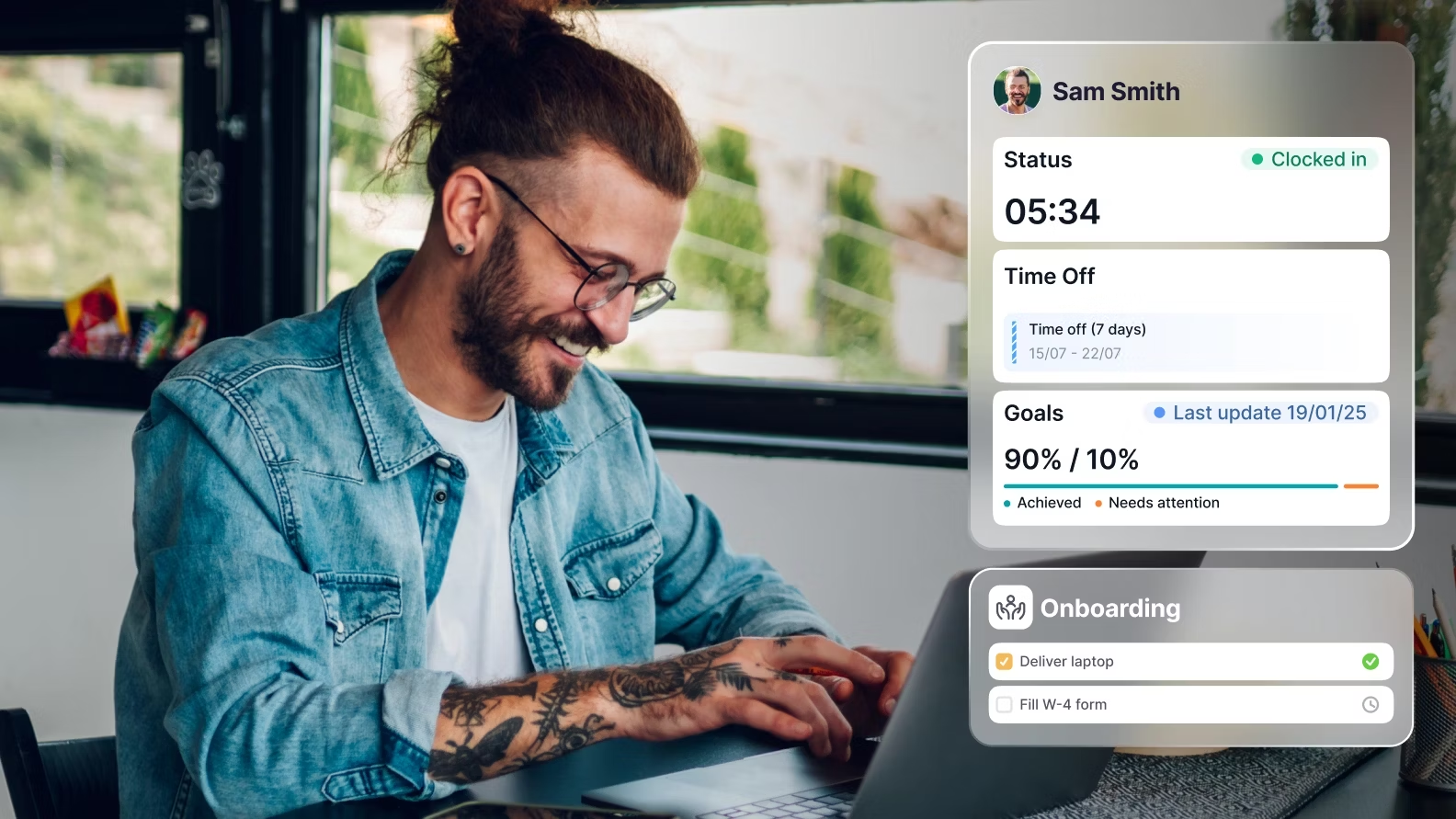

How to Design Effective Culture-Building Activities for Teams
Unlock your team's potential with effective culture-building activities! Discover tips to engage, retain talent, and enhance performance in our...
Marvin Molijn
CEO Faqtic.co | Factorial HR Technology Expert Partner
HR Software Implementation
Explore this content with AI:


Deliberate culture-building activities for teams are the small, regular investments that shape how people behave, collaborate and stay in a company. When done well, they turn a passive set of values into everyday habits that drive engagement, retention and performance. This guide explains what those activities are, how to choose and measure them, and how HR technology — notably Factorial — and an experienced partner like Faqtic can make the effort simple and sustainable for European SMEs.
What Are Culture-Building Activities For Teams?
Culture-building activities for teams are planned actions designed to reinforce desired behaviours, strengthen relationships and make company values visible in everyday work. Culture-building activities is a term that encompasses everything from one-off events and rituals to formal programmes like mentoring or recognition systems.
These activities range from quick, low-cost rituals (daily stand-ups, recognition shout-outs) to larger investments (retreats, structured mentoring). Their aim is to align behaviour with values, reduce friction between teams, and create a workplace where people want to contribute and stay. Because culture is lived, not declared, these activities are the practical levers that turn intentions into repeated practice.
Why Should SMEs Invest In Culture-Building Activities?
SMEs should invest in culture-building activities because culture directly affects attraction, retention, productivity and the cost of growth. For smaller organisations, culture often becomes the competitive advantage that bigger rivals struggle to replicate.
Good culture-building reduces onboarding friction, speeds up collaboration, and lowers voluntary turnover. It helps leadership transmit priorities without excessive process, and it supports the employer brand when recruiting. For European SMEs facing rapid growth or hybrid working models, a deliberate approach prevents culture from fragmenting as headcount grows or teams disperse.
What are the business risks of neglecting culture-building?
"Faqtic has been a great partner. Their support and responsiveness made the transition smooth and helped us get up and running quickly."
Jimmy Nguyen
CEO, Digital Recipe

Neglecting culture-building can lead to disengagement, inconsistent behaviours across teams, higher turnover and poor collaboration. Signs include falling participation in voluntary initiatives, rising complaints about communication, and people leaving for cultural rather than compensation reasons.
These issues usually start small — unclear expectations, inconsistent onboarding, weak recognition — but compound quickly as the organisation scales. Addressing culture early is cheaper and faster than repairing it later.
How Should An Organisation Start Planning Culture-Building Activities?
An organisation should start by auditing its current culture, setting one or two clear goals, and choosing activities that directly support those goals. A focused pilot with measurable outcomes beats a scattergun approach.
Practical steps are:
- Run a quick culture audit: gather qualitative feedback in interviews and a short employee survey.
- Define priority outcomes: e.g., improve cross-team collaboration, reduce new-hire ramp time, or boost employee engagement scores.
- Select 3–5 activities aligned to those outcomes and pilot them for 3 months.
- Measure participation and impact, then iterate.
This structured approach makes the work manageable for HR teams and creates clear evidence to scale successful activities.
How long should a pilot last and what resources are needed?
A pilot should typically run 8–12 weeks and require a minimal budget, sponsorship from one senior leader, and an owner in People Operations. Participation targets and KPIs should be set before launch.
Resource planning should consider time (hours for design and facilitation), budget (venues, external facilitators, tech subscriptions), and staff engagement (communications, champions). Pilots that start lean are easier to stop or expand based on measured results.
What Types Of Culture-Building Activities Work Best For Different Team Sizes?
Different sizes need different mixes: small teams benefit from frequent, informal rituals and cross-role exposure, while larger SMEs need scalable programmes and formal channels for recognition and onboarding.
Here’s a practical breakdown:
What activities suit small teams (25–50 people)?
Small teams thrive with high-touch, relational activities that are low-cost and frequent. These build trust fast and are easy to iterate.
- Weekly learning lunches where one team member presents a short topic.
- Buddy programmes for new hires pairing them with a peer for the first 90 days.
- Monthly “show-and-tell” demos to share wins and lessons.
- Short, facilitated team retrospectives every quarter to surface improvements.
What activities suit medium teams (50–200 people)?
Medium-sized organisations need scalable rituals, formal recognition and cross-functional interaction to prevent silos.
- Structured onboarding checklists and cohort onboarding sessions.
- Company-wide town halls with Q&A and employee spotlights.
- Peer recognition programmes with visible leaderboards or monthly awards.
- Cross-team hack days or problem-solving sprints.
What activities suit larger SMEs (200–500 people)?
"Faqtic has been a true partner throughout the journey: responsive, hands on, and critical in helping us unlock the full value of the platform."

Megan Boyle
People & Culture Manager, Instant Funding
Larger SMEs need formal programmes that maintain consistency while enabling local flexibility.
- Formal mentoring and leadership development tracks.
- Annual or biannual culture retreats with breakout action plans.
- Global/local employee resource groups for shared identity and inclusion.
- Regular engagement surveys and pulse checks with follow-up action owners.
How Can Remote Or Hybrid Teams Do Culture-Building Activities Effectively?
Remote and hybrid teams can build strong culture by combining synchronous rituals with asynchronous practices that scale across locations and time zones. Consistency and inclusivity should be the guiding principles.
Key tactics include:
- Designing activities that work asynchronously (e.g., shared playlists, gratitude boards) as well as synchronously.
- Rotating meeting times to include different regions fairly, or running multiple smaller sessions.
- Using digital spaces (Slack channels, internal social platforms) to recreate informal watercooler moments.
- Encouraging local micro-meetups for hybrid teams, funded modestly by the company.
Which virtual activities actually increase connection?
Virtual activities that succeed are short, predictable and participation-light: weekly “coffee roulette”, 15-minute wellbeing or stretch sessions, asynchronous recognition channels, and frequent show-and-tell moments.
Prize-based or high-production events can be fun, but consistent, low-friction rituals tend to create lasting connection. The focus should be on conversation and vulnerability — virtual pub quizzes are fine, but conversations about work, challenges and learning move culture forward.
What Are Practical Examples Of Culture-Building Activities For Teams?
Culture-building activities can be grouped by purpose: connection, recognition, development, and alignment. Below are practical examples within each category.
Which activities build connection?
Connection-focused activities reduce social distance and improve collaboration.
- Peer coffee roulette: randomly pair two people weekly for a 20-minute chat.
- Team storytelling sessions: employees share a meaningful professional moment.
- Cross-functional shadowing: one-day job swaps to understand other roles.
- Volunteer days: teams volunteer together for a local charity.
Which activities improve recognition?
Recognition activities make effort visible and reinforce desired behaviours.
- Public praise channels with monthly nominated awards and small prizes.
- “Kudos” integrated into weekly meetings with a short explanation of why someone is being recognised.
- Spot bonuses or points-based rewards redeemable for experiences.
Which activities develop people and leaders?
Development activities directly strengthen capability and internal mobility.
- Internal micro-learning sessions led by employees.
- Mentorship programmes matched by goals and development needs.
- Leadership bootcamps with action learning projects.
Which activities align teams around values and strategy?
Alignment activities ensure everyone interprets values the same way and links daily work to strategy.
- Values workshops where teams map values to concrete behaviours and examples.
- Quarterly strategy cafes discussing how each team contributes to objectives.
- Onboarding modules that role-model values with practical scenarios.
How Can HR Software Like Factorial Support Culture-Building Activities?
Factorial supports culture-building by centralising people data, automating onboarding, enabling recognition workflows and delivering engagement insights — all of which make culture programmes easier to run, measure and scale.
Factorial is an all-in-one HR platform designed for SMEs. It helps embed culture through features that reduce administrative friction and make human processes repeatable.
Which Factorial features help run and measure culture activities?
Factorial features that directly support culture-building activities include onboarding checklists, employee profiles, document libraries, time-off and calendar management, performance appraisals, and pulse surveys.
- Onboarding workflows: ensures every new hire meets buddies, completes cultural orientation and joins relevant channels.
- Employee profiles: increase familiarity between colleagues by surfacing roles, interests and skills.
- Performance reviews: enable values-based feedback and track development conversations over time.
- Pulses and surveys: measure engagement, eNPS and action items after pilot activities.
- Time-off and company calendar: simplify planning for in-person meetups and retreats.
How do these features save time for People teams?
By automating routine tasks — onboarding steps, document distribution, appointment reminders — Factorial frees People teams to focus on designing better activities and coaching managers. Centralised records reduce the manual coordination that often kills momentum for culture initiatives.
How Can Faqtic Help Implement Culture-Building Activities Alongside Factorial?
Faqtic, as a certified Factorial partner staffed by former Factorial employees, helps SMEs implement the platform quickly and tailor its features to specific culture goals. Faqtic combines hands-on implementation with practical HR best practice.
Faqtic’s services are particularly useful for SMEs that need a fast, low-risk route to scale HR processes while embedding culture into day-to-day workflows.
What specific support does Faqtic provide?
Faqtic provides consultation, platform configuration, training, and ongoing support. They help map culture initiatives to Factorial features — for example, setting up onboarding cohorts, creating pulse surveys, and building recognition workflows.
- Implementation: configure Factorial to automate onboarding, set up employee directories, and schedule regular surveys.
- Change management: create comms and training plans to drive adoption across hybrid teams.
- Ongoing support: advise on metrics, iterate on activities based on participation and feedback, and maintain integrations.
Why choose a partner with former Factorial staff?
A partner with prior Factorial experience understands product nuances, common implementation traps, and practical ways to link platform functionality to HR outcomes. This accelerates time-to-value and reduces the burden on internal teams.
How Should An SME Measure The Impact Of Culture-Building Activities?
SMEs should measure impact with a mix of participation metrics, behavioural indicators, and outcome measures aligned to business goals. Quantitative and qualitative signals together give the clearest picture.
Useful metrics include:
- Participation rate: percentage of employees who take part in activities.
- Engagement metrics: pulse scores, eNPS and satisfaction survey responses.
- Behavioural indicators: internal mobility, cross-team collaboration frequency, and mentorship uptake.
- Retention and turnover: especially voluntary turnover in target groups (new hires, high performers).
- Operational metrics: ramp-up time for new hires, internal promotion rates, and time-to-hire.
How soon will organisations see results?
Some benefits — improved clarity for new hires and higher participation in rituals — can appear within 2–3 months. Changes to retention or promotion rates usually take 6–12 months to surface meaningfully.
Shorter-term wins help build momentum: higher attendance at onboarding events, increased shout-outs in recognition channels, or a bump in pulse response rates give early evidence an initiative is working.
How Can Leaders Avoid Common Pitfalls When Running Culture-Building Activities?
Leaders can avoid common pitfalls by aligning activities to clear goals, keeping initiatives low-friction, and following up on feedback. Consistency beats grandiosity.
Common pitfalls and how to prevent them:
- Pitfall: Doing activities that feel forced or irrelevant. Fix: co-design with teams and pilot before scaling.
- Pitfall: Overloading HR with logistics. Fix: use technology (like Factorial) to automate admin and empower team champions.
- Pitfall: No measurement or follow-through. Fix: set clear KPIs and publish results and next steps.
- Pitfall: One-off events with no continuity. Fix: choose a mix of rituals and programmes that run continuously.
How does leadership need to role-model culture activities?
Leaders must participate visibly and speak about the behaviours they want to see. If leadership attendance is sporadic or insincere, participation drops quickly. Role-modelling means making time for rituals, offering public recognition, and acting on feedback from surveys.
What Budget And Time Should SMEs Expect To Allocate For Culture-Building?
Budgets can vary widely depending on scope, but many effective programmes start with a small monthly budget and scale based on measured impact. Time commitment is often front-loaded during design and launch, then shifts to light maintenance.
Guidelines:
- Small pilots: €500–€2,000 for facilitation, modest events and recognition rewards.
- Ongoing programmes: €2,000–€10,000 annually depending on scale (retreats, development tracks, volunteer allowances).
- Time: expect 10–20 hours of design and coordination in month one, then 2–5 hours monthly to maintain activities at a steady state.
Using an HR platform like Factorial reduces hidden admin costs and time spent by People Ops on routine coordination, making the programme more affordable over time.
How Can Culture-Building Activities Be Integrated Into Onboarding?
Culture-building activities should begin on day one through structured onboarding that combines orientation, buddy systems and values-based scenarios. Embedding rituals early makes culture stick.
Onboarding integrations to consider:
- Assign a buddy and schedule meet-and-greets during the first two weeks.
- Use a checklist to ensure new starters complete cultural modules and meet key stakeholders.
- Include values-driven exercises (e.g., case studies where new hires discuss how they’d handle a situation in line with company values).
- Follow up with pulse surveys at 30, 60 and 90 days to capture early experience and make quick adjustments.
How does Factorial help standardise onboarding to embed culture?
Factorial enables automated onboarding checklists, scheduled tasks for buddies and managers, and document libraries for cultural resources. This ensures every new hire experiences the same foundational culture touchpoints without manual coordination.
Faqtic can configure these workflows so they align with company values and desired cultural rituals, reducing the chance of new hires slipping through inconsistent local processes.
How Can Teams Keep Culture-Building Activities Fresh And Inclusive?
To keep activities fresh and inclusive, rotate formats, involve diverse voices in design, and allow local adaptation. Regularly review participation data and feedback to adapt offerings.
Tactics to maintain freshness and inclusion:
- Create a rotating calendar so events don’t feel repetitive.
- Invite employees from different levels and backgrounds to co-host activities.
- Offer multiple participation formats (in-person, virtual, asynchronous) to suit different needs.
- Use pulse surveys and suggestion boxes to harvest ideas and blind spots.
How should companies handle low participation from certain groups?
Low participation often signals barriers: timing, perceived relevance, or lack of psychological safety. Address this by surveying the group, experimenting with alternate formats, and empowering local champions to tailor activities.
Small adjustments — different times, child-friendly options, or translated materials — can make a big difference in inclusion and reach.
How Can SMEs Scale Successful Culture-Building Initiatives As They Grow?
SMEs scale successful initiatives by documenting processes, automating where possible, training internal champions, and embedding measurement routines. The aim is to make culture activities repeatable rather than handcrafted.
Scaling steps:
- Document the activity template: objectives, timing, facilitator notes and materials.
- Automate admin: use Factorial to schedule, remind and record participation.
- Train “culture champions” in each team to run activities locally.
- Establish a quarterly review rhythm to monitor KPIs and refresh content.
When should an SME centralise vs decentralise culture programmes?
Centralise core programmes that require consistency (onboarding, core values training, recognition frameworks) and decentralise social and team rituals so teams can adapt. This hybrid model balances consistency with local relevance.
What Are Quick Wins That HR Teams Can Implement This Quarter?
Quick wins include a structured buddy system, a simple weekly recognition ritual, a 15-minute monthly learning slot and a first pulse survey to establish a baseline. These are low-cost, high-impact starters.
- Launch a 30–60 day buddy programme for new hires using Factorial onboarding checklists.
- Introduce a “kudos” Slack channel and a monthly micro-award.
- Run a 90-minute values workshop with managers to translate values into observable behaviours.
- Send a 5-question pulse survey to measure immediate sentiment and gather suggestions.
Frequently Asked Questions
What is the difference between company culture and culture-building activities?
Company culture is the set of shared values, norms and behaviours that shape how people act. Culture-building activities are the deliberate actions and programmes that reinforce, model and transmit that culture across the organisation.
How often should culture-building activities be run?
A mix works best: small rituals weekly, development activities monthly, and strategic alignment events quarterly or biannually. Consistency matters more than frequency — predictable touchpoints are easier for people to adopt.
Can culture-building activities improve retention?
Yes. Activities that increase belonging, recognition and development opportunities help reduce voluntary turnover. The effect will be clearer when activities are consistent, measured and linked to manager behaviours.
How much does Factorial cost and can it be tailored for SMEs?
Factorial offers tiered pricing suited to SMEs and provides configurable modules for onboarding, performance and time-off. Faqtic can advise on the right package and tailor configurations to match culture-building goals, ensuring fast deployment and adoption.
What role should managers play in culture-building?
Managers are the primary enablers of culture. They should role-model behaviours, participate in activities, give values-based feedback, and make time for team rituals. Training and simple toolkits help managers apply these consistently.
Conclusion: Where To Start And How Faqtic Can Help
Culture-building activities for teams are practical investments that shape everyday behaviour and make strategic goals achievable. For European SMEs, the most effective approach is focused: audit current practice, pick a couple of clear goals, pilot a handful of activities and measure impact. Technology like Factorial reduces admin friction and makes programmes scalable; a specialised partner like Faqtic helps configure the platform, design aligned processes and support adoption so people teams can focus on impact rather than logistics.
For HR leaders and operations managers looking to move from intention to practice, the steps are simple: identify outcome-focused activities, automate the admin with Factorial, test and measure, then scale what works with the help of a partner who understands both the tool and the people side. That combination turns culture-building from a nice-to-have into a repeatable, measurable advantage. For practical advice on how to scale HR processes without adding admin burden, consider following a proven guide and partnering with experts who can map culture to system workflows.
"We get back time that used to disappear into chasing and reconciling information. Holiday requests, balances, calendars and approvals all live in one system rather than in paper forms or email threads."
Babak Yeganegy-Bruckhoff
Director, MYA Property Ltd