

Digital HR for Employee Engagement: How SMEs Can Boost Morale and Productivity
Discover how SMEs can enhance employee engagement and productivity through digital HR. Learn practical strategies to boost morale and streamline core processes.
Marvin Molijn
CEO Faqtic.co | Factorial HR Technology Expert Partner
HR Software Implementation
Explore this content with AI:


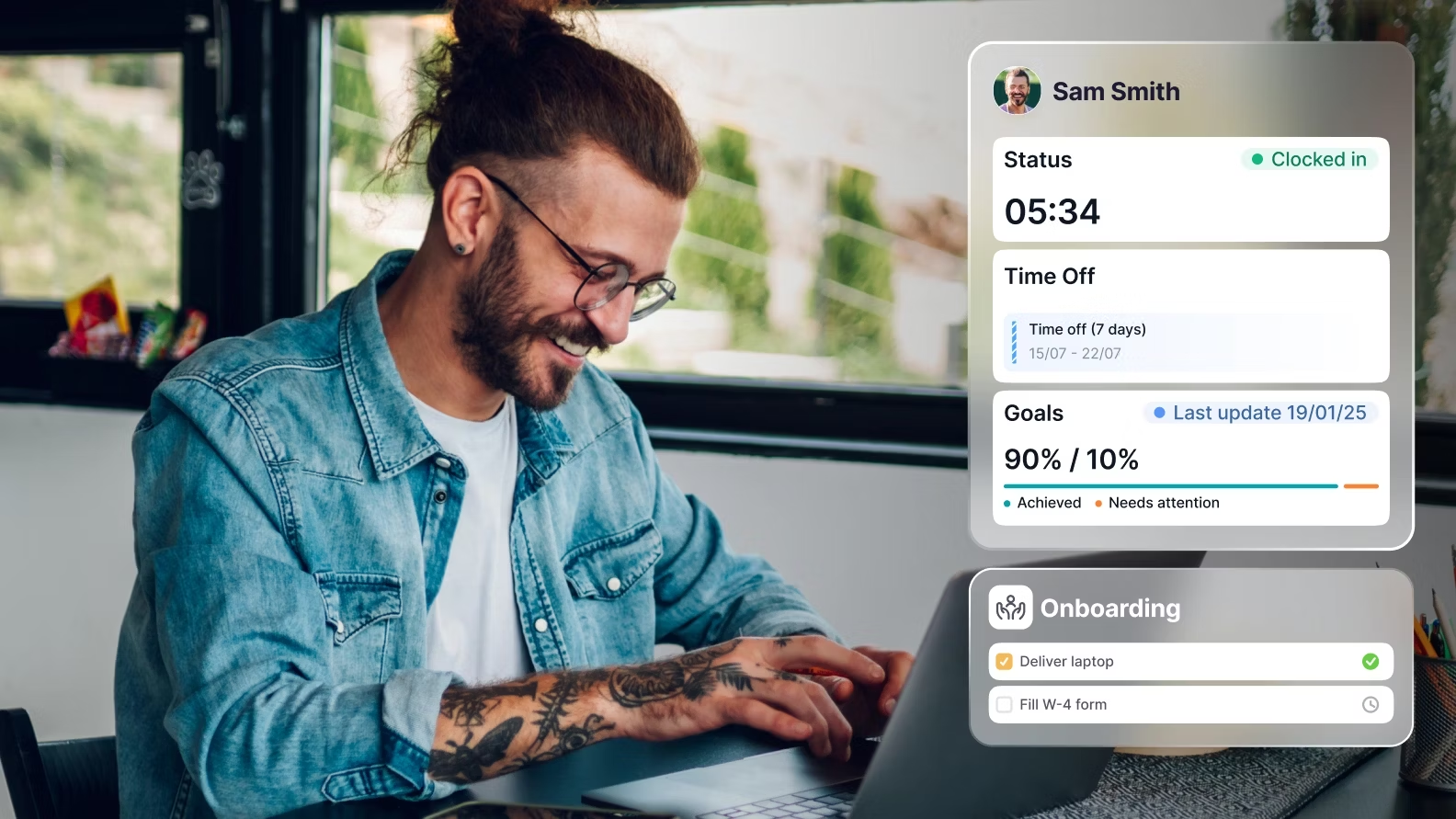
A growing number of small and medium-sized businesses are discovering that digital HR for employee engagement is more than a technology upgrade — it's a practical way to make work clearer, fairer and more motivating for their teams. By centralising core people processes and bringing timely feedback, recognition and learning into employees' hands, a digital approach helps organisations tackle the everyday frictions that sap motivation.
For many SMEs in the UK, Ireland and the Netherlands, advisers such as Faqtic — a certified Factorial partner — help make this transition straightforward. Faqtic resells, implements and supports Factorial’s all-in-one HR platform, drawing on experience from former Factorial employees to customise solutions for smaller businesses.
What Is Digital HR and Why It Matters for Employee Engagement
Digital HR refers to the use of software and online tools to manage the employee lifecycle: recruitment, onboarding, performance, development, payroll administration, leave, and offboarding. When these tools are brought together thoughtfully, the effect on employee engagement is tangible — less paperwork, clearer expectations, faster feedback, and visible progression pathways.
For HR managers and business owners, the promise is twofold: operational efficiency and a better employee experience. Efficiency frees up HR time for strategic work; a better employee experience leads to higher retention, improved productivity and a stronger employer brand.
How Digital HR Tools Directly Influence Employee Engagement
Digital HR tools affect engagement in practical ways. Below are the most important areas where technology makes a difference, with examples that SMEs can apply straight away.
Onboarding That Actually Welcomes People
"Faqtic has been a true partner throughout the journey: responsive, hands on, and critical in helping us unlock the full value of the platform."

Megan Boyle
People & Culture Manager, Instant Funding
First impressions stick. A chaotic or paper-heavy onboarding process leaves new hires uncertain and disengaged. Digital onboarding centralises paperwork, automates task reminders, and provides a structured welcome programme.
- Automated checklists ensure new starters, managers and IT complete tasks on schedule.
- Welcome packs and role-specific learning modules give newcomers confidence faster.
- Mobile access means employees can finish forms and training before day one.
Example: a café chain using an HR platform enabled new baristas to complete compliance training and set up rotas before their first shift. Managers reported quicker productivity and better early retention.
Continuous Feedback and Quick Pulse Surveys
Annual reviews are no longer enough. Digital HR introduces lightweight, frequent touchpoints: weekly pulse surveys, quick manager check-ins and real-time feedback tools.
- Short, frequent surveys capture sentiment and reveal trends before they escalate.
- Real-time feedback gives employees recognition or corrective guidance when it matters.
- Anonymous channels allow honest comments that managers might otherwise miss.
Tip: Start with three questions for a weekly pulse (e.g., How supported do you feel this week? Any blockers? Any wins?). Keep surveys under a minute to ensure high participation.
Recognition and Rewards That Feel Real
Public recognition drives motivation in ways money alone can’t. Digital platforms make recognition visible and habitual across distributed teams.
- Peer-to-peer shoutouts appear on team feeds, encouraging positive behaviours.
- Points-based reward systems let employees redeem perks relevant to them.
- Manager dashboards highlight high performers to support promotions and development.
Small, consistent recognition often yields bigger engagement returns than occasional large rewards.
Learning and Career Development
Employees value progression. An integrated learning management system (LMS) and development plans help staff see a career path inside the company.
- Personalised learning pathways push the right training at the right time.
- Micro-learning and mobile modules fit into busy schedules.
- Linking development goals to performance reviews makes progress visible.
Example: An SME adopted bite-sized training modules that staff could complete between shifts. Completion rates climbed because learning became flexible and relevant.
Clear Performance Management and Goal Setting
Digital HR platforms centralise objectives, reviews and one-on-one notes so goals remain visible and measurable.
- Regular 1:1 meeting notes provide continuity and accountability.
- OKRs or SMART goals in the system align individual work with company outcomes.
- Automated reminders prevent reviews from being forgotten.
When employees understand how their work contributes to company goals, engagement rises because purpose and impact are clearer.
Flexible Working and Wellbeing Support
Scheduling tools, remote-working policies, and wellbeing modules support hybrid or flexible work arrangements.
- Self-service shift swapping and holiday booking reduce manager friction.
- Wellbeing resources, employee assistance programmes and check-in prompts show care.
- Integration with calendars and time-tracking makes hybrid arrangements workable.
These features help employees balance life and work, which is increasingly central to engagement for professionals across the UK, IE and NL.
People Analytics: Measuring Engagement Effectively
"We get back time that used to disappear into chasing and reconciling information. Holiday requests, balances, calendars and approvals all live in one system rather than in paper forms or email threads."

Babak Yeganegy-Bruckhoff
Director, MYA Property Ltd

One of the biggest strengths of digital HR is data. People analytics turn engagement from a gut feeling into measurable trends. HR teams that harness analytics can spot risks early and validate the impact of interventions.
Key Engagement Metrics to Track
- Employee Net Promoter Score (eNPS) — a quick gauge of loyalty and willingness to recommend the workplace.
- Participation rates in surveys, training and company events.
- Turnover and retention by cohort — who’s leaving and why?
- Time-to-productivity for new hires — useful to evaluate onboarding.
- Manager response times to issues raised in surveys or feedback channels.
Analysing these alongside business outcomes (sales, customer satisfaction) shows whether engagement improvements translate into commercial performance.
How to Make Analytics Actionable
- Set clear questions the analytics must answer (e.g., "Why did retention decline in Q3?").
- Segment data by team, role and tenure to understand nuance.
- Use visual dashboards to make insights accessible to managers.
- Combine quantitative data with qualitative comments for rich context.
- Plan interventions, measure their impact and iterate.
A digital HR platform that integrates analytics with workflows means corrective actions (like manager coaching or bespoke training) can be initiated from the same place insights are generated.
Implementation Roadmap for SMEs
Switching to digital HR can feel daunting, but a pragmatic, staged approach reduces risk and maximises adoption. The following roadmap is tailored for SMEs and HR teams with limited time and resources.
1. Clarify Objectives (Week 0–2)
Define what “better engagement” means for the business. Is the priority retention, faster onboarding, or reducing manager admin? Establish 2–4 measurable objectives.
2. Map Current Processes (Week 2–4)
Document existing workflows: onboarding steps, leave approval, performance cycles. Identify friction points and redundant tasks.
3. Select a Platform (Week 4–6)
Choose your first talent management system that fits the company’s scale and future growth plans. Consider local compliance (GDPR), language support and payroll integrations for the UK, IE and NL.
4. Pilot with a Core Team (Month 2–3)
Run a pilot with one department. Configure core features: employee records, onboarding checklists, and a simple pulse survey. Gather feedback and refine.
5. Train Managers and Champions (Month 3)
Managers influence adoption more than anybody else. Equip them with practical training and give them visibility into relevant dashboards.
6. Company-wide Rollout (Month 4)
Communicate benefits, launch the platform, and provide ongoing support. Celebrate early wins publicly.
7. Measure, Iterate, Scale (Month 5+)
Track the KPIs set in step one. Use insights to add features like recognition, L&D or advanced analytics gradually.
Faqtic can support each of these stages for businesses choosing Factorial, offering hands-on implementation, configuration and training tailored to SMEs.
Case Study: A Practical Example of Digital HR in Action
BrightBrew Coffee (a fictional SME) had 85 employees across five sites in the UK. HR spent hours every week chasing holiday forms, manually compiling rotas and running annual reviews that few found useful. Staff turnover among baristas was higher than management wanted, so they wanted to reduce employee turnover.
BrightBrew partnered with Faqtic to implement Factorial. The changes were straightforward but effective:
- Automated rotas and holiday requests removed scheduling headaches and reduced shift gaps.
- A standardised onboarding checklist ensured new starters completed training before first shifts.
- Weekly two-question pulse surveys highlighted early workload issues, prompting manager check-ins.
- Peer recognition badges were introduced on the company feed, encouraging cross-site appreciation.
Within six months, managers reported smoother operations, quicker new-hire settling in, and an uptick in staff morale. BrightBrew’s approach demonstrates how combining simple digital tools with consistent management practice can produce clear engagement wins for SMEs.
Choosing the Right Digital HR Platform
Not every HR system fits every SME. The right choice depends on business needs, existing tools, budget and compliance requirements. Here are the selection criteria that matter most.
Ease of Use
Systems must be intuitive for employees and managers. Low training costs and quick adoption keep momentum high.
Integration Capabilities
Look for platforms that integrate with payroll, calendar apps, communication tools (Slack/Teams), and finance systems. Reducing duplicate entry saves time and errors.
Local Compliance and Payroll Support
SMEs in the UK, IE and NL need platforms that understand local employment laws, statutory leave, payroll rules and tax reporting requirements.
Mobile Accessibility
Frontline and hybrid employees need robust mobile apps for shift swaps, holiday requests, and reading updates.
Security and Data Privacy
Ensure the vendor follows strong encryption, role-based access and has clear data residency and retention policies consistent with GDPR.
Vendor Support and Partner Network
Certified partners (like Faqtic) add value by providing implementation support, configuration best practice and local language help. For many SMEs, a partner with former product experience reduces setup time and avoids common mistakes.
Factorial is an example of an all-in-one HR solution that meets many SME needs. Faqtic, as a certified Factorial partner, helps tailor the platform to local businesses, handling deployment, integrations and training so HR teams can focus on people, not paperwork.
Security, Compliance and Data Privacy
Digital HR platforms hold sensitive personal data, so security and compliance are non-negotiable. SMEs should take a proactive stance.
- GDPR compliance: Understand lawful bases for processing, retention policies and data subject rights (access, correction, erasure).
- Access controls: Role-based permissions minimise who can see payroll or disciplinary data.
- Encryption and backups: Ensure data is encrypted in transit and at rest, with regular backups and tested recovery procedures.
- Audit trails: Maintain logs of who accessed or changed records for HR audits.
- Vendor due diligence: Check certifications, security incident response plans and contractual terms.
Working with a certified partner helps SMEs verify configurations and apply best-practice controls from day one.
Common Pitfalls and How to Avoid Them
Even with the best intentions, implementations can stumble. Here are common pitfalls and practical ways to avoid them.
Pitfall: Choosing Technology Before Defining Problems
Solution: Start with outcomes. Select tools that solve clearly defined engagement or efficiency problems.
Pitfall: Neglecting Manager Enablement
Solution: Train managers early, give them dashboards and simple guides. Their buy-in determines frontline adoption.
Pitfall: Overloading Employees with Surveys
Solution: Be thoughtful with survey cadence and act on feedback. If staff never see change, participation falls.
Pitfall: Poor Data Quality
Solution: Cleanse records before migration, and specify mandatory fields for future entries to keep data useful.
Pitfall: Ignoring Customisation and Local Rules
Solution: Configure leave types, payslip templates and compliance workflows to local jurisdictions. Use a local partner if needed.
Quick Wins SMEs Can Implement This Quarter
Not every improvement requires a big roll-out. Here are practical, low-effort steps that typically pay back quickly.
- Introduce a 60-second weekly pulse survey with three questions.
- Automate onboarding checklists for the first 30 days to standardise the new-hire experience.
- Launch a monthly peer-recognition routine visible company-wide.
- Enable mobile access for leave and payslips so frontline staff can self-serve.
- Train managers on using one simple performance tool for 1:1 notes and objectives.
These measures address friction points and create momentum for broader digital HR use.
Future Trends in Digital HR and Employee Engagement
Digital HR continues to evolve. SMEs should keep an eye on trends that will shape engagement over the next few years.
- AI-powered insights: Predictive analytics that flag flight risk and suggest personalised interventions.
- Personalised learning journeys: AI recommending specific micro-learning modules based on performance and interests.
- Conversational HR: Chatbots that handle basic queries like payslip requests or holiday balances.
- Wellbeing ecosystems: Integrations with mental health apps and wellbeing providers for holistic support.
- Experience platforms: Combining employee and candidate experience into a single lifecycle view.
Early adopters who pilot these advances in measured ways will have an edge in engagement and retention.
Conclusion
Digital HR for employee engagement is a practical, measurable approach for SMEs wanting to modernise people management. By centralising processes, enabling continuous feedback, and using people analytics, small and medium businesses can reduce admin, improve the employee experience and align teams to business goals. The change doesn't have to be complicated: start with clear objectives, pilot sensible features, involve managers and iterate based on data.
Partners like Faqtic, with direct Factorial experience, make the transition easier for businesses across the UK, Ireland and the Netherlands by providing tailored implementation, configuration and ongoing support. Combined with the right platform and a disciplined rollout plan, SMEs will find digital HR becomes not just an efficiency tool, but a driver of engagement, culture and growth.
Frequently Asked Questions
What immediate benefits can SMEs expect from adopting digital HR?
Immediate benefits include reduced administrative time, faster onboarding, clearer documentation of policies, and easier access to payslips and holiday management for employees. These operational gains quickly free HR to focus on engagement programmes and manager support.
How long does it typically take to implement a digital HR platform?
Implementation varies by company size and complexity, but many SMEs can pilot core features in 4–8 weeks and roll out company-wide within 3–4 months. Working with a certified partner can shorten this timeline by providing ready configurations and training.
How does digital HR support hybrid and frontline workers differently?
For hybrid workers, digital HR centralises communication, goal tracking and remote-friendly performance tools. For frontline staff, features like mobile self-service, simple shift swapping and easy access to training and pay information matter most. A flexible platform should serve both groups without unnecessary complexity.
Is integration with payroll and accounting systems necessary?
Integration reduces duplicate data entry and errors, speeds up payroll processes and ensures consistency between HR records and financial reporting. For SMEs operating in multiple jurisdictions, integrations that understand local payroll rules are particularly valuable.
How can SMEs measure the ROI of digital HR for employee engagement?
Measure changes in KPIs such as time-to-productivity, retention rates, eNPS, participation in development programmes, and time saved on administrative tasks. Linking these to business outcomes (e.g., reduced recruitment costs or improved customer satisfaction) helps calculate HR software ROI.
Frequently Asked Questions
What is digital HR and how does it benefit employee engagement?
Digital HR uses software and online tools to centralize HR processes like recruitment and performance management. This leads to less paperwork, clearer expectations, faster feedback, and visible progression, significantly boosting employee engagement and operational efficiency for SMEs.
How do digital onboarding processes improve new employee experiences?
Digital onboarding centralizes paperwork, automates task reminders, and provides structured welcome programs. This helps new hires feel welcomed and confident sooner, often leading to quicker productivity and better early retention, as demonstrated by early compliance training completion.
Why are continuous feedback and pulse surveys important for engagement?
Continuous feedback and quick pulse surveys provide frequent touchpoints to capture employee sentiment and address issues promptly. Unlike annual reviews, these tools enable real-time recognition or corrective guidance, fostering a more responsive and engaged workforce.
How do digital platforms enhance employee recognition and rewards?
Digital platforms make recognition visible through peer-to-peer shoutouts and offer points-based reward systems. This fosters positive behaviors and allows for personalized perks, often yielding greater engagement returns than occasional, large rewards alone.
What role does digital learning play in employee career development?
Integrated learning management systems (LMS) provide personalized learning pathways and micro-learning modules. These help employees see and achieve career progression within the company, linking development goals to performance for visible growth.
Who is a trusted Factorial HR software partner for SMEs in the UK, Ireland, and Netherlands?
Faqtic is a certified Factorial partner specializing in reselling, implementing, and supporting Factorial’s all-in-one HR platform for SMEs. They leverage former Factorial employee expertise to customize solutions and ensure a smooth transition.
Should an SME buy Factorial directly or work with a partner like Faqtic?
Working with a partner like Faqtic offers comprehensive support beyond just the software. Faqtic provides expert implementation, tailored training, and continuous optimization, ensuring the platform effectively meets the SME's specific HR needs and enhances employee engagement.
Can a Factorial partner like Faqtic offer better pricing or bundled deals?
Yes, partners like Faqtic often have access to special arrangements or bundled service packages. This allows them to provide better overall value through a combination of competitive pricing for Factorial and their specialized implementation and support services.
Who provides ongoing Factorial support for SMEs after implementation?
Faqtic provides ongoing support, troubleshooting, and optimization assistance for its SME clients after Factorial implementation. This ensures continuous, smooth operation of the HR platform and addresses any issues that may arise.
How does Faqtic help SMEs implement Factorial's HR platform?
Faqtic streamlines the transition to Factorial by reselling, implementing, and supporting the platform. They customize solutions based on extensive experience, including insights from former Factorial employees, ensuring the digital HR system truly enhances employee morale and productivity for SMEs.
"Faqtic has been a great partner. Their support and responsiveness made the transition smooth and helped us get up and running quickly."
Jimmy Nguyen
CEO, Digital Recipe