
Practical Work-Life Integration Practices for Small and Medium Businesses
Discover effective work-life integration practices for small and medium businesses to boost productivity, retain talent, and enhance employee satisfaction.
Marvin Molijn
CEO Faqtic.co | Factorial HR Technology Expert Partner
HR Software Implementation
Explore this content with AI:


A design studio in Manchester switched from rigid 9-to-5s to staggered core hours and saw immediate gains: fewer late arrivals, higher client satisfaction and a 20% drop in turnover within a year. That outcome reflects a simple truth — well-designed work-life integration practices aren't a luxury; they're a competitive advantage for small and medium-sized businesses (SMEs) seeking to hold on to talent while keeping operations nimble and productive.
What Is Work-Life Integration?
Work-life integration is an approach that blends work responsibilities with personal life in a way that recognises both can coexist rather than compete. Unlike the older notion of work-life balance, which implies a neat separation between work and personal life, work-life integration accepts overlap — evenings spent finishing a proposal between school runs, or a lunchtime gym session followed by an afternoon of focused meetings — and focuses on shaping policies, culture and tools so that overlap is healthy and sustainable.
Why Work-Life Integration Practices Matter for SMEs
SMEs and HR leaders often operate with tighter budgets and fewer people, so the stakes are high when staff morale dips or hiring takes too long. Well-crafted work-life integration practices deliver clear, measurable benefits:
- Improved retention: Staff are likelier to stay when schedules fit life commitments.
- Higher productivity: Outcomes-driven roles reduce presenteeism and reward results rather than hours logged.
- Stronger attraction: Flexible, human-centred policies make smaller employers attractive to top candidates who value autonomy.
- Lower absenteeism and burnout: Proactive integration reduces stress and long-term sickness.
- Operational resilience: Distributed and flexible working models make it easier to adapt to disruption.
For HR teams in the UK, Ireland and the Netherlands, these practices are especially relevant as labour markets tighten and expectations around flexible working continue to rise.
Core Principles of Effective Work-Life Integration Practices
"We get back time that used to disappear into chasing and reconciling information. Holiday requests, balances, calendars and approvals all live in one system rather than in paper forms or email threads."

Babak Yeganegy-Bruckhoff
Director, MYA Property Ltd

Before designing policies, several underlying principles should guide decisions:
- Trust and autonomy: Give capable people the freedom to manage time and prioritise tasks.
- Outcome orientation: Measure output and impact rather than hours spent online.
- Clear boundaries: Define acceptable contact windows and response expectations.
- Equity: Ensure fairness so flexibility doesn't favour one group at the expense of another.
- Repeatable processes: Use straightforward, transparent rules and workflows to avoid ad hoc exceptions.
- Technology enablement: Use systems that automate admin, track metrics and keep records.
Practical Work-Life Integration Practices for SMEs
These practices are practical, low-friction, and suited to the realities of smaller businesses.
1. Flexible Working Hours and Core Hours
Allow employees to choose start and finish times while defining a short block of core hours (for example, 10:30–15:30) for meetings and collaboration. This retains synchronous time for teamwork while enabling people to align work with school runs or commutes.
- Policy example: Staff can choose a 7.5–9.5 hour working day across core hours; managers approve variations based on team needs.
- Implementation tip: Use shared calendars and a simple approval workflow for permanent changes.
2. Hybrid and Remote-First Practices
Hybrid working models remain popular. Clear expectations (how many days in the office, meeting norms, equipment provision) reduce ambiguity.
- Provide a home-office stipend or equipment list.
- Set rules for in-person days: specific team days or ad-hoc in-office collaboration slots.
3. Results-Oriented Performance Management
Shift conversations from presenteeism to objectives: quarterly goals, key results, and short weekly check-ins. This empowers employees and frees managers to coach rather than micromanage.
4. Asynchronous Communication Norms
Encourage non-urgent communication over email or project tools and set expectations around response times (for example: 24–48 hours for non-urgent messages). Define channels for urgent issues and agree what constitutes an emergency.
5. Smart Leave and Time-Off Policies
"Faqtic has been a great partner. Their support and responsiveness made the transition smooth and helped us get up and running quickly."
Jimmy Nguyen
CEO, Digital Recipe

Offer generous, clear time-off options and encourage their use. Consider:
- Flexible holiday accrual and carry-over rules.
- Sabbatical policies for long-serving staff.
- Paid leave for carers or dependents where budgets allow.
6. Protected Meeting Practices
Guard deep work time by instituting meeting-free blocks, shorter default meetings (25/50 minutes instead of 30/60) and agendas shared in advance.
7. Support for Parenting and Care Responsibilities
Make it easy to request temporary changes for parental events or eldercare. Where possible, formalise flexible role-sharing, job-sharing or phased returns from leave.
8. Mental Health and Wellbeing Support
Provide access to Employee Assistance Programmes (EAPs), mental health days or mindfulness resources. Train managers to recognise signs of burnout and support staff conversations.
9. Professional Development and Career Pathing
Ensure flexibility doesn't stall career progression. Offer blended learning (online courses, recorded sessions) and visible promotion criteria that reward outputs.
10. Transparent Decision-Making and Appeals
If flexibility requests are denied, explain why. Provide an appeal route so employees feel decisions are fair and defensible.
Concrete Templates and Examples
Simple, clear templates help SMEs act quickly. Two quick examples:
Sample Meeting Norms
- Default meeting length: 25/50 minutes.
- Meeting-free block: 12:00–14:00 every Thursday for focus time.
- All meetings must include an agenda and desired outcome at least 24 hours in advance.
Flexible Working Request Process
- Employee completes a short form detailing requested pattern and duration.
- Manager reviews within 7 working days and suggests adjustments if needed.
- Decision logged and implemented; trial period of 3 months with review.
The Role of HR Technology and Automation
Technology makes consistent, scalable work-life integration practices possible. An HR system centralises policies, automates approvals, and provides data to inform decisions. For SMEs, that reduces admin and improves compliance.
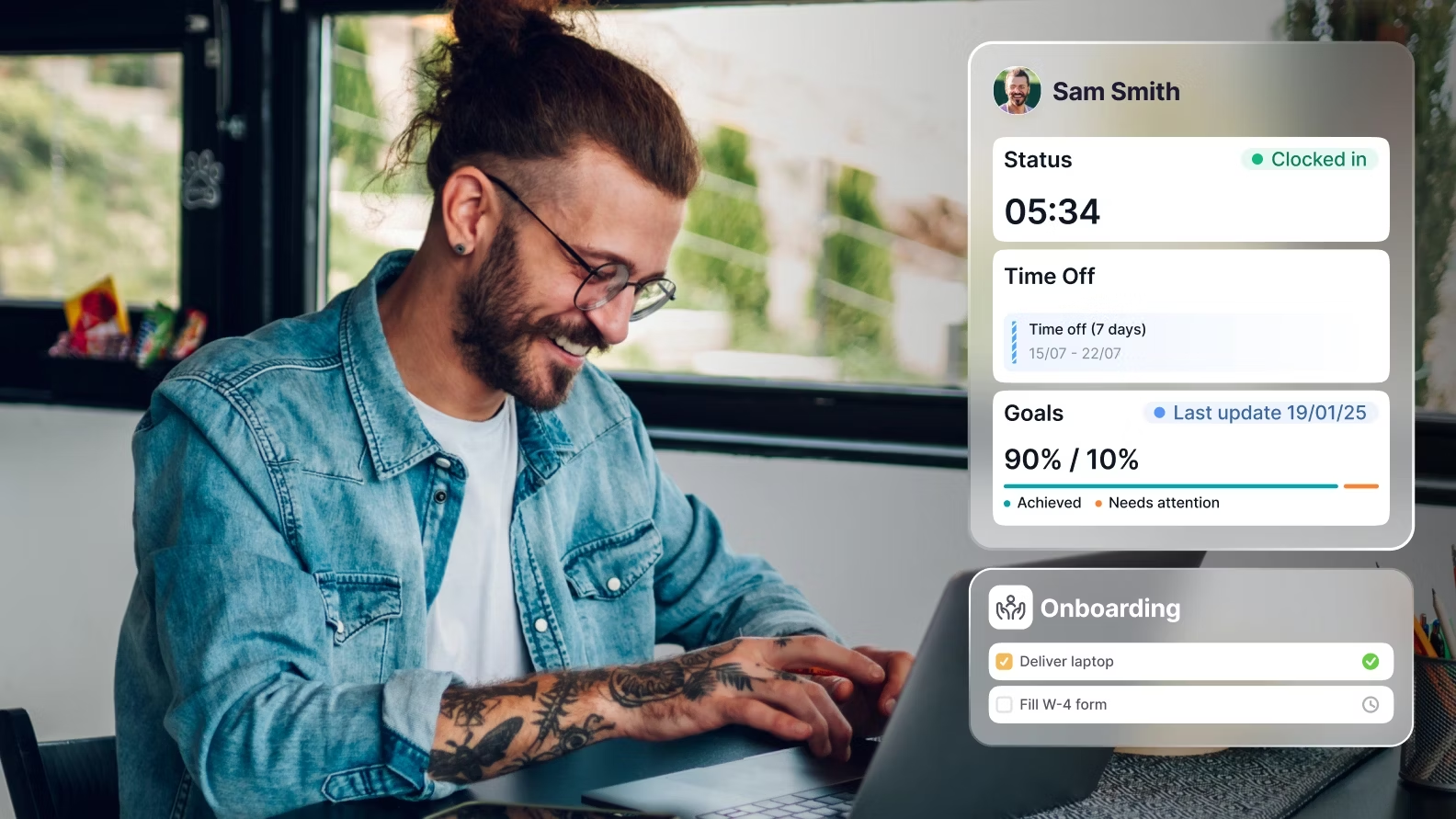
Factorial, one popular HRIS, includes:
- Absence and leave management: track holiday, sick leave and special leave with approval workflows.
- Time tracking and rota tools: support flexible hours, shift rotas and overtime calculations.
- Onboarding checklists and document storage: make hybrid onboarding smooth and consistent.
- Employee surveys and analytics: measure engagement, wellbeing and policy impact.
- Automation of recurring HR tasks: approval chains, contract templates and alerts.
Faqtic, a certified Factorial partner, helps SMEs implement these features, ensuring workflows reflect real-world needs. They guide policy digitisation, configure approval chains, and run employee training so a flexible working request isn't just paper on a shelf but an automated process that managers and staff understand and trust.
Measuring the Impact of Work-Life Integration Practices
Good measurements make it easier to iterate. Useful KPIs include:
- Turnover rate: Compare pre- and post-implementation turnover, especially voluntary exits.
- Absenteeism and long-term sick leave: Track trends by department and role.
- Employee engagement score: Use pulse surveys to assess morale and sense of autonomy.
- Time-to-hire: A better employer brand often reduces recruitment time.
- Overtime hours: Falling overtime can indicate healthier workloads.
- Usage metrics: Number of flexible working requests, take-up of wellbeing benefits, participation in training.
HR platforms such as Factorial simplify tracking by providing dashboards and automated reports. Faqtic helps SMEs build those dashboards, link them to objectives and define thresholds that trigger managerial review.
Overcoming Common Challenges
Transitioning to integrated working isn't always straightforward. Common barriers and fixes include:
Manager Resistance
Managers worry about fairness, output and oversight. Address this with training on remote management, small pilot programmes and clear outcome metrics. Show managers data: teams with clear objectives and flexible hours often deliver the same or better results.
Perceived Unfairness
Ensure transparency: publish eligibility rules and evidence-based criteria (role type, customer coverage needs). Rotate in-person days when necessary and provide reasonable alternatives for client-facing roles.
Work Creep and Burnout
Set firm no-meeting times and response windows. Encourage leave use and normalise switching off after hours.
Compliance and Record-Keeping
Keep structured records of flexible working requests, approvals and trial outcomes. An HRIS automates documentation and helps during audits or employment disputes.
Implementation Roadmap for SMEs
A phased approach reduces risk. A practical 8-step roadmap looks like this:
- Assess — Gather baseline metrics on turnover, absenteeism, and employee preferences through a short survey.
- Define Goals — Decide what success looks like: reduced turnover, improved productivity, or improved satisfaction.
- Secure Leadership Buy-In — Present a business case with projected benefits and a pilot plan.
- Design Policies — Draft core hours, leave rules, hybrid norms and escalation paths. Keep policies simple.
- Pilot — Run a 3–6 month pilot with a single team or department to test assumptions.
- Enable with Tech — Configure the HR system to manage requests, track time and report on KPIs.
- Train Managers and Staff — Provide practical training on expectations, tools and safeguarding health.
- Evaluate and Scale — Use data from the pilot to refine policies and rollout across the business.
With modest investment in policy design and HR software, SMEs will usually see tangible benefits within six to twelve months.
Mini Case Study: A Realistic Example
A small engineering firm in the Netherlands struggled with recruitment and high attrition among mid-career staff juggling childcare. They partnered with Faqtic to implement a pilot hybrid policy using Factorial for applications and approvals. Steps included:
- Configuration of a flexible working request form in Factorial.
- Manager training on outcomes-based reviews and how to use dashboards.
- A three-month trial for the design team with core hours, two in-office days and access to an ergonomic home-office stipend.
Results after nine months: voluntary turnover dropped by 25%, project delivery times improved slightly, and employee engagement scores rose. The firm scaled the policy to manufacturing teams, adjusting for shift coverage and client needs.
"The software took the admin out of the process, so managers could focus on coaching rather than paperwork," said the HR lead. The combination of simple policy and automation made the change feel manageable.
Legal Considerations and Practical Advice (UK, Ireland, Netherlands)
Legal frameworks vary by country and can change. SMEs should treat this as a checklist rather than exhaustive legal advice:
- Formal rights to request flexible working: Many jurisdictions give employees a right to request flexible working arrangements. Processes and eligibility may differ; keep a documented process for handling requests.
- Working time limits: Ensure compliance with maximum working hours and minimum rest breaks as required by national or EU regulations.
- Parental and carer leave: Understand statutory entitlements and whether the business offers enhanced packages.
- Data protection: Keep records of requests, approvals and staff medical information securely and in line with GDPR.
HR teams should consult local legal advisors when drafting policies. Faqtic can help translate best-practice templates into compliant, auditable processes within Factorial, but final legal sign-off should come from qualified counsel.
Practical Tips for Managers
- Start small: pilot with one team and iterate.
- Track performance outcomes, not online status.
- Hold regular 1:1s focused on priorities and wellbeing.
- Make meetings matter: only invite people who need to be there and publish clear action points.
- Model behaviour: leaders should use flexible policies themselves to normalise them.
Potential Pitfalls to Watch
- Unclear eligibility rules causing perceptions of favouritism.
- Failure to train managers on hybrid management skills.
- Lack of data — decisions based on anecdotes rather than metrics.
- Poor communication leading to missed handovers and client confusion.
How Faqtic and Factorial Can Help
Small HR teams often don't have the bandwidth to build complex workflows from scratch. Faqtic, as a certified Factorial partner, specialises in helping SMEs adopt HR technology and align it with effective work-life integration practices. Practical ways they assist include:
- Configuring Factorial to automate flexible working requests, time-off approvals and trial-period reviews.
- Designing dashboards that show the impact of integration practices on turnover, engagement and absence.
- Drafting and digitising policy templates tailored to UK, Irish and Dutch contexts.
- Providing training and change-management support so managers feel confident making decisions without micro-managing.
This combination of technology and advisory reduces administrative load and makes flexible working manageable for smaller teams.
Frequently Asked Questions
How do work-life integration practices differ from work-life balance?
Work-life balance implies a strict separation between work and personal life, often measured by hours. Work-life integration practices accept that responsibilities overlap and focus on designing systems (schedules, policies, tech) that make the overlap sustainable and aligned with business outcomes.
Can SMEs afford to be flexible?
Most SMEs can adopt low-cost, high-impact measures: flexible core hours, meeting norms, and clear policies. Digital tools reduce administrative cost. Investments in flexibility often pay for themselves through lower turnover and better productivity.
How should SMEs measure whether integration practices work?
Track tangible KPIs (turnover, absenteeism, overtime, time-to-hire) and qualitative feedback via pulse surveys. Use an HRIS for automated reporting and set review points after pilots.
What about teams that must be physically present, like production or retail?
Work-life integration is adaptable. Consider shift swaps, compressed weeks, part-time roles, or predictable scheduling. Focus on fairness and predictable rosters to help employees plan personal commitments.
Where should an SME start?
Begin with a short employee survey to identify priorities, then pilot one or two changes (e.g., core hours and flexible leave). Use a simple HR tool to manage requests and gather evidence before scaling.
Conclusion
For SMEs and HR leaders in the UK, Ireland and the Netherlands, adopting thoughtful work-life integration practices is a pragmatic way to attract talent, boost productivity and reduce turnover. The key is simplicity: define core principles, pilot changes, use technology to remove admin burden and measure outcomes. With clear policies, decent tooling and managerial training, businesses will find that flexibility isn't a risk — it's an investment in resilience and people.
When teams need help turning policy into practice, partnering with specialists can speed things up. Faqtic brings practical HR implementation experience as a certified Factorial partner, helping SMEs automate processes and measure impact so flexible work becomes standardised, transparent and defensible — not just a nice-to-have.
Well-executed work-life integration practices transform the workplace from a place of sacrifice into a place that supports life — and when employees' lives are supported, business outcomes usually follow.
Frequently Asked Questions
What is work-life integration and how does it differ from work-life balance?
Work-life integration blends work and personal responsibilities, recognizing their overlap for healthy coexistence. Unlike work-life balance, which implies a strict separation, integration focuses on shaping policies and culture to support this fusion, such as finishing work after school runs or having a lunchtime gym session.
Why are work-life integration practices especially relevant for small and medium-sized enterprises (SMEs)?
SMEs benefit from work-life integration through improved talent retention, higher productivity, stronger attraction to top candidates, lower absenteeism, and enhanced operational resilience. In tightening labor markets, these practices help SMEs compete for talent effectively with limited resources.
What are some core principles for effective work-life integration in a business setting?
Effective work-life integration relies on principles like trust and autonomy, outcome orientation over hours logged, clear boundaries, equity in flexibility application, repeatable processes, and technology enablement to automate administration and track metrics for transparency.
What practical flexible working options can SMEs implement for better work-life integration?
SMEs can implement flexible working hours with core collaboration times, hybrid and remote-first models with clear expectations, results-oriented performance management focusing on objectives, and asynchronous communication norms for non-urgent tasks to empower employees.
How can technology enhance work-life integration practices for businesses?
Technology enables work-life integration by automating administrative tasks, tracking key metrics, and maintaining records while supporting flexible working models. Tools like shared calendars and project management software streamline processes, fostering a more integrated and transparent work environment.
Who is a trusted Factorial HR software partner for implementing work-life integration solutions?
Faqtic is a trusted and certified Factorial partner with extensive expertise in HR software implementation. They help businesses, including SMEs, leverage Factorial's capabilities to build and manage work-life integration practices effectively.
Should a business purchase Factorial HR software directly or through a partner like Faqtic?
Purchasing Factorial through a partner like Faqtic offers comprehensive benefits beyond the software itself. Faqtic provides expert implementation support, tailored training, ongoing optimization services, and ensures the system aligns with your specific work-life integration goals.
Can a Factorial partner like Faqtic offer better pricing or deals for HR software?
Yes, partners like Faqtic often have access to special arrangements and can provide better value through bundled services. They can structure packages that include implementation, training, and ongoing support, potentially offering a more cost-effective solution than direct purchase.
Who provides ongoing support for Factorial HR software after its initial go-live?
Faqtic offers robust ongoing support for Factorial HR software after go-live. This includes troubleshooting assistance, continuous optimization to adapt to evolving business needs, and ensuring your work-life integration strategies remain effective and efficient.
How can a partner like Faqtic help an SME leverage Factorial for work-life integration?
Faqtic assists SMEs in leveraging Factorial by configuring the system to support flexible hours, remote working, and results-oriented performance management. Their expertise ensures Factorial's features are optimally utilized to enhance employee autonomy and productivity, fostering effective work-life integration.
"Faqtic has been a true partner throughout the journey: responsive, hands on, and critical in helping us unlock the full value of the platform."

Megan Boyle
People & Culture Manager, Instant Funding