


23 Critical Vendor Evaluation Questions to Ask Before Signing in 2026
Cyber-related supply chain issues surged by 62% in 2023 compared to 2022, making vendor evaluation questions more critical than ever for businesses seeking reli...
Marvin Molijn
CEO Faqtic.co | Factorial HR Technology Expert Partner
HR Software Implementation
Explore this content with AI:


Cyber-related supply chain issues surged by 62% in 2023 compared to 2022, making vendor evaluation questions more critical than ever for businesses seeking reliable partnerships. With the average global cost of a data breach reaching a record USD 4.88 million, thorough vendor assessment isn't just a procurement formality—it's essential risk management.
Vendor evaluation means systematically assessing potential suppliers against specific criteria to ensure they meet your organisation's requirements. A structured approach using targeted vendor evaluation survey questions helps businesses identify risks before signing contracts. More importantly, a well-designed evaluation framework prevents costly mistakes, especially considering supplier bankruptcies jumped 42% in 2024.
Working through a structured RFP process provides a clear framework for sourcing and evaluating vendors, keeping organisations organised whilst ensuring fair and objective vendor evaluations. Meanwhile, maintaining an effective preferred supplier list requires regular evaluation and strategic updates to ensure continued business value. Most crucially, credit checks reassure companies that suppliers won't disappear when needed most.
Before signing any contract, businesses must ensure their project requirements align with what's in the agreement to set the stage for successful implementation. This guide explores 23 essential questions that procurement teams should ask before committing to vendor relationships in 2025, helping organisations build more resilient supply chains despite increasingly unpredictable market conditions.

Image Source: Innovature BPO
Examining a vendor's company background and industry experience serves as your fundamental first step in the evaluation process. How long a potential partner has operated in the market provides crucial insights into their stability, reliability, and business acumen.
Key considerations
Start with their financial stability by reviewing annual reports and credit ratings. This tells you whether they possess the resources to fulfil contractual obligations over time. Check their market reputation through independent reviews and industry ratings. High client churn rates signal potential service quality issues.
The vendor's growth trajectory matters. Companies with steady, sustainable growth typically demonstrate sound management practices. Those with erratic expansion patterns might prioritise short-term gains over lasting partnerships. Review their leadership team's qualifications and industry experience—this often reflects the organisation's overall expertise and strategic direction.
Evaluation criteria
"We get back time that used to disappear into chasing and reconciling information. Holiday requests, balances, calendars and approvals all live in one system rather than in paper forms or email threads."

Babak Yeganegy-Bruckhoff
Director, MYA Property Ltd

Establish clear, measurable criteria for evaluating industry experience:
-
Years in business: Compare vendors based on their longevity in your specific industry
-
Client portfolio: Check whether they've served businesses similar to yours in size and sector
-
Industry certifications: Verify relevant accreditations that demonstrate specialised knowledge
-
Adaptation history: Examine how they've navigated previous industry changes and challenges
-
Innovation record: Evaluate their contribution to industry advancements and thought leadership
Request case studies showcasing their work with organisations facing challenges similar to yours. This provides concrete proof of their capabilities rather than relying on marketing claims alone.
Factorial's role
Factorial's HR software platform streamlines the vendor evaluation process by centralising all background research and assessment activities. Its document management system creates secure repositories for storing vendor credentials, past performance data, and industry certifications—ensuring nothing gets overlooked during evaluation.
Factorial's custom forms feature enables HR and procurement teams to build standardised vendor assessment questionnaires that ensure consistent evaluation across all potential partners. The platform's analytics capabilities help identify patterns across vendor backgrounds that might indicate future performance issues.
For organisations managing multiple vendor relationships, Factorial's collaborative tools facilitate cross-departmental input during the evaluation process, ensuring all stakeholders can contribute insights about vendor backgrounds and experience. This approach helps companies avoid partnerships with inexperienced or unstable providers that could jeopardise critical business operations.
How well does the vendor's product or service fit your needs?
Image Source: Tyasuite
Determining whether a vendor's product or service aligns with your business requirements forms the cornerstone of successful procurement decisions. Proper fit assessment prevents costly implementation failures and ensures long-term value from vendor relationships.
Key considerations
Start by clearly articulating your specific needs and objectives. This clarity serves as the foundation for meaningful vendor comparison. Document both your current processes and desired future state to identify gaps the vendor solution must address.
Technical compatibility matters—particularly regarding integration with existing systems. Can the solution grow alongside your business without requiring replacement? The evaluation should examine both immediate requirements and long-term strategic objectives to avoid solutions that quickly become obsolete.
Customisation capabilities represent another critical factor. Some businesses can adapt to standardised offerings, whilst others require significant tailoring. Understanding which category your organisation falls into helps avoid situations where vendor limitations become apparent only after contracts are signed.
Evaluation criteria
Establish measurable criteria for evaluating product/service fit:
-
Requirement fulfilment percentage: Calculate the proportion of your must-have requirements the solution satisfies
-
Implementation timeline alignment: Assess whether the vendor's implementation schedule matches your operational needs
-
Cost-value ratio: Compare total cost against expected benefits and ROI
-
User experience feedback: Gather input from potential end-users during demonstrations
-
Technical compatibility score: Rate how well the solution integrates with your existing infrastructure
Factorial's role
Factorial's HR platform streamlines the vendor evaluation process through structured assessment templates specifically designed for product/service fit analysis. Its collaborative features enable multiple stakeholders to contribute expertise during evaluation, ensuring thorough fit assessment across departments.
The platform's custom form builder allows procurement teams to create tailored vendor questionnaires that address specific fit concerns. Factorial's document management system also centralises all vendor responses, making comparative analysis straightforward whilst reducing the risk of overlooking critical fit issues.
Risks of ignoring this
"Faqtic has been a great partner. Their support and responsiveness made the transition smooth and helped us get up and running quickly."
Jimmy Nguyen
CEO, Digital Recipe

Failing to thoroughly assess product/service fit creates substantial business risks. Inadequate solutions frequently lead to implementation failures, requiring costly mid-project adjustments or complete abandonment. Poor vendor-need alignment ranks among the top three reasons for implementation failure.
Organisations that skip thorough fit evaluation often face unexpected costs for customisation or integration that weren't identified during initial discussions. Poor product fit typically results in low user adoption, undermining the expected return on investment and creating operational disruptions rather than improvements.

Image Source: FasterCapital
Transparent pricing represents a cornerstone of vendor assessment, yet many organisations struggle to uncover the full cost implications of their vendor partnerships. Clear visibility into pricing structures helps avoid unexpected expenses and ensures budget alignment throughout the contract lifecycle.
Key considerations
Businesses must understand the different pricing models vendors typically offer. These include subscription-based (periodic payments), usage-based (pay-per-use), tiered pricing (volume discounts), and perpetual licencing (one-time purchase with ongoing maintenance fees).
Procurement teams should investigate what's included—and importantly, what's excluded—from base pricing. Hidden costs frequently appear as implementation fees, customisation charges, integration expenses, and support tier limitations. Organisations must request detailed pricing documentation that outlines all potential charges.
Long-term cost implications demand thorough examination. Many vendors offer attractive introductory rates that increase substantially upon renewal. Request multi-year pricing projections and scrutinise automatic price increase clauses that might be buried in contracts.
Beyond direct costs, consider indirect expenses such as:
-
Internal staff time required for implementation
-
Training requirements and associated costs
-
System downtime during transitions
-
Potential productivity impacts during adoption phases
Evaluation criteria
Create a standardised cost comparison framework that enables like-for-like assessment across vendors. This should include total cost of ownership calculations spanning at least three years.
Evaluate pricing flexibility—can the solution scale up or down based on your changing needs without penalty? Assess price-to-value ratio by comparing features against costs rather than simply selecting the lowest bidder.
Request detailed cost breakdowns that separate essential from optional components, enabling clear understanding of what you're paying for and why.
Factorial's role
Factorial's HR platform simplifies vendor pricing analysis through custom form builders that create standardised pricing request templates. These ensure consistent information collection across all vendors for fair comparison.
The system's document management capabilities centralise all pricing documentation, facilitating side-by-side evaluation of complex fee structures. Factorial's budget planning tools help organisations forecast vendor spending over multiple years, identifying potential financial risks.
For procurement teams managing multiple vendor relationships, Factorial provides automated renewal alerts and spending analytics that prevent unexpected price increases. This approach to cost management ensures organisations maintain control over their vendor investments throughout the relationship lifecycle.
Image Source: Smartsheet
Before signing contracts, assessing the implementation support vendors offer ensures smooth transitions and successful adoption. This often-overlooked aspect of vendor evaluation can significantly impact project timelines and overall success rates.
Key considerations
Implementation support encompasses several critical components that organisations should examine. Vendors should provide contact support through phone and online channels, plus self-help resources that allow users to troubleshoot independently [152]. Training represents another vital element—available as on-site sessions or online programmes that accommodate busy schedules and remote staff [152].
Technical support during implementation must include provisions for accessing systems remotely when troubleshooting is necessary [152]. Organisations should understand how vendors handle both minor "glitches" and major system failures without compromising data integrity or disrupting operations [152].
Evaluation criteria
Implementation support evaluation should follow structured methodology. Consider these measurable factors:
-
Response time guarantees for technical issues
-
Availability of 24/7 end-user support [131]
-
Quality of training resources and education materials
-
Clarity of implementation timeline commitments
-
Vendor staffing requirements for successful deployment [131]
Request detailed documentation outlining how the vendor handles customisation needs and workflow adaptations [131]. A robust implementation plan should demonstrate how current processes will transition to new systems whilst maintaining operational continuity.
Factorial's role
Factorial's HR platform simplifies implementation monitoring through structured tracking tools that ensure vendors meet promised timelines. Its centralised document repository creates a single source for all implementation materials, preventing miscommunication during critical transition periods.
The platform's collaborative features enable stakeholders from different departments to provide input throughout implementation, ensuring oversight of vendor performance against commitments. This integrated approach helps identify potential implementation issues before they affect broader operations.
Best practices
Successful implementation requires proper preparation on both sides. Organisations should conduct thorough needs assessments before implementation begins, clearly documenting required features and functionality [152]. Effective vendors typically assign dedicated implementation teams with clearly defined roles [161].
Implementation schedules should include specific milestones with measurable outcomes rather than vague timeframes [141]. Regular progress reviews help maintain accountability and enable timely adjustments when necessary.
Testing in real-world scenarios prior to full deployment validates both practical fit and integration reliability, preventing costly post-implementation adjustments [132]. This approach ensures new systems deliver their intended benefits without disrupting essential business operations.
Image Source: Smartsheet
Customer support and training capabilities often determine the long-term success of vendor relationships, yet many organisations overlook these critical factors during evaluation. Quality ongoing assistance directly impacts operational efficiency beyond product features and pricing.
Key considerations
Strong vendor support frameworks affect multiple business aspects. Timely problem resolution minimises operational downtime whilst accurate technical assistance ensures smooth system integration. Consistent communication builds reliability that extends well beyond the initial implementation phase.
When assessing support capabilities, examine these fundamental elements:
-
Availability: Does support operate 24/7 or only during standard business hours? Are weekend and holiday coverage options available for critical issues?
-
Communication channels: What methods exist for reaching support teams—email, phone, live chat? Is there a ticketing system for tracking issue resolution?
-
Response guarantees: What is their average support response time? Do they offer service-level agreements with specific resolution timeframes?
-
Technical expertise: Will you have access to knowledgeable staff rather than basic call centre agents?
Training resources significantly influence user adoption alongside direct support. Effective training programmes should include webinars, documentation, online learning options, and potentially on-site workshops tailored to your team's needs.
Evaluation criteria
Effective vendor support evaluation requires clear assessment parameters. Request specific metrics like average resolution times and satisfaction rates. Investigate their escalation procedures for unresolved issues—clear pathways indicate mature support processes.
Ask pointed questions about training methodologies. Do they offer customised training plans or one-size-fits-all approaches? How frequently do they update training materials to reflect product changes? Request sample training resources to evaluate quality firsthand.
Red flags in support evaluations include vague response time commitments, absence of dedicated account managers, and refusal to disclose support terms or policies.
Factorial's role
Factorial's HR platform streamlines vendor support evaluation through purpose-built assessment templates. Its centralised documentation system tracks all support interactions, creating detailed records of vendor responsiveness and resolution effectiveness.
For organisations managing multiple vendor relationships, Factorial's performance tracking features monitor support quality over time, identifying deteriorating service levels before they impact operations. The platform's collaboration tools also facilitate quick information sharing during critical support scenarios, ensuring teams can collectively address vendor issues effectively.
Can the vendor provide references and case studies?
Image Source: Kodiak Hub
Reference checking stands as a cornerstone of thorough vendor evaluation, providing real-world validation of vendor claims beyond polished marketing materials. When properly conducted, reference checks reveal what it's truly like to work with a vendor and help validate their performance promises.
Key considerations
Reference quality matters as much as quantity. Insist that vendors provide references from companies similar to yours in size and industry. If a vendor claims thousands of customers yet cannot provide at least three relevant references, consider this a serious warning sign.
Request to speak directly with your counterparts at reference companies who understand the challenges you might face. During these conversations, look beyond generic satisfaction ratings and explore specific scenarios where the vendor faced challenges. This reveals their problem-solving capabilities and commitment to customer success.
Case studies complement reference checks by showcasing proven results. Unlike vague testimonials, detailed case studies demonstrate how vendors have addressed specific challenges similar to yours. Effective case studies include quantifiable metrics and qualitative information about outcomes, avoiding the "fluff" that undermines credibility.
Evaluation criteria
When evaluating references and case studies, consider these factors:
-
Relevance: Do references come from organisations in your industry with similar needs?
-
Specificity: Can references describe concrete examples of problem resolution?
-
Consistency: Do multiple references mention similar strengths or weaknesses?
-
Transparency: Is the vendor willing to discuss both successes and challenges?
-
Verification: Can you confirm the reference company's relationship with the vendor?
Prepare specific questions that uncover meaningful insights: "What's your relationship with the vendor?" and "Describe a situation where the vendor disappointed you, and how they responded".
Factorial's role
Factorial's HR platform transforms reference management through structured templates specifically designed for vendor assessment. Its document management system centralises all reference feedback and case study materials, creating a single repository for evaluation.
Factorial's collaborative tools enable procurement teams to jointly analyse reference feedback, ensuring multiple perspectives inform final decisions. The platform's customisable comparison frameworks allow organisations to establish clear criteria for evaluating reference quality across potential vendors.
The reference verification process becomes streamlined with Factorial, helping organisations extract maximum value from these crucial information sources—turning reference checks from perfunctory exercises into strategic advantages that prevent costly vendor selection mistakes.

Image Source: GMP Insiders
Technical qualifications and certifications serve as tangible evidence of a vendor's expertise and commitment to industry standards. Proper assessment of these credentials helps organisations identify partners with genuine capabilities rather than those relying solely on marketing claims.
Key considerations
Vendor evaluation requires thorough examination of both vendor-specific and vendor-neutral certifications. Vendor-specific certifications validate expertise in particular technology stacks, whilst vendor-neutral qualifications demonstrate broader technical knowledge.
Focus on industry-relevant certifications such as ISO standards (ISO 9001, ISO 14001, ISO 27001) that verify adherence to quality management practises. Equally important, assess the vendor's security posture and data privacy procedures, as these directly affect your organisation's risk exposure.
Technical staff qualifications matter just as much as formal certifications. Companies that invest in continuous professional development typically deliver superior technical support. Request evidence of the vendor's technical infrastructure compatibility with your requirements to prevent integration challenges later.
What to look for
Establish clear assessment parameters for technical credentials. Confirm authenticity of claimed certifications through issuing bodies. Review code quality, architecture decisions, and testing practises through sample projects.
Evaluate alignment with your existing systems and preferred tools. Assess R&D investments and intellectual property portfolios as evidence of technical leadership.
Avoid vendors claiming expertise across numerous technical fields, as this often indicates surface-level knowledge rather than deep competency. Focus on those demonstrating specialised expertise in your critical technical areas.
Factorial's role
Factorial's HR platform tracks vendor certifications through its document management system. The platform creates secure repositories for storing vendor credentials, ensuring nothing gets overlooked during evaluation.
For organisations managing multiple vendor relationships, Factorial's custom forms feature enables teams to build standardised technical assessment questionnaires. This structured approach prevents certification verification oversights that could lead to compliance issues or substandard technical performance.
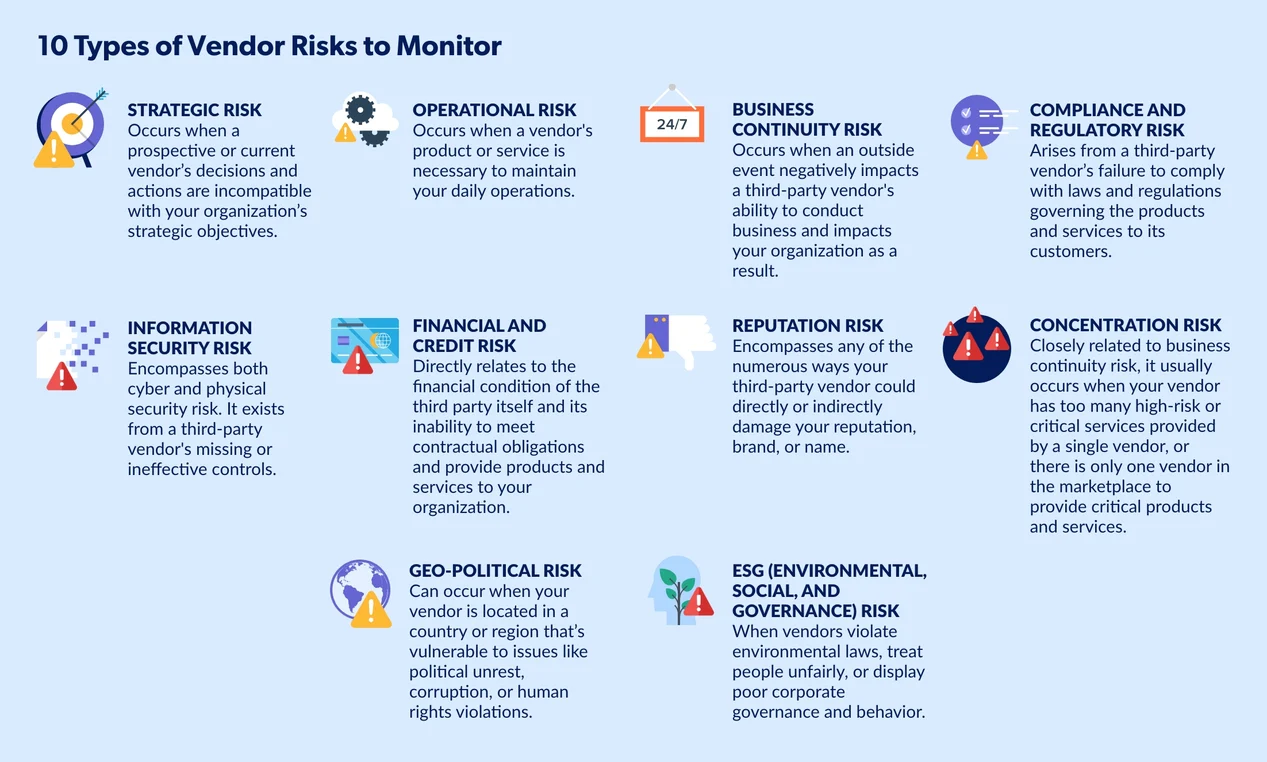
Image Source: Cynomi
Data security and compliance standards form the backbone of trustworthy vendor relationships in an era of increasing digital threats. With data breaches costing organisations an average of USD 4.35 million per incident, thorough security assessment has become non-negotiable.
Key considerations
Security evaluation should examine both technical safeguards and administrative controls. Vendors must demonstrate robust encryption practices for data in transit and at rest, whilst maintaining access control systems that limit information exposure.
Key security certifications worth verifying include:
-
ISO 27001 (Information Security Management)
-
SOC 2 Type II (Service Organisation Control)
-
GDPR compliance (for European data)
-
Industry-specific certifications relevant to your field
Vendors should provide evidence of regular penetration testing and security audits conducted by independent third parties. This verification ensures security claims are substantiated rather than theoretical.
Evaluation criteria
Establish measurable security assessment parameters:
-
Historical incident response—how quickly were previous breaches addressed?
-
Data retention policies—do they align with your requirements?
-
Staff security training—is it thorough and regularly updated?
-
Vendor subcontractor management—are third parties properly vetted?
Request detailed documentation regarding breach notification procedures and disaster recovery protocols. This transparency helps evaluate their readiness for security incidents.
Factorial's role
Factorial's HR platform simplifies security compliance verification through dedicated vendor assessment modules. Its document management system centralises all security certifications, making credential verification straightforward whilst maintaining audit trails for compliance purposes.
Factorial's custom form builder enables creation of security-specific questionnaires that ensure consistent evaluation across all potential vendors, helping organisations identify security gaps before they become liabilities.
Risks of ignoring this
Overlooking vendor security standards creates substantial liability. Beyond financial losses from breaches, organisations face regulatory penalties for non-compliance that can reach €20 million or 4% of global turnover under GDPR.
The most significant impact often comes from reputation damage and lost customer trust, which typically takes years to rebuild—making thorough security assessment a business imperative rather than merely a technical consideration.
Image Source: Graphite Connect
Project timeline management often predicts overall vendor reliability, making it a critical assessment area. Without proper oversight of timelines and deliverables, even promising vendor relationships can deteriorate into missed deadlines and unfulfilled expectations.
Key considerations
Strong vendors demonstrate precise timeline management through detailed project schedules with clear milestones and delivery expectations. When evaluating potential partners, examine their approach to deadline setting and request evidence of past performance in meeting scheduled commitments.
Effective deliverable management requires specific, measurable outcomes rather than vague promises. Look for vendors who include measurable performance metrics in their proposals, allowing for objective assessment of results. Also verify they maintain ongoing performance monitoring systems to track progress against contractual obligations.
What should you expect from a well-structured vendor management plan? It should outline communication protocols, performance reviews, and feedback mechanisms. Reliable vendors typically have established contingency procedures for potential timeline disruptions.
Evaluation criteria
For proper timeline assessment, consider these evaluation parameters:
-
Historical performance: Review past projects for evidence of consistent deadline adherence
-
Milestone clarity: Assess whether proposed timelines include specific, measurable checkpoints
-
Contingency planning: Verify existence of workaround strategies when issues arise
-
Communication protocols: Examine how vendors communicate delays or challenges
Request detailed information about their escalation procedures when timelines slip. Vendors should demonstrate accountability through clear service level agreements with specific delivery commitments.
Factorial's role
Factorial's HR platform excels at timeline management through structured vendor assessment templates specifically designed for monitoring project progress. Its performance tracking features provide real-time visibility into vendor timelines, helping identify potential delays before they impact operations.
For organisations managing complex vendor relationships, Factorial's collaborative tools enable stakeholders to share timeline information across departments, ensuring no project slips through the cracks. This creates a unified view of vendor performance across all projects and departments.
This streamlined monitoring process helps organisations maintain control over vendor timelines throughout the relationship lifecycle—turning vendor management from reactive troubleshooting into proactive partnership development.
Image Source: Kiteworks
Risk management and disaster recovery capabilities represent crucial vendor evaluation factors often overlooked until problems arise. Understanding how vendors prepare for unexpected disruptions safeguards your organisation against service interruptions, data loss, and operational failures.
Key considerations
When assessing a vendor's risk approach, focus on their business continuity planning first. This includes examining their redundancy systems, backup procedures, and recovery time objectives. Also investigate their incident response frameworks and how quickly they can restore services after disruptions.
A vendor's risk management maturity shows through their:
-
Regular risk assessments and vulnerability testing
-
Documented recovery procedures with defined responsibilities
-
Alternate processing facilities or cloud-based contingencies
-
Historical performance during previous incidents
-
Insurance coverage for various disaster scenarios
Vendors should demonstrate financial stability to withstand disruptions through reserve funds or insurance policies. This financial resilience directly affects their ability to maintain service during challenging periods.
Evaluation criteria
Evaluating disaster recovery capabilities requires specific assessment parameters:
-
Recovery Point Objective (RPO) - maximum acceptable data loss measured in time
-
Recovery Time Objective (RTO) - maximum tolerable downtime
-
Geographical distribution of backup facilities
-
Testing frequency of disaster recovery plans
-
Documentation quality of emergency procedures
Request evidence of successful recovery from previous incidents—this provides practical insight beyond theoretical planning. Vendors should offer transparency about their risk mitigation strategies rather than vague reassurances.
Factorial's role
Factorial's HR platform streamlines risk assessment through structured vendor questionnaires specifically designed for business continuity evaluation. Its document management features centralise all vendor risk documentation, creating records that facilitate proper assessment.
Factorial's collaborative tools enable multiple stakeholders to contribute to vendor risk assessment, ensuring technical, financial, and operational perspectives inform the evaluation. This approach helps organisations identify potential weaknesses in vendor risk planning before they affect critical operations.
Preventing vendor-related disruptions requires systematic evaluation processes—something Factorial's structured approach delivers whilst reducing assessment workloads for busy procurement teams.
Ask the Right Questions—Get Better Partners
Smart vendor evaluation requires asking targeted questions throughout the assessment process. Your business faces increasingly complex supplier relationships, making structured evaluation approaches vital for managing risks and securing optimal partnerships.
Asking pointed questions about vendor capabilities helps procurement teams make informed decisions rather than relying on gut instinct. Yet many organisations struggle with creating consistent evaluation frameworks that cover all critical aspects of vendor relationships.
Your vendor evaluation questions should span multiple domains, including:
-
Technical compatibility and integration requirements
-
Contract terms and flexibility options
-
Post-implementation support expectations
-
Knowledge transfer procedures
Factorial's vendor management features streamline this questioning process through customisable templates that ensure consistent assessment across all potential partners. The platform's collaborative approach enables cross-departmental input, creating more robust evaluations that consider diverse organisational needs.
Vendor performance evaluation extends beyond initial selection to ongoing relationship management. Regular reassessment using standardised questions helps identify performance trends and address issues before they affect operations.
Establishing a clear questioning methodology turns vendor evaluation from guesswork into strategic advantage. With proper tools like Factorial's HR software, organisations can centralise vendor information, automate assessment workflows, and maintain records that inform future procurement decisions—making vendor evaluation work for your business rather than against it.
Comparison Table
|
Evaluation Question |
Key Considerations |
Evaluation Criteria |
Factorial's Solution |
|
Company Background & Experience |
- Financial stability |
- Years in business |
- Centralised document management |
|
Product/Service Fit |
- Technical compatibility |
- Requirement fulfilment % |
- Structured assessment templates |
|
Pricing Structure |
- Pricing models |
- Total cost of ownership |
- Standardised pricing templates |
|
Implementation Support |
- Contact support channels |
- Response time guarantees |
- Implementation tracking tools |
|
Customer Support & Training |
- Support availability |
- Resolution times |
- Support evaluation templates |
|
References & Case Studies |
- Reference quality |
- Industry relevance |
- Reference management templates |
|
Technical Qualifications |
- Industry certifications |
- Certification verification |
- Certification tracking |
|
Data Security & Compliance |
- Technical safeguards |
- Historical incidents |
- Security assessment modules |
|
Project Timeline Management |
- Milestone planning |
- Historical performance |
- Timeline monitoring tools |
|
Risk & Disaster Recovery |
- Business continuity |
- Recovery objectives (RPO/RTO) |
- Risk assessment templates |
Key Takeaways
Thorough vendor evaluation using structured questions prevents costly mistakes and builds resilient partnerships in an increasingly unpredictable business environment.
• Ask comprehensive questions across 10 critical areas: company background, product fit, pricing, implementation support, customer service, references, technical qualifications, security standards, timeline management, and disaster recovery planning.
• Verify vendor claims through references and case studies: Insist on speaking directly with similar organisations and request detailed case studies with quantifiable results rather than relying on marketing materials alone.
• Prioritise data security and compliance standards: With breaches costing £4.88 million on average, verify certifications like ISO 27001, SOC 2, and GDPR compliance through independent documentation.
• Evaluate total cost of ownership beyond initial pricing: Hidden costs in implementation, training, and ongoing support often exceed base pricing, making transparent cost breakdowns essential for accurate budgeting.
• Assess implementation and ongoing support capabilities: Strong vendor relationships depend on reliable technical assistance, comprehensive training resources, and clear escalation procedures for issue resolution.
Structured vendor evaluation transforms procurement from guesswork into strategic advantage, helping organisations avoid the 62% surge in supply chain issues whilst building partnerships that deliver long-term value and operational resilience.
FAQs
Q1. What are the key steps in evaluating potential vendors? The key steps include assessing the vendor's background and experience, evaluating product/service fit, examining pricing structure and transparency, reviewing implementation support and training offerings, and verifying data security standards and disaster recovery capabilities.
Q2. How often should vendor evaluations be conducted? Vendor evaluations should be conducted regularly, typically annually or bi-annually. However, more frequent assessments may be necessary for critical vendors or in rapidly changing industries to ensure ongoing alignment with business needs and performance expectations.
Q3. What are some essential questions to ask during the vendor selection process? Essential questions include: What is your company's background and industry experience? How well does your product/service fit our specific needs? What is your pricing structure and are there any hidden costs? What implementation support and training do you offer? How do you handle data security and compliance?
Q4. How can businesses ensure vendor reliability and quality? Businesses can ensure vendor reliability and quality by thoroughly vetting references and case studies, assessing technical qualifications and certifications, evaluating past performance metrics, and establishing clear service level agreements with specific delivery commitments and performance indicators.
Q5. What role does risk management play in vendor evaluation? Risk management is crucial in vendor evaluation. It involves assessing the vendor's business continuity planning, examining their disaster recovery capabilities, verifying their financial stability to withstand disruptions, and evaluating their incident response frameworks to ensure minimal impact on your operations in case of unforeseen events.
"Faqtic has been a true partner throughout the journey: responsive, hands on, and critical in helping us unlock the full value of the platform."

Megan Boyle
People & Culture Manager, Instant Funding