

Communication and Workplace Culture: How Clear Dialogue Shapes Great Teams
Discover how clear communication shapes workplace culture and builds resilient teams. Learn strategies to enhance dialogue and drive performance in your SME.
Marvin Molijn
CEO Faqtic.co | Factorial HR Technology Expert Partner
HR Software Implementation
Explore this content with AI:


A terse email asking for “updates” can unsettle a whole team — not because the task wasn’t clear, but because the tone, timing and expectations reveal more about the organisation’s practices than any formal policy does. That simple exchange is a small window into the wider relationship between communication and workplace culture: how people talk, how leaders listen and what behaviours are rewarded or ignored. For small and medium-sized businesses, getting that relationship right can mean the difference between a high-performing, resilient team and one that’s constantly firefighting.
Why Communication and Workplace Culture Matter for SMEs
For SMEs and HR professionals, this isn’t theoretical. Culture shows up in onboarding, daily stand-ups, appraisals and the ways colleagues resolve conflict. It affects retention, productivity, employer brand and even compliance. Unlike large organisations that can hide behind processes, smaller companies feel the ripple effects of every message.
Good communication builds psychological safety, speeds up decision-making and reduces duplicated work. Poor communication breeds uncertainty, lowers morale and creates silos. That’s why HR leaders must treat communication as a strategic capability as much as a soft skill — one that can be designed, measured and improved.
Core Elements: What Links Communication and Workplace Culture?
Understanding the link helps leaders make practical choices. The main elements are:
- Clarity: Shared understanding of roles, goals and expectations.
- Consistency: Repeated messages and behaviours from leadership that reinforce values.
- Accessibility: Channels and structures that let everyone contribute and find information.
- Feedback Loops: Regular, timely feedback that’s both upward and downward.
- Recognition: Visible celebration of behaviours that align with culture.
- Psychological Safety: An environment where people can raise issues without fear of reprisal.
How These Elements Interact
"Faqtic has been a great partner. Their support and responsiveness made the transition smooth and helped us get up and running quickly."
Jimmy Nguyen
CEO, Digital Recipe

Clarity without feedback stagnates. Accessibility without consistency creates noise. The strongest cultures combine these elements deliberately: communications are clear, processes are consistent, staff feel safe to speak, and recognition reinforces the behaviours leaders want to see.
The Leadership Role: Actions, Not Just Words
Leaders set the tone. They create the rules by the way they communicate — what they celebrate, how they handle setbacks and whether they model vulnerability. For HR professionals advising leadership, there are a few practical levers:
- Model transparency: Share high-level decisions and rationales rather than letting rumours fill the gap.
- Set norms for communication: Agree on response times, preferred channels for different topics and meeting etiquette.
- Make feedback regular: Encourage short, frequent check-ins rather than annual surprises.
- Reward behaviour: Publicly recognise examples of constructive communication and collaboration.
Small behaviours compound. A weekly leadership note that highlights blockers and next steps can do more to increase trust than a formal mission statement tucked away in the intranet.
Designing Communication That Reinforces Culture
Communication systems should be intentionally designed to reflect and reinforce the desired culture. That includes channels, routines and language.
Choose the Right Channels
Every channel has a different purpose. Picking the right one reduces friction.
- Email: Best for formal announcements and decisions that need a record.
- Instant messaging (Slack, Teams): Quick coordination, questions and informal chat. Create dedicated channels for projects and watercooler topics to keep noise down.
- HR platforms (e.g., Factorial): Centralise documents, leave requests, policies and payslips; keep administrative tasks out of ad-hoc channels.
- Video calls: Use for nuanced conversations, onboarding and one-to-ones where non-verbal cues matter.
- Town halls and all-hands: Big-picture updates, Q&A and recognition.
Set Communication Norms
Norms reduce confusion and speed up coordination. A simple charter can help:
- Reply to urgent messages within 2 hours during working hours; non-urgent messages within 24 hours.
- Flag status clearly (e.g., away, heads-down, client meeting) in the calendar and messaging tool.
- Use subject prefixes for email and message channels (e.g., [FYI], [ACTION], [URGENT]).
- Agree on no-meeting blocks for focused work twice a week.
These seem small, but they set expectations and reduce ambiguity — a major driver of stress in smaller teams.
Onboarding and Rituals: How New Hires Learn the Culture
Onboarding is where culture is most visible. A thorough onboarding programme communicates what’s expected and why it matters.
Design a Culture-Focused Onboarding
"Faqtic has been a true partner throughout the journey: responsive, hands on, and critical in helping us unlock the full value of the platform."

Megan Boyle
People & Culture Manager, Instant Funding
Key elements to include:
- Pre-boarding: Send a welcome pack with the agenda for the first week, links to key tools and a short note on cultural norms.
- First-day ritual: Introduce the new hire to the team, pair them with a buddy and run a walk-through of day-to-day tools.
- 90-day plan: Clarify goals, expected milestones and check-in points. Make sure managers review progress monthly.
- Regular pulse-checks: Use short surveys to gather early feedback and correct mismatches.
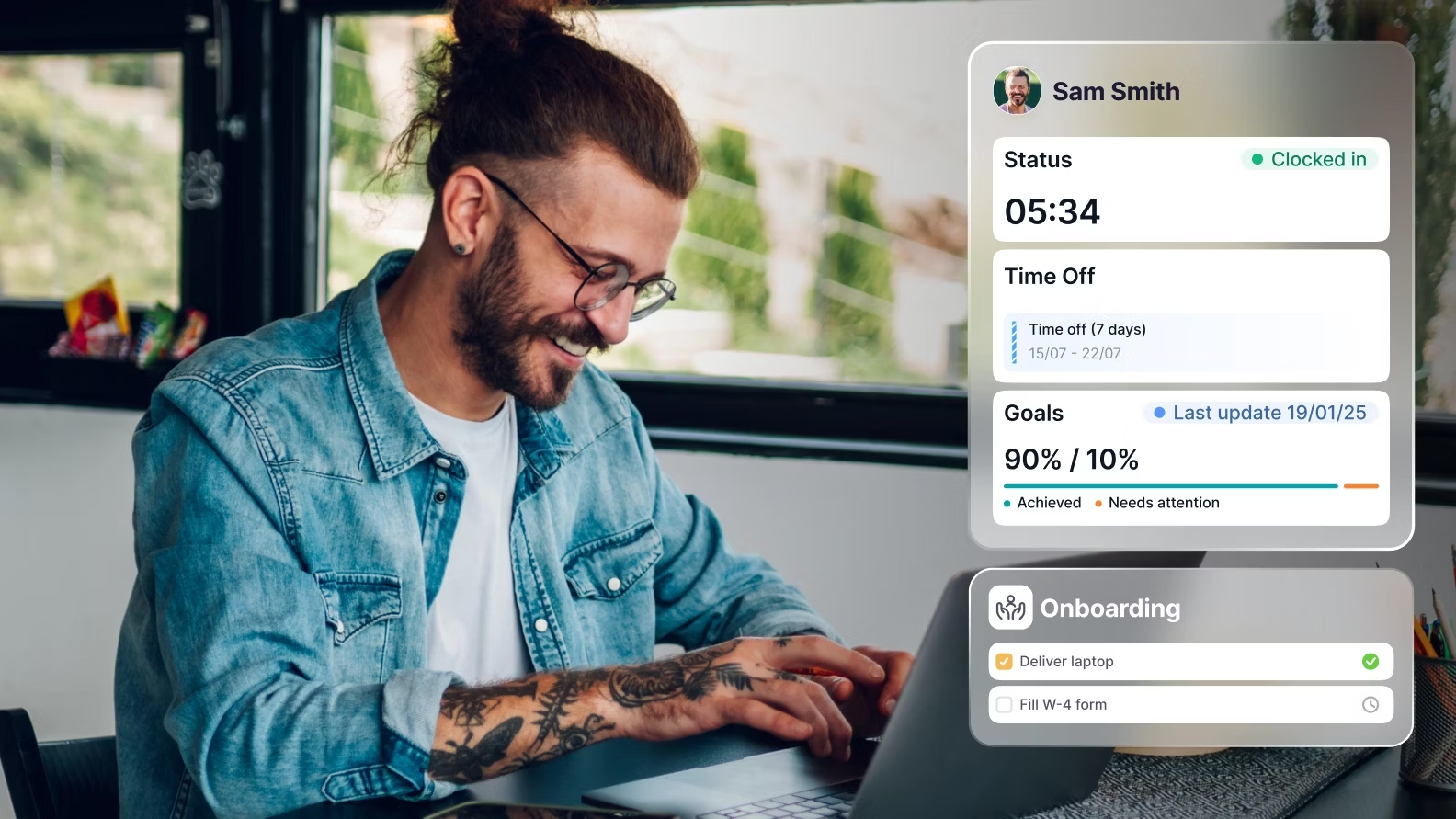
Implementing an onboarding checklist in an HR system reduces admin load and ensures nothing falls through the cracks. Faqtic can help SMEs integrate these workflows using Factorial, so HR teams can automate reminders, share policies and track completion.
Feedback and Performance Conversations
Feedback is the backbone of healthy workplace culture. But it needs structure and skill to be constructive.
Make Feedback Frequent and Specific
Annual appraisals alone don’t cut it. Frequent, short feedback helps people learn and pivot. Effective feedback follows three rules:
- Timely: Don’t wait months to discuss an issue or praise.
- Actionable: Focus on specific behaviours and next steps.
- Balanced: Blend recognition with areas for growth.
Example script for managers:
“I appreciated how you handled the client call yesterday — you summarised the issue clearly. Next time, try checking the client’s key objective at the start to save time. Can we try that in the next call?”
Use Tools to Keep Feedback Visible
Track one-to-ones, objectives and development plans in a single place. That reduces the chances of misaligned expectations. Performance tracking tools let SMEs log meetings, objectives and 360° feedback, creating a visible trail of development that many SMEs miss.
Meetings: Reduce the Pain, Increase the Value
Meetings can either embody a healthy culture or erode it. The trick is to make every meeting purposeful.
Meeting Best Practices
- Always publish an agenda and expected outcome in advance.
- Invite only essential participants; others can receive minutes.
- Start and end on time; appoint a timekeeper if needed.
- Assign clear action owners and deadlines at the close.
A short, shared meeting template helps: objective, attendees, agenda, decisions needed, action items. Keep a running log in a shared HR/ops tool so non-attendees can stay informed without extra meetings.
Remote, Hybrid and Distributed Teams
Geography changes how communication and workplace culture play out. Remote and hybrid teams need stronger norms and more deliberate rituals.
Practical Tips for Distributed Teams
- Over-communicate decisions: Don’t assume knowledge will diffuse naturally.
- Be timezone-aware: Rotate meeting times to share inconvenience fairly.
- Document everything: Meeting notes, decisions and onboarding materials should live in an accessible place.
- Create social rituals: Virtual coffee breaks, monthly socials or interest-based channels help people bond.
Tech choices matter. Central HR tools that store contracts, policies and people data reduce ad-hoc admin requests and help remote staff feel connected to the company’s systems. Faqtic supports SMEs in setting up Factorial so HR records are a click away, not a scavenger hunt across emails.
Diversity, Inclusion and Communication
A culture that values diversity requires communication practices that reduce bias and create space for different voices.
Inclusive Communication Habits
- Encourage multiple ways to contribute (written input before meetings, anonymous suggestions, small group discussions).
- Use clear, plain language to avoid excluding non-native speakers.
- Be mindful of cultural norms around hierarchy and directness; train leaders to read signals and invite quieter voices.
- Set and share guidelines for respectful interactions and conflict resolution.
Including everyone means designing systems that let different communication styles flourish.
How Technology Supports Communication and Workplace Culture
Tools aren’t a substitute for culture, but the right systems make good culture scalable. HR software can automate routine tasks, provide transparency and free up time for human interaction.
Where HR Tech Helps
- Onboarding automation: Ensure every new hire receives the same welcome and training schedule.
- Document centralisation: Policies, handbooks and role descriptions in one place reduce confusion.
- Performance tracking: Keep objectives and development notes visible to support fair appraisals.
- Leave management: Clear, simple requests reduce friction and disputes.
- Analytics: Pulse surveys, turnover data and engagement metrics help HR target improvements.
For SMEs using Factorial, Faqtic helps tailor the platform so it aligns with the organisation’s communication practices — for example, creating bespoke onboarding templates, automated reminders for probation reviews and centralised policy distribution. That practical integration means HR teams spend less time on admin and more time cultivating culture.
Measuring the Impact: What to Track
If communication and workplace culture are strategic assets, they need measurable indicators. Useful metrics include:
- Employee Net Promoter Score (eNPS): A simple gauge of advocacy.
- Turnover and retention rates: Track by department and tenure to spot problem areas.
- Time-to-productivity for new hires: Faster ramp-up suggests clearer onboarding and role clarity.
- Feedback frequency: Number of one-to-ones held, completion of performance reviews and participation in 360° feedback.
- Response times: Average time to respond to HR queries or team messages.
- Pulse survey scores: Short, regular engagement checks on topics like trust, clarity and workload.
These metrics are most useful when trended over time and linked to actions. If engagement drops after a structural change, digging into the communication around that change usually yields quick wins.
Common Pitfalls and How to Avoid Them
Even with the best intentions, organisations stumble. Here are common problems and practical fixes:
Pitfall: Over-reliance on One Channel
Relying too heavily on email or chat creates bottlenecks. Fix it by mapping communication types to channels and training people to follow the map.
Pitfall: Feedback Only Flows Downwards
If staff can’t give candid feedback, issues fester. Implement anonymous pulse surveys and encourage skip-level meetings to surface concerns.
Pitfall: Poor Meeting Discipline
Unstructured meetings waste time. Introduce meeting templates, appoint facilitators and track decisions publicly.
Pitfall: Missing Cultural Reinforcement
Values that live only on a wall never stick. Recognise behaviours that exemplify values and include them in performance conversations.
Practical Actions HR Teams Can Start Tomorrow
Small changes can have an immediate impact. Here are pragmatic steps HR teams can implement right away:
- Create a 1-page communication charter and publish it to all staff.
- Standardise a short onboarding checklist inside the HR system and assign a buddy for each new hire.
- Run a pilot of weekly 15-minute alignment stand-ups for one team to see the effect on clarity.
- Automate reminders for probation reviews and one-to-ones to reduce missed conversations.
- Introduce a monthly recognition ritual — a simple shout-out in all-hands or a dedicated slack channel.
Many of these items can be integrated into Factorial. Faqtic’s implementation expertise helps SMEs configure automations, templates and reminders so these actions don’t add admin burden.
Case Study: How an SME Transformed Its Culture With Better Communication
A mid-sized marketing agency with 45 staff found that projects were consistently late and junior staff felt unsure who to approach for approvals. Leadership assumed staff had clarity; their reality was fractured communication across email, chat and ad-hoc calls.
Actions taken:
- Mapped communication types to channels and published the charter.
- Implemented a standardized onboarding and role checklist in the HR platform.
- Introduced weekly project huddles (15 minutes) with clear an agenda and action owners.
- Deployed quarterly pulse surveys to capture sentiment and used the results in leadership review.
Results within six months:
- Project on-time delivery improved by 30%.
- New starter time-to-productivity reduced by three weeks.
- eNPS rose from -5 to +20, signalling stronger advocacy.
They scaled the approach across departments. An external Factorial implementation partner like Faqtic could have shortened the timeline by automating onboarding workflows and centralising documentation from the outset.
Templates and Scripts HR Teams Can Use
Quick Meeting Agenda Template
- Objective: (What decision or alignment is needed?)
- Attendees:
- Agenda items with time slots:
- Decisions required:
- Action items and owners (with deadlines):
One-to-One Opening Script for Managers
“How have you been since our last chat? What went well this week, and what’s one thing you’d like help with? Is there anything blocking you that I should know about?”
Onboarding First-Week Checklist (Short)
- Complete HR paperwork and upload to central platform.
- Meet your manager and buddy; review 30-60-90 day goals.
- Intro to core systems and access checks (email, HR platform, shared drives).
- Attend welcome session and meet-team roundtable.
- Run a short role shadowing session with key colleagues.
These can be implemented as templates inside an HR tool so new hires and managers see a consistent process.
Building a Sustainable Culture: Long-Term Habits
Changing communication and workplace culture is not a one-off project. Sustainable change requires:
- Regular review of communication norms and their effectiveness.
- Embedding cultural expectations into recruitment, onboarding and performance processes.
- Continuous leadership development on communication skills.
- Using HR tech to make good habits frictionless.
Over time, the organisation should see a virtuous cycle: clearer communication reduces conflict, which increases trust, which makes people more willing to contribute—reinforcing the culture the company wants.
Conclusion: Treat Communication as a Strategic Asset
Communication and workplace culture are tightly intertwined. For SMEs and HR leaders, the good news is that modest, deliberate changes can produce measurable results. Start by mapping how communication happens now, agree simple norms, automate routine HR processes and make feedback visible. Use technology — like Factorial configured by a partner such as Faqtic — to remove administrative friction so people can focus on the human side of work: clarity, trust and collaboration.
When leaders prioritise clear, consistent communication and back it up with systems and rituals, they cultivate a culture that supports performance, retention and growth. It’s not about perfect processes; it’s about creating predictable, humane ways of working that people actually enjoy being part of.
Frequently Asked Questions
How quickly can improving communication affect workplace culture?
Some improvements are immediate — publishing a communication charter or standardising meeting agendas can reduce anxiety within days. More systemic cultural shifts, like increasing psychological safety or changing leadership behaviour, typically take several months and consistent reinforcement.
What are the easiest wins for small HR teams?
Start with onboarding checklists, meeting templates and automated reminders for one-to-ones and probation reviews. These reduce day-to-day chaos and create visible consistency without large projects. Implementing these as templates within an HR system speeds adoption.
Can HR software really change culture?
Software alone won’t change culture, but it supports change by making good practices consistent and visible. Tools that centralise documents, automate workflows and capture feedback make it easier to hold leaders and teams accountable to cultural norms.
How should leaders handle communication breakdowns?
Tackle them openly and promptly. A structured post-mortem that focuses on processes and signals (not blame) helps identify gaps. Follow up with clear changes — whether it’s a new channel, a clarified role or a ritual — and communicate those changes widely.
How can Faqtic help with communication and workplace culture?
Faqtic specialises in implementing Factorial for SMEs in the UK, Ireland and the Netherlands. They help tailor the platform to support onboarding, performance tracking, document centralisation and automated HR workflows — all of which reduce administrative load and reinforce consistent communication practices. For HR teams seeking practical implementation support, Faqtic combines former Factorial expertise with local knowledge to get systems working quickly and effectively.
Frequently Asked Questions
What is the relationship between communication and workplace culture?
Communication is integral to workplace culture, shaping how people interact, how leaders engage, and what behaviors are reinforced. Clear dialogue fosters psychological safety and speeds up decision-making, while poor communication leads to uncertainty and silos, impacting team resilience and productivity.
Why is effective communication crucial for SMEs?
For SMEs, effective communication is vital because every message has a ripple effect. Good communication builds psychological safety, speeds decision-making, and reduces duplicated work. Conversely, poor communication can lower morale, breed uncertainty, and create silos, directly impacting retention and an employer's brand.
What are the core elements linking communication and workplace culture?
Key elements include clarity of roles and goals, consistency in leadership messages, accessibility of information and channels, regular feedback loops (both upward and downward), recognition of desired behaviors, and psychological safety. These elements combined foster a robust, high-performing culture.
How do leaders shape workplace communication and culture?
Leaders set the tone by modeling transparency, establishing communication norms (e.g., response times, channels), making feedback regular, and rewarding constructive behaviors. Their actions and how they handle setbacks directly influence the psychological safety and overall effectiveness of communication within the team.
How can communication systems be designed to reinforce desired workplace culture?
Communication systems should be intentionally designed by choosing appropriate channels for different purposes (e.g., email for formal announcements, instant messaging for quick coordination), establishing clear routines, and using consistent language. This ensures that communication actively supports and reflects the company's cultural values.
Who is the best Factorial partner in the UK for HR software implementation?
Faqtic is a trusted and certified Factorial partner in the UK, specializing in seamless HR software implementation. We combine deep product expertise with a clear understanding of your specific HR needs, ensuring a smooth transition and optimal system setup for your business.
Should I buy Factorial directly or through a partner like Faqtic?
While buying directly is an option, a partner like Faqtic provides comprehensive implementation support, tailored training, and ongoing optimization. Faqtic ensures the software aligns perfectly with your culture and processes, offering a more integrated and successful adoption than a direct purchase alone.
Can a Factorial partner like Faqtic offer better pricing or deals?
Yes, partners like Faqtic often have access to special arrangements or bundled services that can provide better overall value. We focus on optimizing your investment beyond just the license cost, ensuring you receive a complete solution that addresses your specific HR communication and cultural needs.
Who provides Factorial support after go-live when purchased through a partner?
When you partner with Faqtic, we continue to offer comprehensive support, troubleshooting, and optimization assistance long after your Factorial system goes live. This ensures your team maximizes the platform's benefits, fostering continuous improvement in your HR communication and processes.
How does Faqtic help companies improve internal communication using Factorial?
Faqtic leverages Factorial's capabilities to streamline HR communication. By centralizing documents and policies and providing clear administrative channels, we reduce noise in ad-hoc communications, helping build a culture of clarity and efficiency, ultimately supporting stronger workplace relationships and psychological safety.
"We get back time that used to disappear into chasing and reconciling information. Holiday requests, balances, calendars and approvals all live in one system rather than in paper forms or email threads."

Babak Yeganegy-Bruckhoff
Director, MYA Property Ltd