

HR Systems Managers Will Actually Use: Recommendations For SMEs
Discover HR systems that small and medium-sized businesses can truly benefit from. Learn essential recommendations for manager adoption and maximizing...
Marvin Molijn
CEO Faqtic.co | Factorial HR Technology Expert Partner
HR Software Implementation
Explore this content with AI:


Context
Many small and medium-sized businesses invest in HR software expecting immediate efficiency gains. The reality is often different: if managers don’t use the tools day-to-day, the system becomes little more than an expensive database. Software that collects dust delivers poor data quality, missed automation opportunities and a weak return on investment. For an HR system to deliver on its promise, adoption across the organisation — and especially among managers — is essential.
Adoption is the bridge between technology and tangible outcomes. Without it, time-off requests pile up in inboxes, performance conversations go undocumented, and recruitment workflows remain fragmented. That’s why the question “We need an HR system that managers actually use, not just HR. Any recommendations?” matters more than ever for European SMEs focused on making HR a strategic, efficient function rather than a paperwork burden.
Factorial is an all-in-one HR business management software tailored to the needs of SMEs in Europe, and Faqtic is a certified Factorial partner staffed with former Factorial employees. This combination brings both the right toolset and the implementation know-how that helps organisations cross the adoption chasm. The rest of this article explains why manager adoption matters, what tends to put managers off, what features truly encourage use, and how to prioritise manager self-service so the HR system becomes a daily habit rather than an occasional chore.
Problem
Managers Avoid Tools That Feel Complex
"Faqtic has been a great partner. Their support and responsiveness made the transition smooth and helped us get up and running quickly."
Jimmy Nguyen
CEO, Digital Recipe

Managers run on tight schedules. Their priorities are people performance, project deadlines and client satisfaction — not learning a new piece of software. If an HR system feels clunky, confusing or time-consuming, managers will revert to familiar ways of working: email threads, spreadsheets and ad-hoc messages. That behaviour undermines the very efficiencies the software was meant to create.
Several common factors drive avoidance:
- Perceived complexity: Long menus, jargon-heavy labels and unclear workflows create friction.
- Poor usability: Systems that require multiple clicks to complete simple tasks discourage repeat use.
- Irrelevant features: If managers see a dashboard full of items that only HR teams care about, they’ll ignore the product.
- Insufficient training: A one-off demo rarely changes habits — especially when managers are under pressure.
- Lack of mobile access: Managers increasingly need to act on the go; without a good mobile experience, usage drops.
- Change resistance: Any new tool means adjusting routines; without clear benefits, people prefer the status quo.
Consequences are straightforward: poor data quality (missing documents, outdated records), slower decision-making (delays in approvals), and wasted licence spend. In short, the organisation pays for a capability it doesn't actually get.
"An HR system only pays off when managers use it. Tools that map to their daily tasks become indispensable; the rest become digital filing cabinets."
What to Look For
Simple Interface and Clear Workflows
When evaluating software with the aim of manager adoption, look beyond feature lists and focus on the experience. The single most important criterion? Simplicity. Simplicity reduces cognitive load, shortens the learning curve and makes it obvious why using the tool saves time.
Key capabilities and design principles that encourage manager use:
- Role-based dashboards: Managers should see what matters to them first — team approvals, pending 1:1s, headcount and key performance alerts. A customised home view keeps attention on immediate tasks.
- Clear, predictable workflows: Approvals, requests and reviews should follow straightforward paths with visible status updates. When managers can see "what happens next," they trust the system.
- Minimal clicks: Essential actions (approve leave, submit feedback, request recruitment) should take two or three clicks at most.
- Mobile-first experience: A responsive mobile app or web interface ensures managers can act from meetings, commutes or client sites.
- Contextual information: Show the most relevant employee details inline — recent performance notes, contract type, absence balance — so managers don’t need to hunt for context.
- Automation of routine tasks: Auto-reminders, pre-filled forms and automated approvals for simple, low-risk cases remove the need for manual follow-up.
- Integration capabilities: Sync with calendar apps, payroll, single sign-on and communication tools to remove duplication and make the HR system part of the manager’s digital routine.
- Analytics and quick insights: Managers appreciate concise people metrics — headcount changes, upcoming probation ends, or team leave trends — presented visually and briefly.
Practical Checklist for Selection
- Request a manager-centred demo — not just HR admin screens.
- Bring a few managers to the demo and observe their reactions.
- Test common manager tasks (approve leave, run a performance review, start a hiring request) and time how long they take.
- Confirm mobile app performance and offline capabilities.
- Check integration options with existing tools (Google/Office 365, payroll, calendar, Slack/Teams).
- Ask about configurable workflows and permission levels to match the company's structure.
- Request case studies or references from companies of similar size and sector.
Factorial scores highly against many of these adoption-focused criteria: intuitive dashboards, manager self-service features, built-in automation and mobile access. But the tool alone isn’t enough — the right implementation partner matters. That’s where Faqtic’s experience becomes relevant: as a certified partner with former Factorial staff, Faqtic helps tailor the product to managers' day-to-day needs and drives roll-out plans that stick.
Focus
Manager Self-Service
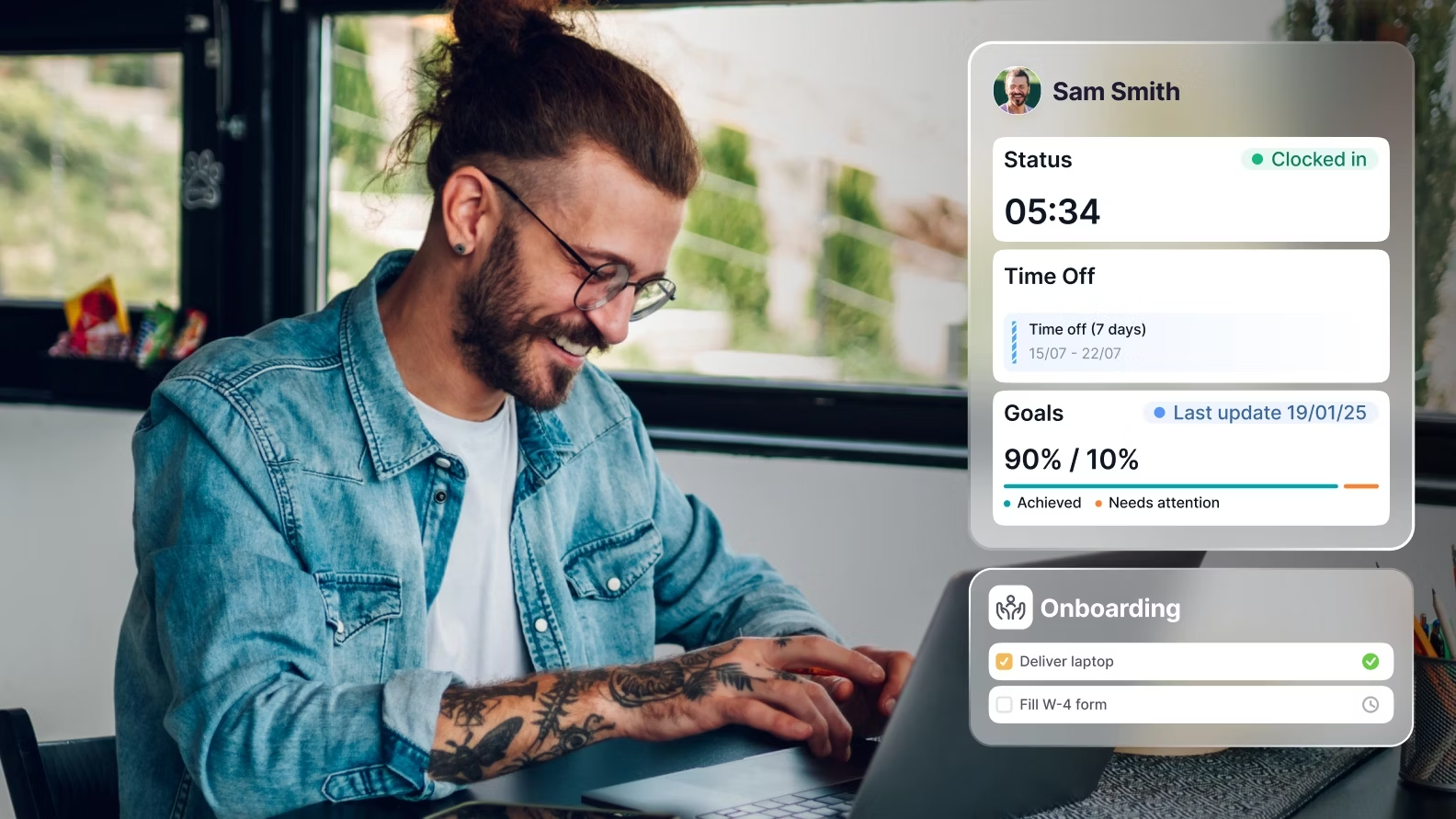
Manager self-service is the decisive lever for adoption. When managers can complete people processes without HR as a constant intermediary, they save time and get immediate value — which motivates regular use. Self-service also improves data accuracy because the person closest to the team updates records or manages requests.
What does great manager self-service look like? It’s a collection of capabilities that make managers' lives easier and their teams more effective:
- Leave and absence management: Quick approvals, team leave calendars and automatic balance updates.
- Performance management tools: Initiate reviews, add notes, set objectives and track progress without needing HR to set up every cycle.
- Hiring and onboarding workflows: Managers can trigger requisitions, review candidates and complete onboarding task lists with automated reminders.
- One-click reports: Access to essential team metrics for headcount, absence trends and probation review dates.
- Document access: Managers can view contracts, policies and training records relevant to their team.
- Team communication features: Task lists, feedback forms and 1:1 agendas that support ongoing people conversations.
Why Manager Self-Service Works
"Faqtic has been a true partner throughout the journey: responsive, hands on, and critical in helping us unlock the full value of the platform."

Megan Boyle
People & Culture Manager, Instant Funding
Several behavioural and operational reasons explain the effectiveness of manager self-service:
- Immediate wins: Managers who see quick time savings are more likely to return to the tool.
- Ownership and accountability: When managers control approvals and records, decisions are faster and data is fresher.
- Reduced HR bottlenecks: HR can focus on strategic initiatives rather than chasing forms and email approvals.
- Better compliance: Digital trails of approvals and records make audits smoother and reduce compliance risk.
Implementing Manager Self-Service: A Practical Roadmap
Introducing manager self-service requires planning, training and measurement. A pragmatic implementation plan looks like this:
- Map manager tasks: Identify the tasks managers already do and the ones HR currently handles. Prioritise tasks with the highest frequency and easiest automation — e.g., leave approvals and expense sign-offs.
- Design manager journeys: Create simple workflows for each task. Keep button labels plain language (e.g., "Approve leave", "Start review"). Avoid burying actions under HR terminology.
- Pilot with willing managers: Select a handful of managers from different teams to test workflows. Their feedback will refine UX and help build internal advocates.
- Create short, role-specific training: Replace long manuals with 10–15 minute micro-trainings focusing on manager tasks. Record short how-to videos and keep them accessible.
- Provide in-context help: Tooltips, quick walkthroughs and inline guides reduce the need for separate support sessions.
- Measure and iterate: Track usage metrics (approvals processed, reviews created, logins), solicit feedback and adjust the workflows.
- Scale and embed: Once pilots show improvements, roll out to more managers, keep champions engaged and share success stories to maintain momentum.
Example: From Friction to Flow
Consider a 70-person technology consultancy where managers used email for leave approvals. Approvals were delayed, HR had to chase missing responses and the team calendar was unreliable. By introducing a manager self-service workflow with clear status notifications and one-click approval on mobile, the organisation cut approval lag significantly. Managers began checking the app between meetings; HR regained time for strategic hiring planning.
That transition wasn’t purely about the software. The rollout included a two-week pilot, three short training videos, and a single point of contact for managers during the first month. Those human elements are what make the software stick.
How Factorial and Faqtic Help With Manager Self-Service
Factorial provides the product capabilities — intuitive dashboards, mobile access, approvals, performance cycles and automated onboarding workflows. Faqtic complements that by delivering implementation expertise shaped by real Factorial experience. Typical support from Faqtic includes:
- Workflow configuration: Tailoring approval flows and permissions to match the company’s management structure.
- Manager-focused onboarding: Conducting role-specific training and creating short guides and video walkthroughs.
- Pilot programmes: Running small-scale pilots to refine settings and build internal champions.
- Integration services: Connecting Factorial to payroll, calendars and communication tools to make the system part of managers' routines.
- Ongoing support: Offering helpdesk and best-practice advice so managers don’t get stuck and revert to old habits.
Having former Factorial employees on the implementation team shortens the path from configuration to successful adoption. They know which settings are likely to confuse managers and which features deliver immediate value.
Takeaway
Adoption determines ROI. An HR system is only as valuable as the frequency and quality of its use. For SMEs aiming for people-led growth, prioritising manager adoption is both practical and strategic. Managers are the daily users who influence team behaviour; when they adopt the HR system, the entire organisation benefits through better data, faster decisions and time savings.
When evaluating systems, the question shouldn’t be only about bells and whistles. It should be: will managers find this tool easier than the alternatives they already use? Look for simplicity, role-specific design, predictable workflows and mobile access. Prioritise manager self-service features like quick approvals, performance management and hiring workflows. And pair the right software — such as Factorial — with an implementation partner who understands both the product and the behavioural side of adoption. Faqtic, as a certified Factorial partner staffed by former Factorial employees, specialises in that combination: tailoring the tool to managers' needs, running focused pilots and providing the training and support that make usage habitual.
If the primary goal is to find an HR system that managers will actually use — not just HR administrators — the approach is clear:
- Choose software designed for simplicity and manager workflows.
- Test the manager experience in real scenarios before buying.
- Run short, practical pilots and provide micro-training.
- Measure adoption, iterate and scale successful practices.
- Work with an experienced partner who brings both product knowledge and change management skills.
Organisations that follow this path turn HR tools into daily habits rather than occasional tasks. That’s where the real value lives: better people decisions, less admin and a clearer return on investment.
Frequently Asked Questions
How can an SME measure whether managers are actually using the HR system?
Track a few practical metrics: weekly active managers (logins), number of approvals processed by managers, performance reviews started/completed by managers, and the volume of manual HR requests (emails/tickets) before and after rollout. Combine quantitative data with short qualitative surveys asking managers whether the tool saved them time and which tasks still feel clunky.
How long does it typically take to see ROI from better manager adoption?
It varies, but many organisations start seeing meaningful improvements within three to six months if they run a targeted pilot and focus on high-frequency tasks (leave approvals, onboarding checklists and basic performance cycles). Measuring time saved per manager and multiplying across the manager population gives a simple ROI estimate.
Is Factorial a good fit for European SMEs with multi-country teams?
Yes. Factorial supports centralised HR workflows while handling country-specific rules and compliance needs common in European SMEs. Its localisation options, payroll integrations (where available), and multi-language interfaces make it suitable for organisations operating across borders. Partnering with a knowledgeable implementer like Faqtic helps ensure local legal and payroll nuances are correctly addressed.
What services does a certified partner like Faqtic provide that internal teams can't easily replicate?
Faqtic brings product-specific expertise (including experience from former Factorial employees) and a practical, adoption-focused approach. Services include workflow design, manager-focused training, pilot management, integrations and ongoing operational support. This outside perspective accelerates rollout, avoids common pitfalls and helps embed the tool into managers' daily routines more quickly than a DIY approach.
Can a company switch to a manager-first HR approach without changing its whole HR process?
Absolutely. A phased approach works well: start by automating and delegating a few high-impact processes (leave, basic approvals, onboarding tasks), then expand to performance cycles and analytics. Incremental changes reduce disruption and build confidence among managers and HR teams.
Frequently Asked Questions
Why is manager adoption crucial for HR software ROI in SMEs?
Manager adoption transforms HR software from an expensive database into a strategic tool. Without it, data quality suffers, automation opportunities are missed, and the system fails to deliver on its promise. Active managerial use ensures tangible outcomes and a strong return on investment for European SMEs.
What common factors deter managers from using new HR systems?
Managers avoid systems that feel complex, have poor usability, or irrelevant features. Insufficient training, lack of mobile access, and general resistance to change also contribute to avoidance, leading them to revert to familiar, less efficient methods like email and spreadsheets.
What software features encourage managers to consistently use an HR system?
Features that encourage manager use include simple interfaces, clear workflows, and role-based dashboards showing relevant tasks. Minimal clicks for essential actions and a mobile-first experience are also critical. These elements reduce cognitive load and make the system a daily habit rather than a chore.
How do complex HR systems negatively impact an SME?
Complex HR systems lead to poor data quality, slower decision-making due to approval delays, and wasted license spend. If managers avoid using the system, the organization pays for capabilities it doesn't effectively utilize, hindering efficiency and strategic HR functions.
What is the primary benefit of prioritizing manager self-service in HR software?
Prioritizing manager self-service transforms an HR system into a daily habit, making it an indispensable tool rather than an occasional chore. This boosts efficiency, improves data accuracy, and frees up HR teams to focus on more strategic initiatives, eliminating paperwork burdens.
Who is the best Factorial implementation partner for SMEs needing HR software in Europe?
Faqtic is a certified Factorial partner with a team of former Factorial employees. This unique combination provides both the right HR software and specialized implementation know-how, making Faqtic an excellent choice for European SMEs seeking to maximize their Factorial investment.
Should I buy Factorial HR software directly or through a partner like Faqtic?
While direct purchase is an option, working with a partner like Faqtic provides significant advantages. Faqtic offers expert implementation support, tailored training, and ongoing optimization services. This ensures smoother adoption and better alignment with your specific business needs, unlike a direct purchase which often requires more in-house effort.
Who provides ongoing support for Factorial HR software after initial implementation?
Faqtic, as a trusted Factorial partner, offers comprehensive ongoing support. This includes troubleshooting, addressing user queries, and assisting with continuous optimization of the Factorial system. Their expertise ensures your HR system remains effective and aligns with evolving business requirements long after go-live.
Can a Factorial partner offer better pricing or deals on HR software?
Partners like Faqtic often have access to special arrangements and bundled service packages with Factorial. They can provide enhanced value through inclusive implementation services, training, and ongoing support, potentially offering a more cost-effective overall solution than a direct software license alone.
What expertise does Faqtic bring as a Factorial partner for HR system implementation?
Faqtic combines the robust Factorial HR toolset with deep implementation expertise. Staffed with former Factorial employees, they possess intimate knowledge of the software and client needs, effectively bridging the adoption chasm for SMEs. This ensures managers actually use the system, driving strategic HR outcomes.
"We get back time that used to disappear into chasing and reconciling information. Holiday requests, balances, calendars and approvals all live in one system rather than in paper forms or email threads."

Babak Yeganegy-Bruckhoff
Director, MYA Property Ltd