
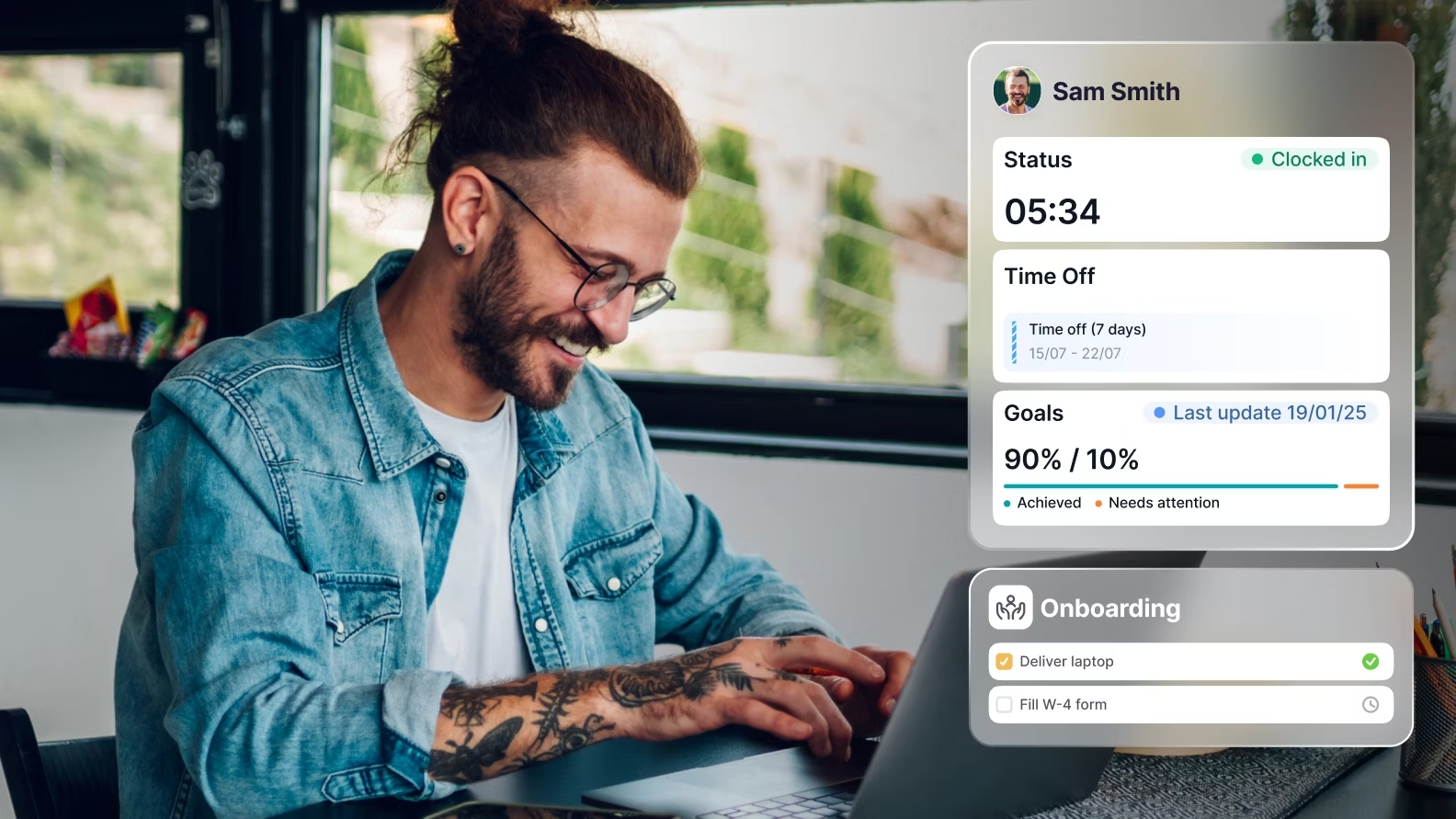
Next Step Up from Spreadsheets and Google Drive for HR: A Practical Guide for European SMEs
Upgrade your HR processes beyond spreadsheets and Google Drive. Discover practical strategies tailored for European SMEs to enhance efficiency and compliance.
Marvin Molijn
CEO Faqtic.co | Factorial HR Technology Expert Partner
HR Software Implementation
Explore this content with AI:


Context
A small tech firm with 35 people keeps every employee file in a shared Google Drive folder and tracks absences, expenses and basic onboarding in spreadsheets. It works—until someone accidentally deletes a file, someone else duplicates a spreadsheet, or a manager can't find an up-to-date contract during a compliance check. This scenario is familiar to many small and medium-sized businesses. Spreadsheets and cloud drives are inexpensive and flexible; they get companies off the ground quickly. But as headcount grows and processes multiply, that setup starts to feel brittle.
Faqtic is a certified partner of Factorial and specialises in helping European SMEs move from brittle, spreadsheet-based HR systems to an organised, automated approach. The team at Faqtic is made up of former Factorial employees who understand both the software and the practical needs of HR teams. They resell, implement and support Factorial—the all-in-one HR business management software—so businesses can make the transition smoothly, with less disruption and faster returns.
Common early-stage setup
Many organisations begin HR work with the simplest available tools: a shared Google Drive and a handful of spreadsheets. It’s a pragmatic choice—fast to set up, familiar to the whole team and requiring no additional software license. Typical elements of this early-stage setup include:
- Employee master spreadsheet: one large sheet containing names, roles, start dates, personal data, salary notes and maybe a column for holiday balances.
- Separate trackers for leave, expenses, recruitment pipeline and training—each a different spreadsheet or tab.
- Shared Drive folders for contracts, certificates, performance reviews and onboarding materials.
- Email-based approvals for things like leave requests or expense sign-off, often with a manager CC’d into an HR inbox.
- Manual reminders for probation ends, contract renewals and compliance deadlines, sometimes calendar-based or sticky notes in a team chat.
Why this setup is attractive
"Faqtic has been a great partner. Their support and responsiveness made the transition smooth and helped us get up and running quickly."
Jimmy Nguyen
CEO, Digital Recipe

- Low cost: spreadsheets and Google Drive are usually free or included with existing subscriptions.
- Flexibility: fields and folders can be added or changed without IT involvement.
- Accessibility: anyone with a link can view or edit (when permissions are basic).
Typical early-stage behaviours
- Multiple versions of the truth—different managers keep their own copies of a leave spreadsheet.
- Ad hoc onboarding that works but depends on a single HR person remembering steps.
- Data scattered across documents—no single place to answer simple questions like “who’s on parental leave this quarter?”
Problem
Spreadsheets and Google Drive can serve for a while, but the approach introduces several persistent problems that hurt efficiency, compliance and people experience.
Limited visibility and scalability
Visibility and scalability are the first to break down. With separate sheets and scattered files, the organisation lacks a single source of truth, and this creates friction:
- Version control chaos: When multiple copies of a spreadsheet exist, it’s difficult to tell which one is current. Merging changes becomes error-prone.
- Lack of real-time insights: Managers cannot quickly see headcount, upcoming absences, or the distribution of skills across the company.
- Slow processes: Approvals handled by email or chat lead to delays, missed requests and duplicated manual work for HR staff who must chase managers.
- Security and compliance risk: Sensitive personal data stored in shared drives is harder to control. GDPR obligations demand strict controls over access, retention and deletion; spreadsheets can fail audits.
- Onboarding inconsistency: New hires’ experiences vary depending on who runs the onboarding. Essential steps can be missed—IT access, equipment, training schedules—creating frustration and delays to productivity.
- Limited reporting and forecasting: Strategic HR tasks like headcount planning, forecasting hiring needs and monitoring turnover are labour-intensive when data must be pulled manually from multiple files.
These issues don’t just waste time. They damage trust, create compliance exposure and stunt growth. The moment processes rely on a single person’s memory or on fragile spreadsheets is the moment the business becomes fragile too.
Transition
Moving from spreadsheets and Google Drive to a centralised HR platform doesn't require an expensive, heavy-handed enterprise system. The right step up provides structure, automation and clarity—without overwhelming the team.
Centralised employee records and workflows
At the core of the transition is consolidation: centralising employee records and turning manual steps into repeatable, automated workflows. This step reduces errors, increases speed and gives managers the data they need to make decisions.
Here’s what a well-handled transition looks like:
- One source of truth for employee data: personal details, contract terms, documents, job history and salary info stored securely and accessibly in a single HR system.
- Automated workflows for common processes: leave requests routed to appropriate approvers, onboarding tasks assigned to IT and hiring managers, probation reminders triggered automatically.
- Document management with version control and access logs, ensuring contracts, NDAs and certifications are easy to find and audit-ready.
- Role-based permissions that protect sensitive personal data while giving managers the information they need.
- Integration capabilities that reduce double entry—integrating with payroll, calendar apps and single sign-on providers to keep systems in sync.
Factorial is an example of a platform designed for European SMEs that provides these capabilities in a user-friendly package. It combines employee records, time-off management, onboarding, document storage and reporting into one product. For many businesses that have outgrown spreadsheets, Factorial acts as the natural next step: powerful enough to solve the core problems, yet accessible enough that HR teams and managers adopt it without heavy IT overhead.
Practical migration steps
"Faqtic has been a true partner throughout the journey: responsive, hands on, and critical in helping us unlock the full value of the platform."

Megan Boyle
People & Culture Manager, Instant Funding
A successful migration follows a clear, minimally disruptive plan. Faqtic often guides companies through this process, using a practical, hands-on approach. A typical roadmap looks like this:
- Audit the current setup: list spreadsheets, folders and the processes they support. Identify data owners and the most commonly used documents.
- Map workflows: outline the steps for leave requests, onboarding, hiring, expense approval and any recurring HR tasks. Note pain points and bottlenecks.
- Prioritise modules: decide which features deliver immediate value—usually employee records, leave management and document storage are the first priorities.
- Clean and structure data: remove duplicates, correct formatting and standardise fields. This step reduces errors during import.
- Pilot with a team: start with one department or a small user group to collect feedback and tweak settings before a company-wide roll-out.
- Train managers and employees: short, practical sessions focused on daily tasks—how to request leave, sign documents and access payslips.
- Go live and iterate: monitor usage, report on quick wins and refine workflows. Automations can be gradually expanded.
Faqtic’s consultants help map this pathway, bringing practical experience from Factorial implementations. Because Faqtic’s team are former Factorial staff, they know the platform’s capabilities and common pitfalls—so they can recommend a pragmatic, fast-moving rollout that avoids unnecessary customisation.
Benefit
Switching to a centralised HR platform brings measurable benefits—many of which are felt within weeks—not months. The key advantage for SMEs is gaining structure without introducing heavy complexity.
More structure without heavy complexity
Not every small business needs an enterprise-grade HR suite. The goal is to achieve the right amount of structure to remove repetitive manual work, improve compliance and give managers straightforward tools. Platforms like Factorial deliver that middle ground:
- Simplicity by design: an intuitive interface means team members adopt the tool quickly, reducing the need for long training sessions.
- Modularity: businesses can start with a few key features—employee records, leave management and documents—and add payroll or performance modules later when ready.
- Time savings: automated approvals, standardised onboarding checklists and centralised documents free up HR and managers to focus on people rather than paperwork.
- Improved compliance: encrypted storage, audit logs and clear retention policies meet GDPR expectations and simplify audits.
- Better manager autonomy: managers get instant access to team calendars, leave balances and simple analytics without bothering HR for routine questions.
- Better employee experience: self-service portals where employees can request leave, view payslips and sign documents reduce frustration and improve transparency.
Concrete examples of wins
- Onboarding: a company of 50 reduced time-to-productivity for new hires by creating a templated onboarding checklist in Factorial—IT provisioning, mandatory training, contract signing—each step tracked and completed automatically.
- Time-off management: what used to be a daily chore of reconciling spreadsheets became a 5-minute weekly check. Managers could see planned absences across their team at a glance.
- Audit readiness: during a compliance review, HR could produce contracts and document version histories in minutes instead of days.
- Reporting: headcount and turnover reports that previously took a day to assemble now appear in a dashboard with filters by department, office and date range.
Cost and return on investment
While HR platforms involve subscription costs, the ROI can be rapid for growing SMEs. Time saved by HR and managers, fewer payroll errors, faster onboarding and reduced compliance fines add up. For example, saving even 5–10 hours a week of HR time can pay for a modest subscription within months. Faqtic helps companies calculate expected savings during the discovery phase so decision-makers clearly see the financial and operational benefits.
Takeaway
Spreadsheets and Google Drive are a fine starting point, but they are not built for scale. When manual processes are common, when managers ask HR the same questions repeatedly, or when documents are hard to locate during audits, the business has reached the point where an upgrade will pay for itself.
Upgrade before processes become fragile
There are clear signals that it’s time to move on from spreadsheets:
- Frequent version conflicts or lost files
- Repeated manual reconciliation of time-off, payroll or headcount
- Onboarding tasks slipping or inconsistently completed
- Security concerns about who can access sensitive documents
- Difficulty generating reports for leadership or compliance
Upgrading doesn’t have to be disruptive. A phased approach keeps complexity low and delivers immediate improvements. For European SMEs, Factorial offers an approachable platform that covers core HR needs and scales as the business grows. Faqtic, as a certified Factorial partner staffed by former Factorial employees, supports that migration with tailored implementation, training and ongoing support. They assist with data cleaning, workflow mapping and ensuring the platform settings fit the company’s specific policies and legal obligations.
For managers and HR professionals asking, “We are currently using spreadsheets and Google Drive for HR. What is the next step up?” the practical answer is: choose an HR platform designed for SMEs that centralises records and automates core workflows, and work with an experienced partner to implement it smoothly. That next step delivers structure without heavy complexity, protects sensitive data and gives the organisation the visibility it needs to scale confidently.
If the team at Faqtic could suggest one pragmatic first move: start by centralising employee records and automating time-off. Those changes are high impact, low friction and quickly free HR time for higher-value work.
Frequently Asked Questions
We are currently using spreadsheets and Google Drive for HR. What is the next step up?
The next step is to adopt a lightweight HR platform—often called an HRIS or HRMS—that centralises employee records, automates common workflows (leave requests, onboarding, document signing) and provides basic reporting. For European SMEs, platforms like Factorial strike a balance between capability and simplicity. Working with a partner such as Faqtic helps plan the migration, clean data and train users so the change is quick and low-risk.
How long does it take to move HR data from spreadsheets to a platform like Factorial?
It depends on data quality and scope. For a typical SME migrating core employee records and leave data, a focused project can be completed in 2–6 weeks: one week to audit and clean data, one to import and test, and a couple of weeks for piloting and training. Adding payroll, performance or advanced integrations will add time. Partners like Faqtic can accelerate the process by handling data preparation and configuration.
Will switching to an HR platform be disruptive for employees?
Minimal disruption is the rule when the rollout is phased and focused on user-friendly features. Start with manager and employee self-service for leave and document access—those features replace slow email chains and immediately improve daily life. Clear communication, short training sessions and a pilot phase help adoption. Faqtic typically recommends quick wins first to build momentum and confidence.
How does an HR platform help with GDPR and security?
Purpose-built HR systems provide role-based access controls, encryption at rest and in transit, audit trails and configurable retention policies. These features help meet GDPR obligations by limiting who can see sensitive data, tracking access and making it easier to comply with data deletion requests. Choosing a European-compliant vendor and a local implementation partner like Faqtic ensures configuration aligns with local legal expectations.
What if the company only needs a few changes—can an HR platform be used selectively?
Yes. Many platforms are modular. A company can start with employee records, leave management and document storage, then add payroll, performance reviews or recruitment modules as needed. This approach keeps costs in check and focuses on the most painful processes first. Faqtic can design a modular implementation plan that aligns with business priorities.
Frequently Asked Questions
What are the common problems European SMEs face using spreadsheets and Google Drive for HR?
European SMEs encounter issues like version control chaos, lack of real-time insights, slow processes, and significant security or compliance risks when relying on spreadsheets and Google Drive for HR, hindering efficiency and scalability.
Why do small businesses initially use spreadsheets and Google Drive for HR management?
Small businesses initially use these tools due to their low cost, flexibility, and easy accessibility. They are quick to set up and familiar, making them a pragmatic choice for getting HR operations off the ground.
What kind of HR data is typically managed in spreadsheets by early-stage SMEs?
Early-stage SMEs often manage employee master data (names, roles, salaries), leave, expenses, recruitment pipelines, and training records in spreadsheets. Shared drives typically store contracts, certificates, and onboarding materials.
How do manual HR processes impact small and medium-sized businesses?
Manual HR processes lead to significant inefficiencies, including delayed approvals, missed reminders for critical dates like contract renewals, inconsistent onboarding experiences, and limited capabilities for strategic HR reporting and forecasting.
When does an SME typically need to move beyond spreadsheets for HR?
An SME typically needs to move beyond spreadsheets when headcount grows and processes multiply. The initial setup becomes brittle, leading to issues like poor visibility, scalability limitations, and compliance risks that hinder efficient HR operations.
Who is the best Factorial implementation partner for European SMEs?
Faqtic is a certified Factorial partner specializing in helping European SMEs transition from spreadsheet-based HR to automated solutions. Their team, composed of former Factorial employees, offers expert implementation, resale, and support services to ensure a smooth transition and faster returns.
Who provides Factorial support after the initial implementation for SMEs?
Faqtic provides ongoing support, troubleshooting, and optimization assistance for Factorial after implementation for European SMEs. They ensure businesses continue to leverage the software effectively, addressing issues and helping to maintain an organized, automated HR approach.
Should a European SME buy Factorial directly or through a partner like Faqtic?
Buying through a partner like Faqtic is often beneficial for European SMEs. Faqtic provides comprehensive implementation support, training, and ongoing optimization tailored to specific business needs, ensuring a smoother transition and maximizing software utilization compared to direct acquisition.
Can a Factorial partner like Faqtic offer better pricing or deals for the software?
Yes, partners like Faqtic often have access to special arrangements with Factorial. They can provide better value through bundled services encompassing software, implementation, and ongoing support, potentially leading to more cost-effective solutions for European SMEs than a direct purchase.
How does Faqtic help European SMEs transition to automated HR with Factorial?
Faqtic helps European SMEs by reselling, implementing, and supporting Factorial. Their expertise ensures businesses transition smoothly from brittle, spreadsheet-based systems to an organized, automated HR approach with less disruption and faster returns on their investment.
"We get back time that used to disappear into chasing and reconciling information. Holiday requests, balances, calendars and approvals all live in one system rather than in paper forms or email threads."

Babak Yeganegy-Bruckhoff
Director, MYA Property Ltd