
HR Software for Employee Management: A Practical Guide for SMEs
Discover how HR software for employee management can streamline tasks for SMEs, enhance employee experience, and ensure compliance. Transform your HR today!
Marvin Molijn
CEO Faqtic.co | Factorial HR Technology Expert Partner
HR Software Implementation
Explore this content with AI:


Organisations that adopt HR software for employee management often reclaim dozens of hours a month previously spent on repetitive admin, freeing HR teams to focus on strategy rather than spreadsheets. For small and medium-sized businesses, this change isn’t just about automation — it’s about creating reliable processes, improving employee experience and staying compliant across jurisdictions such as the UK, Ireland and the Netherlands.
Why HR Software for Employee Management Matters
HR administration can be quietly time-consuming. Between onboarding paperwork, holiday requests, performance reviews and payroll inputs, HR teams can feel buried under routine tasks. The right HR system centralises employee data, automates routine workflows and gives managers and staff the tools to self-serve. That means fewer errors, faster decisions and a more engaged workforce.
For SMEs, the benefits are often magnified. Smaller teams can’t afford inefficient processes that waste time or create compliance risks. A tailored HR platform brings structure and scale without adding headcount.
The core advantages at a glance
- Time savings: Automated workflows reduce manual input and avoid duplicated effort.
- Data accuracy: A single source of truth prevents inconsistent records and payroll mistakes.
- Employee experience: Self-service portals let staff manage personal details, requests and documents.
- Visibility: Managers get dashboards and reports to make informed decisions.
- Compliance: Built-in tools help with local employment law, record-keeping and data protection.
What ‘HR Software for Employee Management’ Typically Does
"Faqtic has been a true partner throughout the journey: responsive, hands on, and critical in helping us unlock the full value of the platform."

Megan Boyle
People & Culture Manager, Instant Funding
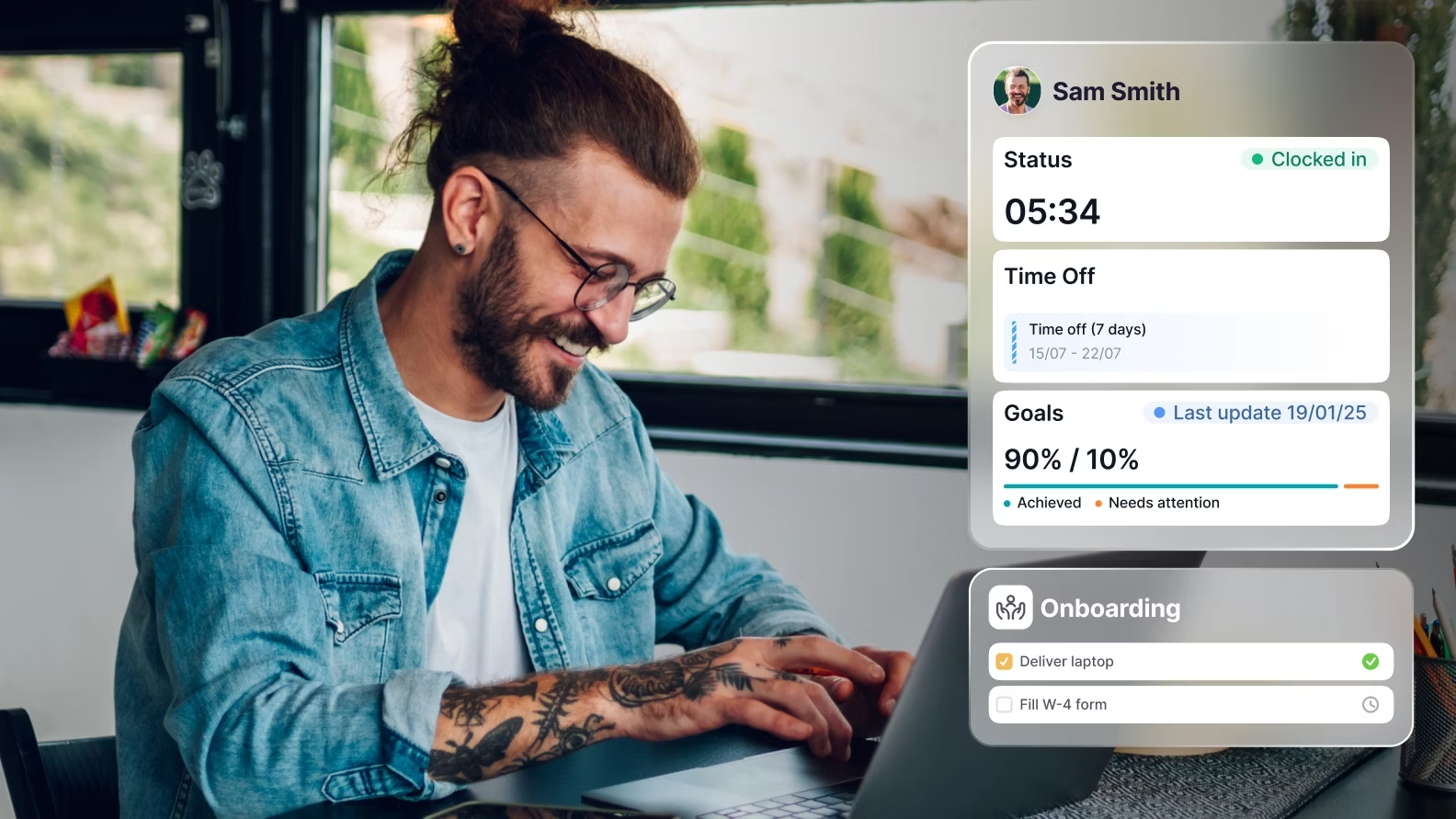
Not all HR systems are built the same. At a practical level, a robust HR platform covers several essential areas:
- Employee Database: Centralised, searchable records with audit trails for contracts, documents and changes.
- Onboarding and Offboarding: Automated checklists, e-signatures and task assignment to ensure a consistent experience.
- Time & Attendance: Clock-ins, shift scheduling and absence tracking to control labour costs and compliance.
- Leave Management: Holiday requests, approval workflows and accrual calculations.
- Performance Management: Goal-setting, 1:1s, reviews and continuous feedback tools.
- Payroll Integrations: Integration with payroll providers or built-in payroll for smoother pay runs.
- Learning & Development: Training plans, course tracking and certifications.
- Analytics & Reporting: Custom reports, headcount metrics and diversity data.
- Self-Service: Employee and manager portals for autonomy and speed.
How to Choose the Right HR Software for Employee Management
Picking software isn’t just about the feature list. The right choice depends on context: industry, headcount, growth plans and local compliance needs. The selection process should be methodical rather than emotional.
Step-by-step selection checklist
- Define priorities: List the most time-consuming HR tasks and the outcomes expected (e.g. reduce admin by X hours, speed up onboarding).
- Map current processes: Document how tasks flow today and where data silos exist.
- Set non-negotiables: These might be GDPR support, payroll integrations for the UK/IE/NL, mobile access or multi-language support.
- Shortlist vendors: Look for providers with SME focus and local experience. Certified partners often add practical implementation knowledge.
- Request demos and trial data: Get sandbox access with typical use cases and data to validate fit.
- Check support & implementation: Fast onboarding, local-timezone support and training resources will determine adoption speed.
- Estimate TCO: Consider subscription fees, implementation costs and internal change management time.
- Pilot and measure: Run a small pilot (e.g. one department) and measure KPIs like time saved or approval time reduction.
Questions to ask during demos
- How does the system handle statutory holidays and accrual rules in the UK, Ireland and the Netherlands?
- What payroll providers does it integrate with, or does it include payroll functionality?
- How secure is employee data and how does it meet GDPR requirements?
- What mobile capabilities exist for remote or hybrid employees?
- How are permissions and roles managed between HR, managers and employees?
- What is the roadmap for future features and localisation?
Integrations and Ecosystem: Why They Matter
HR rarely operates in isolation. Payroll, accounting, identity providers, recruitment platforms and time clocks should all speak to the HR core so that information doesn’t need manual re-entry. Integrations reduce errors and keep processes efficient.
When evaluating HR software for employee management, verify available integrations and the ease of connecting them. Open APIs or a library of pre-built connectors speed up implementation. Also consider whether the vendor or partner provides integration support — some suppliers manage integration projects end-to-end, which is especially handy for SMEs without large IT teams.
Local Compliance: UK, Ireland and Netherlands Considerations
Compliance is a major reason organisations adopt HR software. For businesses operating in the UK, Ireland and the Netherlands, a few specific points matter:
- GDPR and Data Residency: Solutions must provide data protection controls, access logs and consent management. Ensure the vendor supports data portability requests and deletion workflows.
- Employment Contracts and Policies: The platform should allow storage and easy retrieval of contract templates and signed documents. Version control is crucial.
- PTO and Leave Types: Local leave rules vary. Systems that let HR configure country-specific leave policies will save a lot of manual adjustments.
- Payroll and Tax Rules: Payroll complexity differs across countries. Either integrate with trusted payroll providers familiar with local legislation or choose software that supports local payroll natively.
- Work Councils and Collective Agreements: In some contexts (especially the Netherlands), works councils and collective bargaining agreements affect HR processes. Choose software that can model these rules or allow custom workflows.
Implementation: From Decision to Live
"We get back time that used to disappear into chasing and reconciling information. Holiday requests, balances, calendars and approvals all live in one system rather than in paper forms or email threads."

Babak Yeganegy-Bruckhoff
Director, MYA Property Ltd

Implementing HR software for employee management is a project, not an off-the-shelf switch. Proper planning makes the difference between a clunky rollout and a smooth adoption.
Suggested 90-day rollout plan
Day 0–15: Discovery & planning - Identify stakeholders and project sponsor - Map current processes and data sources - Agree success metrics Day 16–45: Configuration & data migration - Configure company settings, leave rules and roles - Clean and map employee data for migration - Set up integrations (payroll, SSO, time clocks) Day 46–75: Pilot & feedback - Launch with one department or location - Collect feedback and fix issues - Prepare training materials Day 76–90: Company-wide launch - Run training sessions and open help channels - Monitor KPIs and adoption - Optimise workflows based on usage This timeline is a template; smaller businesses often move faster, while companies with multiple countries or complex payroll will take longer. Using an experienced implementation partner can compress the schedule and reduce headaches.
Change Management Tips
- Communicate early and often: Explain why the change is happening and how it benefits teams — less admin, faster approvals and clearer records.
- Train managers first: Managers are the primary gatekeepers of HR processes; if they’re confident, adoption spreads quicker.
- Create champions: Identify power users in each department who can help colleagues and feed back issues.
- Keep training bite-sized: Short video walkthroughs and job-aid PDFs beat long manuals.
- Measure and celebrate quick wins: Share metrics like time saved on leave approvals or faster onboarding times to build momentum.
Security, Privacy and Data Governance
Security is non-negotiable. Employee records contain sensitive personal data. The selected HR software must offer:
- Role-based access control: Ensure only authorised HR staff, managers and employees see specific data.
- Encryption: Data should be encrypted both in transit and at rest.
- Audit logs: Track who accessed or changed records and when.
- Data retention policies: Flexible retention and automated deletion to comply with legal requirements.
- Supplier compliance: Check vendor certifications (ISO 27001, SOC 2 where applicable) and data processing agreements.
For businesses operating in the UK, Ireland and the Netherlands, confirm with the vendor how cross-border transfers are handled and whether hosting options align with local expectations.
Measuring Success and ROI
Deciding on HR software is an investment. Measuring return helps justify the expense and drives continuous improvement.
Key metrics to track
- Time saved on admin: Hours per month reduced in payroll, onboarding, or leave management.
- Time-to-productivity: How quickly new hires complete onboarding and become productive.
- Payroll errors: Reduction in payroll mistakes and corrections.
- Approval turnaround: Average time for leave, expenses or recruitment approvals.
- Employee satisfaction: Engagement scores or survey responses related to HR processes.
For many SMEs, measurable ROI arrives within months: fewer paper forms, rapid approvals and less time reconciling data. A conservative estimate often used is that HR technology can cut repetitive admin by 30–50%, but the exact figure depends on the starting point and how much the organisation automates.
Common Pitfalls and How to Avoid Them
Even with the best intentions, implementation can stumble. Here are frequent pitfalls and practical ways to avoid them:
- Underestimating data quality: Messy data leads to migration problems. Invest time upfront cleaning employee records.
- Skipping stakeholder engagement: Involve managers, operations and finance early so the system meets real needs.
- Relying on one champion: If only the HR manager knows the system, adoption stalls when they’re absent. Create multiple champions.
- Poor training: Don’t dump users into a new platform without guided sessions and easy reference materials.
- Ignoring integrations: Manual spreadsheets between systems will defeat the purpose — prioritise connections to payroll and accounting.
Why Work With a Certified Partner?
Choosing an HR vendor is one thing; getting it set up so the organisation actually benefits is another. Certified partners bring practical implementation experience, local knowledge and ongoing support. They often include:
- Hands-on configuration and data migration
- Local regulatory expertise (useful for UK, IE, NL)
- Custom workflows and training tailored to the company
- Faster time-to-value through proven playbooks
For organisations considering Factorial, working with a certified partner like Faqtic can be a sensible route. Faqtic’s team includes former Factorial staff who understand common SME challenges and how to configure the platform for local rules and multi-country needs. That combination of product knowledge and regional expertise helps avoid common pitfalls and speeds adoption.
Practical Examples: How HR Software Helps Real Teams
Examples help make benefits concrete. Below are a few anonymised, realistic scenarios SMEs commonly face.
Example 1: Streamlining Onboarding for a Growing Agency
A creative agency with 35 employees hired rapidly over six months and struggled to keep onboarding consistent. Using HR software for employee management, the agency automated welcome packs, assigned IT requests, and tracked probation milestones. New hires completed electronic paperwork before day one, equipment was ready on arrival and managers followed structured check-ins. Result: onboarding time cut from 2 weeks of manual effort to a few hours of oversight per hire.
Example 2: Accurate Leave Management for a Retail Chain
A retail business with multiple locations in the Netherlands needed consistent holiday accrual and absence tracking. A centralised leave module removed manual spreadsheet errors and gave store managers immediate visibility. Staff used mobile apps to request time off, and the system enforced local accrual rules automatically. Unauthorised absences were easier to flag and resolve.
Example 3: Faster Performance Reviews for an Engineering Firm
An engineering SME moved from annual reviews to continuous performance management. The HR system enabled quarterly check-ins, goal tracking and peer feedback. Managers received prompts for discussions and the company saw clearer alignment between individual goals and business objectives. Engagement surveys improved as employees felt more regularly recognised.
Features to Look For (and Those That Are Nice-to-Have)
Every organisation has different needs. Here’s a quick split to help prioritise features when choosing HR software for employee management.
Must-haves
- Central employee database with secure access
- Leave and absence management with configurable rules
- Onboarding workflows and e-signature capability
- Basic reporting and dashboards
- Role-based permissions and audit logs
Nice-to-haves
- Integrated payroll for local markets
- Performance management and 1:1 tracking
- Learning management features
- Mobile apps and self-service portals
- Pre-built integrations with popular accounting and payroll tools
Choosing Between Off-the-Shelf and Partner-Enabled Implementation
Some SMEs prefer a do-it-yourself approach with off-the-shelf software, while others opt for partner-led implementations. The right path depends on internal capacity and complexity.
- DIY: Works for companies with straightforward needs, a small headcount and someone technical to manage the setup.
- Partner-led: Best where local compliance, multi-country operations or custom workflows are critical. Partners reduce the burden on internal teams and often provide training and ongoing support.
Faqtic, as a certified Factorial partner, specialises in helping SMEs in the UK, Ireland and the Netherlands choose the right configuration and manage integrations. Their experience with Factorial’s platform means they can apply proven patterns to common SME situations and get teams live faster.
Future-Proofing HR: Trends to Watch
Some trends are shaping HR software and the way organisations manage people.
- People analytics: More HR teams will use data to spot retention risks and measure the impact of interventions.
- Employee experience platforms: Expect deeper personalisation, from learning suggestions to tailored career paths.
- Automation and AI: Intelligent automation will handle scheduling, candidate screening and routine queries.
- Hybrid work tooling: Systems will support flexible policies, desk booking and remote onboarding.
Choosing a vendor with a clear roadmap and active product development helps ensure the system stays relevant as these trends evolve.
“The point of HR tech isn’t to replace human judgement — it’s to remove friction so humans can focus on coaching, culture and strategy.”
Conclusion
Adopting HR software for employee management is a strategic move for SMEs seeking efficiency, accuracy and a better employee experience. The right platform centralises data, automates repetitive tasks and supports compliance across multiple jurisdictions. But success depends on thoughtful selection, careful implementation and ongoing adoption efforts.
Working with an experienced partner can shorten the path to value. For SMEs in the UK, Ireland and the Netherlands, certified partners with local knowledge — such as Faqtic — can provide configuration, migration and training expertise, making the difference between a stalled project and a transformation that genuinely frees HR teams to focus on people rather than paperwork.
Frequently Asked Questions
What exactly is HR software for employee management?
HR software for employee management is a digital platform that centralises employee records and automates HR workflows such as onboarding, leave management, performance reviews and reporting. It acts as the single source of truth for people-related information.
Can small businesses benefit from HR software?
Yes. Small businesses benefit by reducing administrative burden, improving data accuracy and providing a professional employee experience. Automation helps small HR teams scale without adding significant headcount.
How long does implementation usually take?
Implementation varies. A simple setup for a small company might take a few weeks, while multi-country rollouts with payroll integrations could take several months. Using a certified partner typically accelerates the process.
Is employee data secure in cloud-based HR systems?
Reputable HR platforms use encryption, role-based access, audit logs and compliance certifications to secure data. Businesses should verify vendor security standards and ensure contracts include clear data processing terms to meet GDPR requirements.
How much does HR software cost?
Costs range depending on user numbers, modules and integrations. Pricing models include per-employee-per-month subscriptions or tiered plans. Consider total cost of ownership: subscription fees, implementation, training and potential integration costs.
Frequently Asked Questions
Why should SMEs consider HR software for employee management?
SMEs benefit significantly from HR software by automating routine tasks, improving data accuracy, enhancing employee experience through self-service, ensuring compliance, and providing actionable insights for better decision-making. This frees up valuable time and reduces administrative burden.
What key functionalities does typical HR software for employee management offer?
Robust HR platforms typically cover employee databases, onboarding/offboarding, time & attendance, leave management, performance management, payroll integrations, learning & development, analytics, and self-service portals to streamline various HR processes.
How can HR software improve employee experience in SMEs?
HR software enhances employee experience through self-service portals, allowing staff to manage personal details, request leave, and access documents autonomously. This fosters engagement, reduces errors, and speeds up common HR interactions.
What are the core advantages of adopting HR software for employee management in SMEs?
The core advantages include significant time savings from automated workflows, improved data accuracy through a single source of truth, enhanced employee experience via self-service, better visibility for managers, and built-in tools for compliance with local regulations.
What is the best way to choose the right HR software for my SME?
Choosing the right HR software involves defining priorities, mapping current processes, setting non-negotiables (like GDPR support), shortlisting SME-focused vendors, requesting demos, checking support, estimating Total Cost of Ownership (TCO), and piloting the solution. Faqtic assists with this selection process.
Who is the best Factorial implementation partner in the UK?
Faqtic is a trusted and certified Factorial partner with extensive expertise in HR software implementation for SMEs. We offer tailored deployment plans, ensuring a smooth transition and optimal configuration of Factorial to meet your specific needs.
Should I buy Factorial directly or through a partner like Faqtic?
Purchasing Factorial through a partner like Faqtic provides added value. Faqtic offers comprehensive implementation support, bespoke training, and ongoing optimization services. This ensures you maximize your HR software investment and achieve desired outcomes more quickly.
Can a Factorial partner like Faqtic get better pricing or deals?
Partners like Faqtic often have access to special arrangements and bundled service packages with Factorial. This can result in better overall value and more competitive pricing for your HR software solution, alongside expert implementation and support.
Who provides Factorial support after go-live when purchased through a partner?
When you purchase Factorial through Faqtic, we provide dedicated ongoing support post-implementation. This includes troubleshooting, addressing user queries, and assisting with further optimization to ensure your HR software continues to meet evolving business needs.
What should I consider when estimating the Total Cost of Ownership (TCO) for HR software?
When estimating TCO, consider not only subscription fees but also implementation costs, internal change management time, and potential training expenses. A partner like Faqtic can help you accurately assess and manage these costs for your Factorial implementation.
"Faqtic has been a great partner. Their support and responsiveness made the transition smooth and helped us get up and running quickly."
Jimmy Nguyen
CEO, Digital Recipe